What's inside
As an Amazon Associate I earn from qualifying purchases. This post may contain affiliate links at no extra cost to you.
Our Top Picks
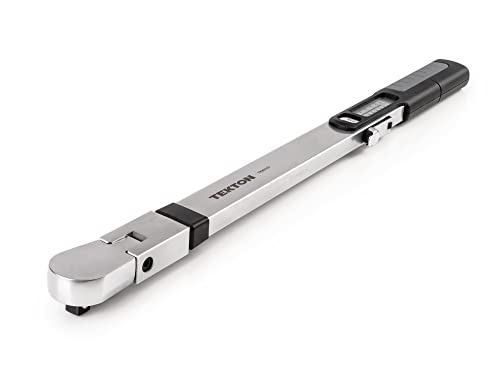 TEKTON 1/2 Inch Drive 72-Tooth Split Beam Torque1/2 Inch Drive (40-250 ft.-lb.)22.8 x 1.7 x 1.4 inches3.7 poundsCheck on Amazon
 TEKTON 3/8 Inch Drive 72-Tooth Split Beam Torque3/8 Inch Drive (20-100 ft.-lb.)18.8 x 1.4 x 1.1 inches2.1 poundsCheck on Amazon
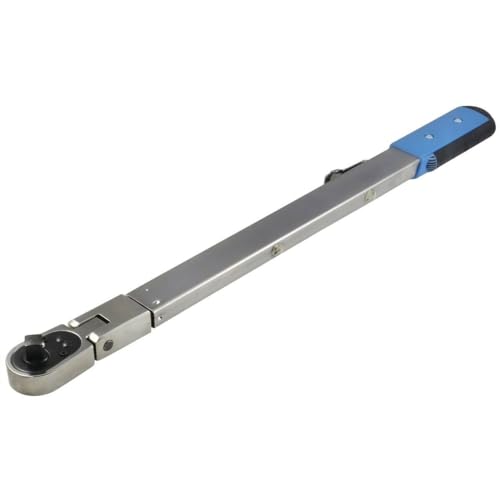 Precision Instruments PREC3FR250F Silver 1/2" Drive Split Beam1/2\"25.5 x 3 x 2.1 inches4.5 poundsCheck on Amazon

Best Split Beam Torque Wrenches for Accurate, Consistent Tightening
The best split beam torque wrench for most occasional users is the Precision Instruments PREC3FR250F: its 40–250 ft-lb range suits larger automotive fasteners, and its split-beam design avoids the usual need to wind a click wrench back to its lowest setting between jobs. For smaller fasteners, choose a lower-range model; for frequent professional work, prioritize a calibration certificate, service support, and a range that keeps your target torque near the middle of the scale.
What to compare before choosing
A split beam wrench indicates torque when its beam deflects against a scale or pointer. Unlike a typical micrometer click wrench, many split-beam models do not rely on a spring that must be unloaded after use. That can make storage simpler, but it does not make the tool immune to wear, incorrect use, or calibration drift.
As an Amazon Associate we earn from qualifying purchases at no extra cost to you.


- Range and units: Check the scale you will actually use. A wrench that reads both foot-pounds and newton-metres is convenient, but a clear primary scale matters more than having extra markings.
- Accuracy claim: Manufacturers commonly specify accuracy as a percentage of the reading, often in the tightening direction. Check the manual for the exact conditions, direction, and torque interval; claims are not directly comparable if those differ.
- Adjustment: Most split-beam models set torque with a knob, lever, or handle adjustment. Look for a legible scale and a positive lock that cannot shift easily while working.
- Head and access: A fixed ratchet head is quick for ordinary work. A flex head helps around obstructions, but adds a joint that needs care and can be a weak point if abused.
- Calibration support: For safety-critical or production work, confirm that the model can be calibrated or serviced and that its certificate meets your requirements.
Split-beam models compared
The figures below are manufacturer-published specifications for representative models. Ranges and accuracy can vary by version, market, or revision, so verify the exact model number and manual before purchase. Weight is omitted where it is not consistently published across versions.
| Model | Drive | Published range | Published accuracy | Best fit |
|---|---|---|---|---|
| Precision Instruments PREC3FR250F | 1/2 in. | 40–250 ft-lb | ±4% clockwise | Automotive and general mechanical work at higher torque |
| Precision Instruments PREC3FR100F | 3/8 in. | 20–100 ft-lb | ±4% clockwise | Smaller automotive fasteners and mid-range jobs |
| GEARWRENCH 85077 | 1/2 in. | 30–250 ft-lb | ±4% clockwise | Users wanting a split-beam tool with a flex head |
| GEARWRENCH 85076 | 3/8 in. | 10–100 ft-lb | ±4% clockwise | Lower-range work with a flex-head layout |
These models are not interchangeable just because their ranges overlap. A 1/2-inch drive may be too bulky for cramped spaces, while a 3/8-inch wrench can be the wrong choice for high torque or large sockets. Confirm whether the published accuracy applies to clockwise tightening only; do not assume the same figure applies in reverse.
Which one suits your work?
| Your situation | Practical choice | Why |
|---|---|---|
| Occasional wheel or chassis work, typically above 40 ft-lb | PREC3FR250F or GEARWRENCH 85077 | The 1/2-inch drive and higher capacity cover common larger fasteners; choose the flex head if access is awkward. |
| Frequent work around 20–100 ft-lb | PREC3FR100F | A narrower range avoids relying on the bottom of a much larger wrench’s scale. |
| Lower-torque fasteners, especially below 20 ft-lb | Choose a separate low-range torque wrench | The listed split-beam models do not cover this range; a larger wrench is not a substitute for a correctly sized tool. |
| Frequent, documented or safety-critical work | A serviceable model with traceable calibration support | Calibration records and repeatable procedures matter more than a convenient scale or an unverified accuracy claim. |
How to set and use a split-beam wrench consistently
- Choose the right range. Ideally, the target sits comfortably within the wrench’s stated operating range, not at its very bottom or top. If you often work at substantially different torques, two appropriately sized tools are safer than stretching one tool across every job.
- Set the value and lock it. Read the intended unit, adjust the handle or setting mechanism, and engage the lock if provided. Recheck the scale after locking; a moved setting defeats the benefit of a precise tool.
- Seat the socket fully. Use the correct drive and a sound, appropriately sized socket. Keep the wrench aligned with the fastener and apply force smoothly at the handle rather than jerking or adding a pipe for leverage.
- Watch the indicator. Read the pointer or beam directly at eye level to reduce parallax. Stop at the specified value; repeated tightening after reaching the target can raise the final torque.
- Follow the fastener instructions. Torque values may assume clean, dry threads. Lubrication, thread-locker, a different washer, or an extension that changes effective leverage can alter clamping force. Use the vehicle or equipment maker’s procedure rather than improvising.
Durability and ownership: what can go wrong
The beam and pointer are exposed to impact, bending, and rough handling. Dropping a wrench can shift its indication even if it still looks intact. The ratchet mechanism is another wear point: dirt, corrosion, or forcing a stuck fastener can damage teeth or make engagement unreliable. Flex-head joints add a further place for looseness to develop.
Keep the tool clean and dry, store it in its case, and avoid using it as a breaker bar. Do not exceed its capacity or use a cheater pipe. If the model has a ratchet direction selector, use the correct direction and avoid loading the mechanism in a way the manual prohibits. Have the wrench checked after a significant drop, repair, or suspected inaccurate reading; professional users should follow a calibration schedule suited to their workload and quality requirements.
One advantage over many click-type wrenches is that split-beam designs generally do not require resetting to a minimum setting after every use. Still, follow the manufacturer’s storage instructions: construction differs, and “no need to unload” is not permission to leave the tool at a high setting indefinitely or store it under load.
Bottom line
For occasional higher-torque jobs, the PREC3FR250F is a sensible starting point if its 1/2-inch drive and range match your fasteners. For work concentrated around 20–100 ft-lb, the PREC3FR100F is the better-sized option. Choose the GEARWRENCH 85077 or 85076 when the flex head meaningfully improves access. If your work requires low torque, reverse-direction accuracy, or documented calibration, select a model whose manual explicitly covers those needs rather than relying on a broad accuracy claim.