What's inside
As an Amazon Associate I earn from qualifying purchases. This post may contain affiliate links at no extra cost to you.
For home mechanics, a beam torque wrench and a click torque wrench can both tighten fasteners correctly. The better choice depends less on the advertised accuracy number and more on how you read the tool, where you use it, and whether you will maintain it properly. A beam wrench is mechanically simple and hard to damage. A click wrench is faster and easier to use in cramped spaces, but its internal spring and clutch need more care.
As an Amazon Associate we earn from qualifying purchases at no extra cost to you.


Our Top Picks
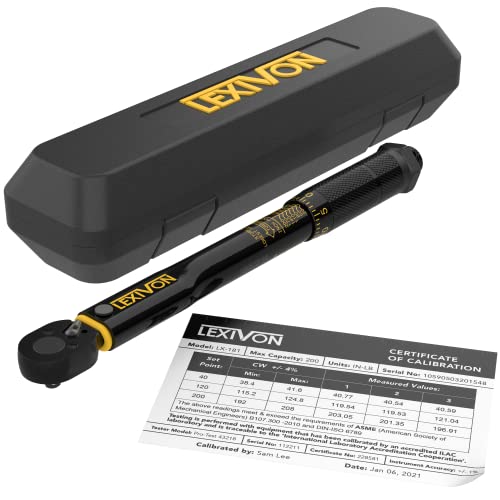
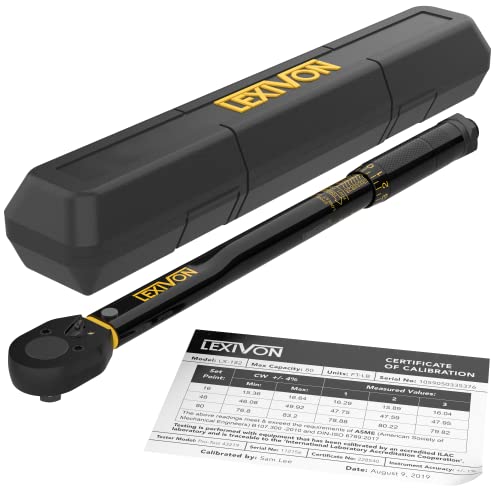 LEXIVON 3/8-Inch Drive Click Torque Wrench 10~80 Ft-Lb/13.6~108.53/8"DR. 10-80 FT-LB2.5 x 3 x 14 inches2.3 PoundsCheck on Amazon
 EPAuto 1/2-inch Drive Click Torque Wrench1/2 Inch Drive (10-150 ft.-lb.)17.4 x 3.3 x 2.6 inches3.5 poundsCheck on Amazon
 LEXIVON Torque Wrench 1/2-Inch Drive Click 10~150 Ft-Lb/13.6~203.51/2"DR. 10-150 FT-LB2.5 x 3 x 18 inches3 PoundsCheck on Amazon

How the Two Wrenches Measure Torque
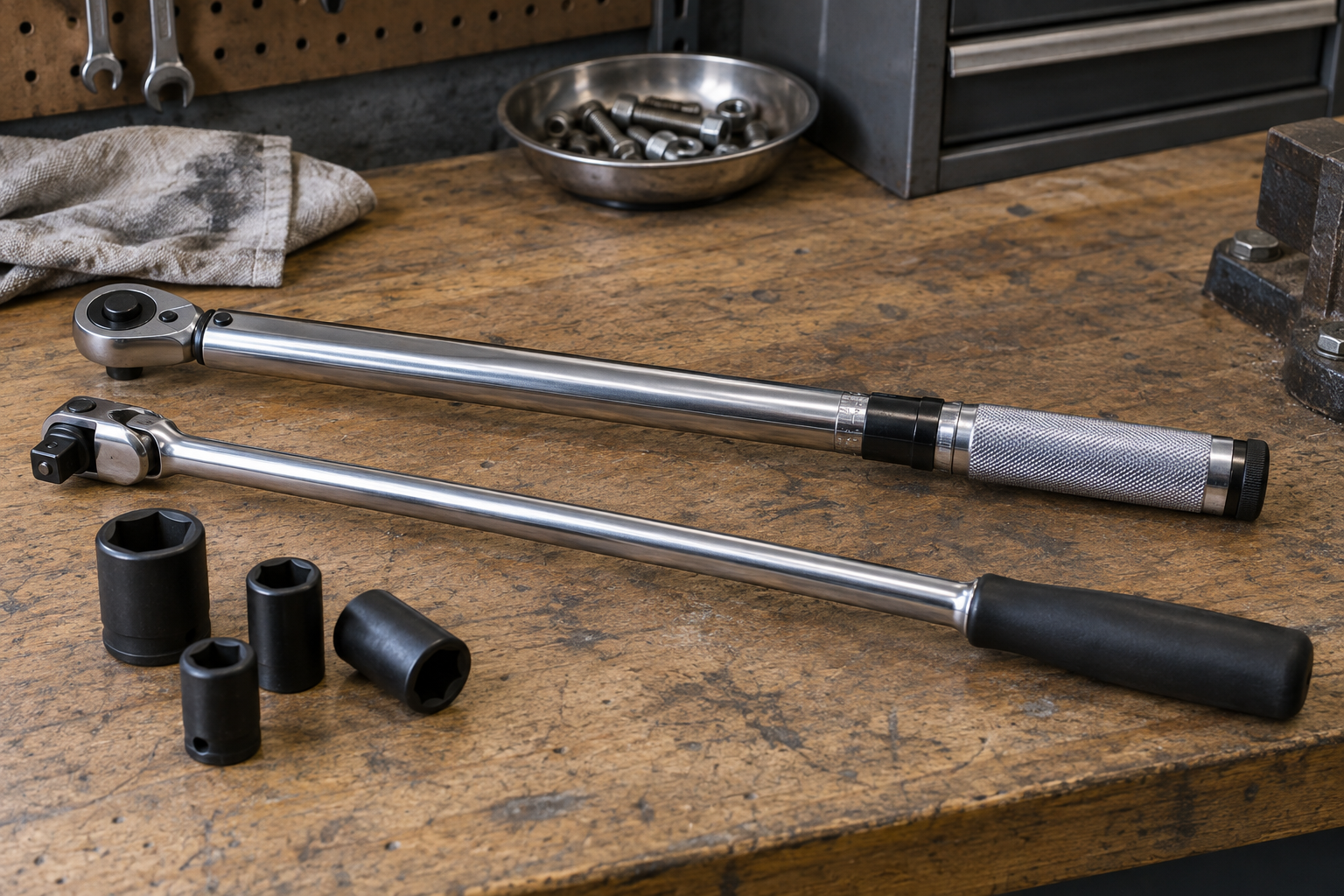
A beam torque wrench uses a flexible steel beam that bends as force is applied. A pointer attached to the handle moves across a fixed scale. You apply force smoothly and stop when the pointer reaches the desired torque value. There is no click, spring preload, or adjustable internal mechanism.
A click torque wrench uses a calibrated spring and a release mechanism. You set the desired value on the handle, then pull until the wrench clicks or briefly breaks over. That release is the signal to stop. If you keep pulling after the click, you can exceed the setting, sometimes by a substantial amount.
Both tools measure torque at the handle. Neither compensates for friction in the fastener threads, dirt, damaged threads, or lubrication differences. If a vehicle manufacturer specifies a dry torque but you use oil on the threads, the resulting clamp load may be much higher than intended even when the wrench is accurate.
Accuracy in Real Home Use
Many quality click wrenches are rated around plus or minus 4% of the indicated value, typically over a specified portion of their range. A wrench rated from 20 to 150 pound-feet may not be accurate at 10 pound-feet, and its stated accuracy may apply only from 20% to 100% of capacity. Check the manufacturer’s specification rather than assuming the entire scale is equally reliable.
A beam wrench does not usually have a spring that drifts out of calibration. Its accuracy depends on the beam, scale printing, pointer alignment, and your ability to read the pointer straight on. Parallax can easily introduce a few pound-feet of error, especially on a wide or poorly marked scale. If you keep your eye directly over the pointer and pull consistently, a good beam wrench can be very dependable.
For a home mechanic working on wheel lugs, suspension bolts, engine fasteners, and brake components, either type is normally accurate enough when used inside its working range. The bigger errors usually come from using the wrong range, pulling too quickly, gripping the wrong part of the handle, or continuing after the click.
| Feature | Beam torque wrench | Click torque wrench |
|---|---|---|
| Accuracy in practice | Very consistent if read correctly | Consistent when calibrated and used correctly |
| Low-torque work | Can be difficult if the scale is crowded | Good when the setting is within its specified range |
| Ease of use | Requires watching the pointer while pulling | Click provides a clear stop signal |
| Storage | No special setting required | Usually should be returned to its lowest marked setting |
| Durability | Simple and tolerant of long-term storage | Internal parts can wear or lose calibration |
| Best use | Budget work, open access, occasional use | Repeated jobs and cramped or obstructed fasteners |
Where Beam Wrenches Win
The main advantage of a beam wrench is that it does not need to be “reset” after use. You can hang it on a wall or place it in a toolbox without compressing a storage spring. That makes it a sensible choice for someone who uses a torque wrench only a few times per year.
Beam wrenches are also inexpensive and mechanically transparent. There is little to fail besides a bent beam, damaged pointer, or unreadable scale. They are useful for checking whether a click wrench is behaving plausibly: set the click wrench to a known value, compare it against the beam, and investigate any large difference rather than trusting either tool blindly.
The drawbacks are just as practical. You need a clear view of the scale during the pull, which is awkward under a dashboard or inside an engine bay. A long beam can also hit nearby parts before the fastener reaches the specified torque. A beam wrench is a poor fit for very low torque unless its scale is large and finely marked.
If you want this simple, low-maintenance option, compare beam torque wrenches with a scale that includes the units used in your repair manual.
Where Click Wrenches Win
A click wrench is quicker for normal automotive work. You set the value, position the socket, and concentrate on pulling smoothly. The click can be felt or heard without watching a pointer, which is valuable when the fastener is hidden from view. Reversible heads and a compact ratcheting mechanism also make them easier to use in tight spaces.
That convenience introduces failure modes. A click wrench left set at 100 pound-feet for months can lose calibration as the spring remains compressed. Dropping it can damage the release mechanism even if the housing looks fine. Using it as a breaker bar can overload the internal clutch. The most common user error is pulling past the first click, particularly when the click is quiet or the mechanic is working overhead.
Choose a click torque wrench for automotive work with a clearly marked scale, a useful range for your jobs, and a published accuracy specification. Do not buy one with a 25-to-250-pound-foot range if most of your work calls for 15 pound-feet. A smaller wrench will generally give better control at that value.
How to Get Accurate Results From Either Type
Use the correct socket and keep it fully seated. Pull from the center of the handle, not from the head or an extension. Apply force slowly and steadily; a one-second pull is a reasonable habit. Keep the wrench and fastener aligned as much as possible, and avoid jerking.
For a click wrench, set the value before loading the fastener and stop immediately at the first click. Return the adjustment to its lowest marked setting afterward, unless the manufacturer gives different storage instructions. Never use a torque wrench to loosen stuck fasteners.
For a beam wrench, place your eye directly over the pointer and watch the scale throughout the pull. If access prevents that, a click style is safer because you cannot reliably read a pointer you cannot see. For low-torque work such as small engine covers or bicycle components, consider a dedicated inch-pound torque wrench rather than forcing a large automotive wrench to do the job.
Which One Should You Buy?
Buy a beam wrench if your budget is tight, your jobs are occasional, and most fasteners are easy to see. It is often the better value for wheel lug nuts and general garage maintenance, provided you can read the scale accurately.
Buy a click wrench if you work in confined spaces, use torque values frequently, or need a faster workflow. Spend more for a reputable, calibrated tool if the fasteners affect brakes, suspension, engine internals, or aluminum threads. For many home mechanics, the most useful setup is a click wrench for routine work and a beam wrench as a simple backup or calibration check.