What's inside
- Quick picks by situation
- Best 4K drones compared
- DJI Mini 4 Pro: the best beginner-friendly 4K drone
- DJI Air 3S: the best balance of camera, endurance, and range
- DJI Mavic 3 Pro: the professional choice
- What the 4K label does not tell you
- Ownership costs and maintenance that listings omit
- Final buying advice
As an Amazon Associate I earn from qualifying purchases. This post may contain affiliate links at no extra cost to you.
The best 4K drones for most buyers are the DJI Mini 4 Pro for portability, the DJI Air 3S for dependable all-round shooting, and the DJI Mavic 3 Pro for professional image quality; the right choice depends less on the “4K” label than on sensor size, usable flight time, and how much range you actually need.
As an Amazon Associate we earn from qualifying purchases at no extra cost to you.


Our Top Picks


Quick picks by situation
| Situation | Best fit | Why it makes sense | Main compromise |
|---|---|---|---|
| First camera drone or frequent travel | DJI Mini 4 Pro | Under 249 g, excellent obstacle sensing, vertical video, and a compact folding design | Smaller main sensor and less wind resistance than larger drones |
| Landscaping, property, and outdoor projects | DJI Air 3S | Longer flight time, dual cameras, strong transmission, and a 1-inch main sensor | Heavier than the Mini line and usually requires more regulatory attention |
| Commercial-looking video and maximum editing flexibility | DJI Mavic 3 Pro | Large Four Thirds Hasselblad camera plus two telephoto cameras | High cost, larger carrying kit, and more demanding flight planning |
| Long-distance inspection where permitted | DJI Mavic 3 Enterprise | Enterprise accessories, precise positioning options, and a camera platform designed for mapping and inspection | More specialized than a normal recreational video drone |
Best 4K drones compared
| Drone | Main camera | Maximum advertised flight time | Transmission range* | Weight | Video highlights |
|---|---|---|---|---|---|
| DJI Mini 4 Pro | 1/1.3-inch CMOS, 48 MP | 34 minutes standard battery; up to 45 with Intelligent Flight Battery Plus | Up to 20 km FCC | Under 249 g with standard battery | 4K/60 HDR, 4K/100 slow motion, 10-bit D-Log M, true vertical shooting |
| DJI Air 3S | 1-inch wide camera plus 1/1.3-inch medium-tele camera | Up to 45 minutes | Up to 20 km FCC | Approximately 724 g | 4K/120 slow motion, 10-bit D-Log M, night obstacle sensing, dual-camera framing |
| DJI Mavic 3 Pro | Four Thirds Hasselblad wide camera, 1/1.3-inch 3x camera, 1/2-inch 7x camera | Up to 43 minutes | Up to 15 km FCC | Approximately 958 g | 5.1K/50, 4K/120, 10-bit D-Log, three focal lengths |
| Autel EVO Lite+ | 1-inch CMOS, 20 MP | Up to 40 minutes | Up to 12 km FCC | Approximately 835 g | Up to 5.4K/30 and 4K/60, adjustable-aperture main camera |
*Advertised maximum transmission figures are measured in favorable conditions. Local radio rules, interference, buildings, trees, weather, and the need to maintain visual line of sight can reduce practical range substantially.
DJI Mini 4 Pro: the best beginner-friendly 4K drone
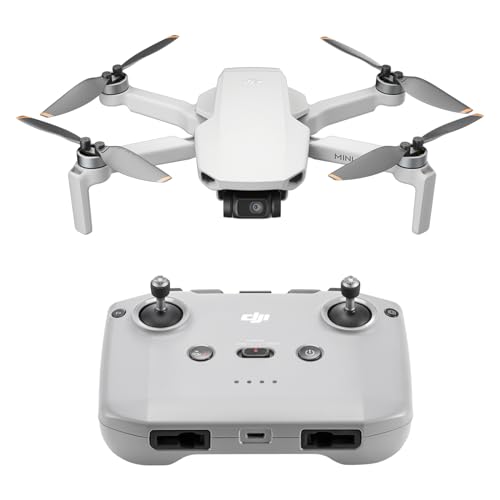
The Mini 4 Pro is the easiest recommendation for a first-time pilot who wants serious video without carrying a large aircraft. Its sub-249-gram standard configuration can simplify registration requirements in some jurisdictions, although the rules still depend on where and how you fly. It folds small enough for a daypack and has omnidirectional obstacle sensing, a major advantage for beginners flying around trees, rooflines, and workshop properties.
The 1/1.3-inch sensor produces sharp 4K footage in daylight and supports 10-bit D-Log M for color grading. Its vertical shooting mode is useful for social media, while the 4K/100 mode provides smooth slow motion. The limitation is physics: the smaller sensor gathers less light than the Air 3S or Mavic 3 Pro. At dusk, in deep shade, or when you want clean shadows lifted in editing, image noise appears sooner.
Choose the standard battery when low weight matters. The extended battery improves endurance but can change the aircraft’s weight category and may not be available in every market. In practical filming, allow a safety reserve rather than treating the advertised 34 minutes as usable recording time. A 25-minute flight plan is more realistic after takeoff, positioning, return, and landing margins.
DJI Air 3S: the best balance of camera, endurance, and range
The Air 3S is the strongest all-purpose choice for filming homes, gardens, construction progress, woodworking facilities, and outdoor events. Its 1-inch primary sensor gives it a meaningful advantage over compact drones in low light, while the second camera provides a tighter perspective without flying closer to the subject. That is helpful when you want to compress the appearance of a driveway, frame a building facade, or isolate a person from a busy background.
Its advertised 45-minute flight time is also valuable in real use. A single battery can cover several short takes, reducing interruptions while you change camera height or direction. The aircraft’s larger size brings better wind stability, but it also means greater transport weight, more attention to takeoff areas, and potentially more registration or competency requirements.
For most owners, the Air 3S offers more useful capability than the Mavic 3 Pro. The Mavic’s large sensor wins when image quality and lens flexibility are the priority; the Air 3S wins when endurance, cost, and a manageable learning curve matter more.
DJI Mavic 3 Pro: the professional choice
The Mavic 3 Pro is the pick for creators who will actually use its three-camera system. The Four Thirds Hasselblad camera produces better tonal detail and low-light performance than the smaller-sensor alternatives, while the 3x and 7x cameras allow wide establishing shots and compressed details from different distances. That flexibility can reduce the number of repositioning flights needed for a polished sequence.
It is not automatically the best purchase for a beginner. The aircraft, batteries, and controller occupy more space, replacement costs are higher, and its extra capability can encourage unnecessary complexity. If your final videos are viewed mainly on phones or social platforms, the difference from an Air 3S may be less visible than the price difference. It becomes easier to justify when you deliver paid work, grade footage heavily, need multiple focal lengths, or shoot in difficult light.
What the 4K label does not tell you
Sensor size
Resolution is only one part of image quality. A larger sensor generally gives cleaner shadows, better highlight handling, and more flexibility when the sun is low. A 1/1.3-inch camera can look excellent in daylight, but a 1-inch camera is a safer choice for evening property footage. The Four Thirds camera in the Mavic 3 Pro is a further step toward interchangeable-camera image quality, though it does not remove the need for careful exposure.
Flight time versus usable time
Manufacturers measure maximum endurance in controlled conditions. Wind, cold, rapid acceleration, obstacle avoidance, and repeated climbs all reduce it. A simple planning calculation illustrates the difference: if a drone advertises 45 minutes but you reserve 25 percent for return and landing, only about 34 minutes remain. If the route includes two takeoffs and several repositioning passes, your actual filming window may be closer to 25–30 minutes.
Range versus control
A long transmission specification does not mean you should fly that far. In many locations, the pilot must keep the drone within unaided visual line of sight. Buildings and trees can interrupt the signal long before the advertised maximum, and returning against a headwind consumes more battery than the outward journey. For most video work, obstacle awareness, stable hovering, and a reliable return-to-home function matter more than an extreme range number.
Ownership costs and maintenance that listings omit
Budget for spare propellers, at least one additional battery, a charging hub, a hard case, and a neutral-density filter set. ND filters act like sunglasses for the camera, helping you maintain a natural shutter speed in bright conditions. They do not improve image quality by themselves, and using one in low light can make footage noisier.
- Inspect propellers before every flight. Replace them after a visible nick, bend, or collision rather than sanding the damage away.
- Keep the camera gimbal free of dust and never force it while powered off.
- Let a battery cool before recharging after a flight, and store batteries near the manufacturer’s recommended charge level if unused for weeks.
- Check firmware, compass warnings, home-point confirmation, and return-to-home height before leaving the ground.
- Avoid launching from loose sawdust, sand, wet grass, or metal surfaces; debris can enter motors and interfere with sensors.
For occasional use, a rough ownership calculation can prevent overbuying. If a complete kit costs roughly $900 and you fly 20 times per year for three years, the hardware cost is about $15 per flight before insurance, repairs, and accessories. A professional who flies 100 times per year may value the Mavic 3 Pro’s image flexibility, while a casual owner may get better value from the Mini 4 Pro.
Final buying advice
Buy the DJI Mini 4 Pro if portability, simplicity, and beginner-friendly safety features are your priorities. Step up to the DJI Air 3S when you want longer real-world sessions, stronger low-light performance, and two useful viewpoints. Choose the DJI Mavic 3 Pro when you can exploit its larger sensor and three focal lengths for paid or highly edited work. Whichever model you select, treat advertised flight time and range as laboratory ceilings—not as a plan—and reserve battery capacity for a safe return.