What's inside
As an Amazon Associate I earn from qualifying purchases. This post may contain affiliate links at no extra cost to you.
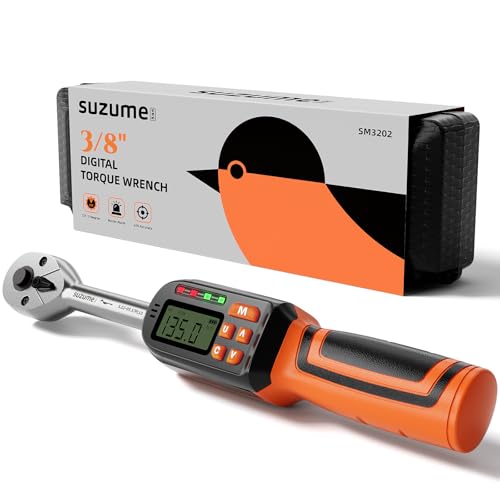
The best digital torque wrench for most automotive work is a 1/2-inch model covering roughly 30–250 ft-lb, with audible, visual, and vibration alerts, while a 3/8-inch wrench is the better choice for lower-torque fasteners and tighter engine-bay access.
As an Amazon Associate we earn from qualifying purchases at no extra cost to you.


Our Top Picks


Quick picks by job
- Best all-around automotive choice: A 1/2-inch electronic wrench with a 25–250 or 30–250 ft-lb range, such as the GearWrench 85077 class of wrench.
- Best for lighter mechanical work: ACDelco ARM60-type 3/8-inch digital wrenches, typically covering about 4–99 ft-lb.
- Best premium option: A Snap-on TechAngle digital torque wrench, particularly when documented calibration, angle measurement, and frequent professional use justify the cost.
- Best affordable digital torque wrench: A digital torque adapter used with an existing ratchet, provided its accuracy specification and calibration documentation are acceptable.
- Best for torque-plus-angle procedures: A digital wrench with a built-in angle sensor, such as TechAngle-style tools, rather than a basic torque-only model.
The right choice depends less on the largest advertised torque number than on whether your normal fasteners fall near the middle of the tool’s range, whether you can read the display in confined spaces, and whether calibration support is available after the warranty period.
Digital torque wrench comparison
| Tool type or example | Drive and typical range | Useful strengths | Limitations | Typical market position |
|---|---|---|---|---|
| ACDelco ARM60-type wrench | 3/8 inch; approximately 4–99 ft-lb | Low-range work, multiple units, buzzer and LED alerts | Too small for many wheel and suspension fasteners | Affordable to mid-range |
| GearWrench 85077-type wrench | 1/2 inch; approximately 30–250 ft-lb | Good automotive coverage, clear digital target setting, audible and visual alerts | Bulky in narrow engine bays; usually not intended for very small fasteners | Mid-range |
| CDI Computorq-style wrench | 1/2 inch; commonly about 30–340 ft-lb, depending on model | High-capacity fastening and professional calibration support | Higher purchase cost and less useful below its minimum range | Professional |
| Snap-on TechAngle | 3/8 or 1/2 inch; range varies by model | Torque-and-angle measurement, strong display and alert system, service support | Expensive; more features than occasional users need | Premium professional |
| Digital torque adapter | Usually 1/4, 3/8, or 1/2 inch; commonly 20–200 ft-lb | Compact, inexpensive, works with existing ratchets | Adds length, can affect access, and may have less refined alerts | Budget |
Ranges are representative rather than interchangeable specifications: exact capacity, accuracy, display, and calibration terms vary by model and production revision. Check the manufacturer’s current manual before buying.
What matters more than the headline accuracy
Accuracy across the working range
Manufacturers commonly quote digital torque accuracy as a percentage of the indicated reading, often around ±2% or ±3% in a defined portion of the range. A wrench rated at ±2% does not make every setting equally precise if the specification only applies from 20% to 100% of capacity. For a 30–250 ft-lb wrench, avoid treating 35 ft-lb as its ideal specialty setting. If most of your work is 15–40 ft-lb, choose a 3/8-inch model instead.
Digital readouts also reduce one common error: interpreting a mechanical scale at an angle. They do not eliminate errors caused by incorrect sockets, extensions, damaged threads, or pulling the wrench too quickly.
Torque range and drive size
A 1/2-inch digital torque wrench is usually the best answer to the search for the best 1/2 digital torque wrench for automotive work. It suits wheel lugs, brake components, suspension hardware, and many larger engine fasteners. A useful range is approximately 30–250 ft-lb; some heavy-duty models extend beyond 300 ft-lb.
A 3/8-inch digital torque wrench is better for spark plugs, intake components, valve covers, smaller brake hardware, and general machinery. A range near 5–100 ft-lb covers far more light mechanical work than a large wrench set near its minimum. For very small fasteners, a 1/4-inch wrench or a calibrated screwdriver may be more appropriate.
Units and target alerts
Look for selectable ft-lb, in-lb, Nm, and kgf-cm or kgf-m when you work from manuals using different measurement systems. Nm is particularly useful when consulting modern vehicle service information. The most practical alert system combines a rising display, an audible beep, a flashing light, and vibration. Vibration matters when wearing gloves or working under a vehicle where a buzzer is difficult to hear.
Peak-hold and track modes serve different purposes. Peak mode records the highest achieved torque; track mode shows the live value. For ordinary fastening, peak mode helps verify the final pull. A lockable target setting is valuable because accidentally switching from Nm to ft-lb can produce a serious error.
Display readability and access
A bright backlit display with large digits is more useful than a long list of measurement units. Check whether the screen remains readable while the handle is horizontal, whether the buttons can be operated with gloves, and whether the head blocks the display in confined spaces. A 45- to 60-degree angled head or a rotating display can improve visibility, but it may also increase bulk.
Torque-only versus torque-and-angle
The best digital torque wrench with angle measurement is one that clearly displays both the target angle and the accumulated angle while allowing the user to zero the tool in the actual tightening position. Torque-plus-angle procedures are common on some cylinder-head, connecting-rod, and high-strength fasteners. They are not interchangeable with simply adding an estimated angle after reaching torque.
Angle measurement is less important for routine wheel installation or furniture hardware. It adds cost, battery dependence, and another setting to manage. If your service information rarely specifies an angle stage, spend the budget on a better-calibrated torque-only wrench and a suitable range.
Decision matrix for different buyers
| Your situation | Best fit | Why |
|---|---|---|
| Occasional home mechanic, limited budget | Digital torque adapter | Lowest entry cost and uses an existing ratchet; choose one with a stated ±2–4% accuracy and certificate. |
| Regular automotive maintenance | 1/2-inch, 30–250 ft-lb wrench | Broad coverage for wheels, suspension, and larger engine fasteners. |
| Engine assembly or motorcycle work | 3/8-inch, 5–100 ft-lb wrench | Better low-range resolution and easier access than a large 1/2-inch tool. |
| Professional, frequent use | Premium wrench with calibration service | Service turnaround, replacement parts, angle functions, and documented records matter more than initial price. |
| Confined workspace | Compact head or adapter with a separate ratchet | Reduces handle length and lets you select a ratchet suited to the access problem. |
Calibration, batteries, and ownership costs
Calibration support is a buying criterion, not paperwork to consider later. Confirm the manufacturer provides a calibration certificate, specifies the test standard, and offers recalibration or points you to an authorized laboratory. Many manufacturers recommend calibration every 12 months or after a defined number of uses; follow the manual, especially after dropping the tool or exceeding its capacity.
Digital wrenches commonly use AA, AAA, or button-cell batteries. Remove batteries during long-term storage if the manual permits it, and replace them before important work rather than relying on a dim display or intermittent alert. Keep the tool dry, wipe oil from the handle and buttons, and do not use it as a breaker bar. The ratchet mechanism, selector buttons, display membrane, and battery contacts are usually the first parts to suffer from abuse or contamination.
A simple ownership calculation explains why a calibration-capable tool can be worthwhile. Suppose a $120 wrench is used for 20 jobs each year over five years: that is 100 uses, or $1.20 per use before calibration. A $450 professional wrench used 150 times per year for five years costs $0.60 per use before service. For an occasional owner, the cheaper tool may be the better value; for daily work, downtime and calibration records can outweigh the purchase price.
Correct setup and use
- Confirm the specification. Find the fastener’s torque and angle requirements in the service manual, including whether threads should be dry, lubricated, or replaced.
- Select the unit. Set Nm, ft-lb, or in-lb before entering the target. Pause to verify the unit on the display.
- Set the target below the tool’s maximum. Aim to work in the middle portion of the range whenever possible.
- Use the correct socket. Seat it fully and keep the wrench square to the fastener. Avoid improvised adapters unless their effect on access and leverage is understood.
- Tighten smoothly. Stop at the first sustained alert or target indication. Do not repeatedly click past the target.
- Complete angle stages separately. Zero the angle function in the instructed position and maintain the required direction.
- Return the tool to its storage setting. Unlike many beam-style tools, electronic models should be stored as directed by the manufacturer rather than left at an arbitrary high target.
For most people comparing the best digital torque wrench options, the decision is simple: choose a 3/8-inch model for low-range precision, a 1/2-inch model for general automotive fastening, and a premium torque-and-angle tool only when its calibration support and extra functions will be used regularly.