What's inside
- What Actually Determines Fit in Confined Areas
- Spec Comparison: Head Thickness, Reach and Weight
- Picks by Situation: Which Cordless Ratchet Wrench to Choose
- Decision Matrix: Match Your Constraints to the Right Type
- 3/8-Inch vs 1/4-Inch vs 1/2-Inch for Tight Spaces
- Battery Weight, Runtime and Balance
- Durability and Ownership Realities
- What to Buy If You Want One Tool
- FAQ
- Related Guides
As an Amazon Associate I earn from qualifying purchases. This post may contain affiliate links at no extra cost to you.
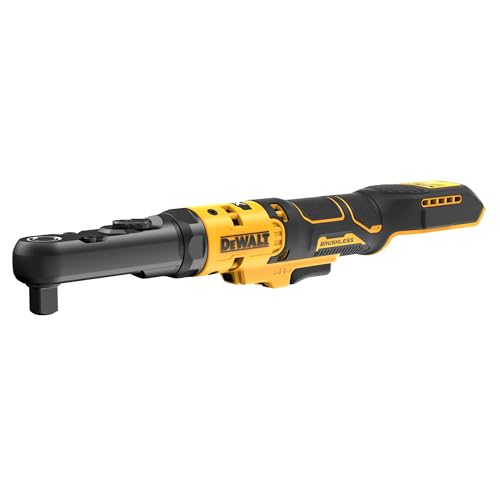
The best cordless ratchet wrench for tight spaces is a 3/8-inch extended-reach model with a head thickness under 0.75 inches and an overall length around 11 to 12 inches, with models like the Milwaukee M12 FUEL Extended Reach 2560 and Snap-on CTR761 leading this category because they combine low profile heads, longer reach, and balanced battery weight.
A cordless ratchet wrench is not a replacement for an impact wrench. It is a powered ratchet that trades brute torque for speed and access, letting you spin fasteners quickly where you cannot swing a hand ratchet. If your work is engine bays, behind HVAC units, inside cabinets, or between studs, head profile and reach will determine whether the tool fits at all, long before torque matters.
As an Amazon Associate we earn from qualifying purchases at no extra cost to you.



Our Top Picks
 Milwaukee 2457-20 M12 Cordless 3/8" Sub-Compact 35 ft-Lbs3/8"9.47 x 2.94 x 1.76 inches1 PoundsCheck on Amazon


What Actually Determines Fit in Confined Areas
Shoppers often compare cordless ratchet wrenches by torque alone, but in tight spaces five measurements matter more:
- Head thickness: Measured from the back of the anvil to the top of the head. Anything over 0.85 inches will not clear many engine brackets, firewall bolts, or appliance housings. The best tight-access heads are 0.65 to 0.75 inches.
- Head width/diameter: A narrower head can slip between hoses, wires, and framing. Ratchets with a yoke-style head are typically slimmer than those built on an impact-style body.
- Overall length and neck length: Standard ratchets are about 10 to 11 inches long. Extended-reach versions are 12 to 15 inches and let you reach recessed bolts without your hand and battery blocking the access hole.
- Drive size: 1/4-inch drives have the smallest heads and sockets, 3/8-inch is the versatile middle ground, and 1/2-inch heads are too bulky for most tight spaces despite higher torque. For tight-space work, the best cordless ratchet wrench 3/8 configuration wins for most buyers because sockets are still compact but strong enough for automotive and mechanical fasteners.
- Battery weight and position: A 12V battery (typically 0.4 to 0.6 lbs) keeps the tool balanced and light nose-down. An 18V/20V battery adds 0.8 to 1.3 lbs at the handle base, which increases fatigue when working overhead and can make the tool too tall to fit under a fender or shelf.
Spec Comparison: Head Thickness, Reach and Weight
Listed specs do not tell the whole story, but head dimensions and battery system are the best objective way to predict tight-space performance. The table below compares common 2026 models sold as cordless ratchet wrenches, using manufacturer-published specs.
| Model | Drive | Voltage Platform | Head Thickness | Overall Length | Max Torque | Tool Weight (bare) |
|---|---|---|---|---|---|---|
| Milwaukee M12 FUEL 2557 (Standard) | 3/8″ | 12V | 0.75 in | 10.8 in | 55 ft-lbs | 1.9 lbs |
| Milwaukee M12 FUEL 2560 (Extended Reach) | 3/8″ | 12V | 0.75 in | 12.0 in | 55 ft-lbs | 2.1 lbs |
| Milwaukee M12 FUEL 2562 (Extended Reach, High Speed) | 3/8″ | 12V | 0.75 in | 12.0 in | 35 ft-lbs | 2.1 lbs |
| Snap-on CTR761 | 3/8″ | 14.4V | 0.68 in | 10.9 in | 65 ft-lbs | 2.3 lbs |
| DeWalt DCF512 (20V Atomic) | 3/8″ | 20V | 0.82 in | 11.2 in | 70 ft-lbs | 3.0 lbs |
| Makita XRW01 (18V LXT) | 3/8″ / 1/4″ interchangeable | 18V | 0.84 in | 12.75 in | 35 ft-lbs | 3.4 lbs |
| Ryobi PSR01 (18V ONE+) | 3/8″ | 18V | 0.85 in | 11.0 in | 60 ft-lbs | 2.8 lbs |
| ACDelco ARW1209-P | 3/8″ | 12V | 0.71 in | 11.0 in | 45 ft-lbs | 2.2 lbs |
Takeaway: 12V and 14.4V ratchets consistently offer thinner heads and lower bare weight. 18V/20V models deliver similar or higher torque but carry a thicker head and a heavier, taller battery foot that can limit clearance under low hoods or inside machinery.
How to Calculate If It Will Fit
Before buying, add head thickness + socket height. A standard 3/8-inch 13mm shallow socket adds about 0.85 inches. A low-profile chrome socket can save 0.15 inches.
Example: Milwaukee M12 FUEL head (0.75 in) + shallow socket (0.85 in) = 1.60 inches total clearance needed. If the gap between your bolt head and the firewall is 1.45 inches, that combo will not fit even though the ratchet alone would. In that case you need a lower-profile head like the Snap-on CTR761 (0.68 in = 1.53 in total) or switch to a wobble extension and a 1/4-inch drive with a smaller socket OD.
Picks by Situation: Which Cordless Ratchet Wrench to Choose
There is no single best cordless ratchet wrench for everyone. Use your workspace and workflow to decide:
Best for Automotive Engine Bays and Recessed Bolts: Extended-Reach 3/8-Inch 12V
Choose the Milwaukee M12 FUEL 2560 / 2562 or ACDelco ARW1209-P type. The 12-inch neck reaches intake manifold bolts, water pump fasteners, and firewall studs without needing to add extensions that increase head stack height. For tight spaces, this 3/8-inch extended format is the most recommended form factor. If you already own M12 batteries, this is usually the most cost-effective path, with kits generally in the $179 to $299 market range for tool plus 2.0Ah battery and charger.
Best for Ultra-Tight Clearance: Low-Profile 14.4V 3/8-Inch
Choose Snap-on CTR761 or similar slim-head 14.4V. At 0.68 inches, it clears timing covers and tight suspension brackets where 0.80-inch+ heads bind. Trade-off is a higher entry price and a closed battery ecosystem. Best for professional technicians who work daily in confined bays and need the slimmest possible yoke.
Best for Occasional Home and Shop Use on a Budget: 18V 3/8-Inch
Choose Ryobi PSR01 or DeWalt DCF512 if you are already invested in that 18V/20V platform for drills and drivers. You will get usable torque (60-70 ft-lbs) for lawn equipment, furniture assembly, and light automotive, but expect more bulk and weight. Avoid if you primarily work overhead or deep inside appliances – the taller battery foot causes hand fatigue and access issues.
Best for Small Fasteners and Electronics/Appliances: 1/4-Inch Drive 12V
If your tight-space work is mostly 8mm and smaller – appliance panels, small engines, HVAC controls – a 1/4-inch drive ratchet like the Milwaukee M12 FUEL 2556 has the smallest head and socket outer diameter. It will not handle lug nuts or large suspension bolts, but it is the only option that reliably fits inside compact housings.
Decision Matrix: Match Your Constraints to the Right Type
| Your Situation | Recommended Drive & Platform | Why |
|---|---|---|
| Limited vertical clearance (<1.6 in) between bolt and obstruction | 1/4″ or slim-head 3/8″ 12V/14.4V | Thinnest head stack; small socket OD saves 0.2-0.3 in |
| Recessed bolts 8-14 in deep (engine bay, behind equipment) | Extended-reach 3/8″ 12V, 12 in neck | Reach without extensions; keeps head profile low |
| Already own 18V/20V drill platform, use ratchet <2 hours/week | 3/8″ 18V/20V from same brand | Shares batteries/charger; avoids buying new platform |
| Daily professional use, 4+ hours/day | 12V FUEL / 14.4V pro-grade with brushless motor | Lighter weight reduces fatigue; brushless lasts longer |
| Need to break loose rusted fasteners first | Break loose by hand, then run with ratchet | Cordless ratchets are not breakers; 35-70 ft-lbs will stall on seized bolts and damage the anvil |
3/8-Inch vs 1/4-Inch vs 1/2-Inch for Tight Spaces
The question behind best cordless ratchet wrench 3/8 searches is whether you are giving up access for strength. In practice:
- 1/4-inch: Smallest head (often 0.60-0.70 in thick) and lightest. Best clearance. Limited to ~25-35 ft-lbs. Ideal for interior trim, small engines, and appliances.
- 3/8-inch: Balanced choice. Head 0.68-0.85 in thick, torque 35-70 ft-lbs. Covers 10mm to 19mm fasteners that make up most confined-space work. Socket selection is widest.
- 1/2-inch: Head typically 0.90 in+ thick and noticeably wider. Torque up to 70-80 ft-lbs but rarely usable in tight spaces because the anvil and sockets are too large to insert. Better served by a compact impact wrench if you need 1/2-inch drive.
If you can only own one cordless ratchet wrench for tight spaces, a 3/8-inch covers the most situations. Add a 1/4-inch only if you consistently work on fasteners under 10mm in boxed-in housings.
Battery Weight, Runtime and Balance
Weight is not just comfort – it changes control in tight quarters. A front-heavy ratchet will tip the anvil off the fastener when you let go.
- 12V 2.0Ah: 0.40-0.45 lbs, 30-45 minutes of intermittent run time, best balance. 2.0Ah is usually enough for ratchet work; 4.0Ah or 6.0Ah nearly doubles weight for minimal benefit because ratchets draw less current than impacts.
- 12V 4.0Ah / 14.4V: 0.60-0.75 lbs, slightly tail-heavy but still manageable overhead.
- 18V/20V 2.0-5.0Ah: 0.85-1.30 lbs, creates a pendulum effect on extended-reach models. You will feel it in the wrist after 10 minutes of overhead work.
For tight spaces, a slim 2.0Ah battery is usually the better choice even if runtime is shorter. It reduces overall height by 10-15mm and lets you rotate the tool in confined holes without the battery catching on edges.
Durability and Ownership Realities
Cordless ratchet wrenches fail differently than drills. Knowing what wears first helps you avoid common mistakes:
- Yoke and anvil wear first. Using the ratchet to break loose tight bolts hammers the pawl and anvil. Always crack the bolt with a hand ratchet or breaker bar, then use the cordless ratchet to run it. This single habit doubles mechanism life.
- Do not use as a hammer or pry bar. The yoke is thin by design for clearance and will bend if side-loaded. If the ratchet stalls, stop – do not lean on it.
- Keep the head clean. Metal dust from grinding and brake work infiltrates the head. Blow out the head with low-pressure air and add one drop of air-tool-grade oil to the drive pawl every few months if the manufacturer allows. Never soak the head in solvent.
- Sockets matter. Use six-point chrome sockets for ratchet work, not impact-rated thick-wall sockets. Impact sockets add 0.10-0.20 inches of wall thickness and diameter, canceling out a slim head advantage. Keep a set of low-profile/shallow sockets for clearance-critical jobs.
- Battery care. Ratchets sit idle longer than drills. Store lithium batteries at 40-60% charge, not fully dead or fully topped. Avoid leaving them in a hot vehicle – heat above 120F degrades 12V packs quickly.
- Common mistake: variable speed trigger. Feather the trigger instead of full-on starts. Full-speed starts under load strip small fasteners and round off 10mm heads, especially in soft aluminum housings.
Motor type also affects ownership. Brushless models (Milwaukee FUEL, DeWalt Atomic, Snap-on brushless) run cooler, are shorter, and typically carry longer warranties than brushed budget models, but cost more upfront. Brushed models are still serviceable for occasional use if you respect their lower duty cycle.
What to Buy If You Want One Tool
If you are buying your first cordless ratchet wrench specifically for tight spaces in 2026, prioritize in this order: 1) head thickness under 0.75 inches, 2) extended reach of 12 inches if you work on cars or machinery, 3) 12V platform for weight, 4) brushless motor, 5) torque. A 55 ft-lbs brushless extended-reach 3/8-inch on a slim 2.0Ah battery will fit more places and be used more often than a 70 ft-lbs 20V tool that cannot enter the workspace.
FAQ
Can a cordless ratchet wrench remove lug nuts?
No. Even 70 ft-lbs ratchets will stall on lug nuts torqued to 80-120 ft-lbs and will damage the ratchet mechanism if forced. Use a breaker bar or impact wrench to break loose, then the ratchet can spin them off if clearance allows.
Is 35 ft-lbs enough?
For running fasteners in confined areas, yes. Most small to medium fasteners in tight spaces are torqued to 8-35 ft-lbs. The cordless ratchet’s job is speed, not final torque. Always finish with a torque wrench where spec matters.
Should I choose an extended-reach or standard length?
If you work beyond 8 inches deep or need to keep your hand outside the compartment for visibility, extended-reach is worth the extra inch and slight weight. If you work mostly inside open cabinets, appliances, or under sinks, standard length offers better maneuverability and fits in a smaller bag.