What's inside
- Quick comparison of the best non-contact voltage testers
- Best overall: Klein Tools NCVT-3
- Best alternative: Milwaukee 2203-20
- Best for professionals: Fluke 2AC
- Best safety rating: IDEAL 61-627
- Best 2-in-1 for outlets: Sperry VD7504GFI
- How to use a non-contact tester safely
- How to choose with numbers
- Limitations and ownership realities
- Which tester should you buy?
- Frequently Asked Questions
As an Amazon Associate I earn from qualifying purchases. This post may contain affiliate links at no extra cost to you.
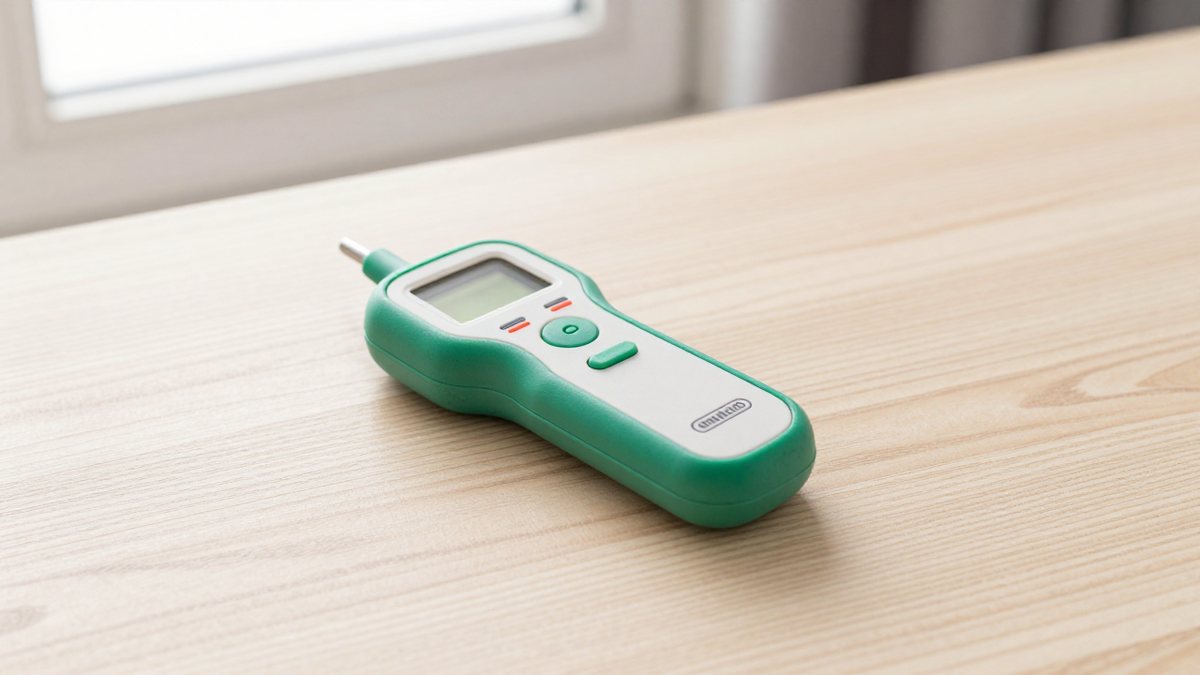
The best non contact voltage tester for most users is the Klein Tools NCVT-3 (or its NCVT-3P variant), a dual-range detector with a flashlight, a rugged body and a drop rating of about 6.5 ft. The Milwaukee 2203-20 is the closest alternative, and the Fluke 2AC is the choice for electricians who want a single-range pen with a continuous self-check. A non-contact tester only indicates the presence of AC voltage; it never proves a circuit is dead.
A non-contact voltage tester (NCVT) senses the electric field around an energized conductor. You hold the tip near an outlet, cable or terminal, and it beeps or lights. It is the first, fastest safety check before touching a wire.
As an Amazon Associate we earn from qualifying purchases at no extra cost to you.


Quick comparison of the best non-contact voltage testers
| Pick | Best for | Key specs (per maker and reviews) | Price tier |
|---|---|---|---|
| Klein Tools NCVT-3 / NCVT-3P | Best overall | Dual range for standard and low voltage, flashlight, about 6.5 ft drop rating | Budget to mid-range |
| Milwaukee 2203-20 | Best alternative | Dual range, flashlight, LED and audible alerts | Mid-range |
| Fluke 2AC VoltAlert | Best for professionals | Detects roughly 90 to 1,000V AC, Voltbeat self-test, silent mode, glowing tip | Mid-range |
| Fluke 1AC II VoltAlert | Best for simple reliability | Detects roughly 200 to 1,000V AC, pocket size | Mid-range |
| IDEAL 61-627 | Best for safety rating | 50 to 600V range, LED indicators, CAT IV 600V rating | Mid-range |
| Sperry VD7504GFI | Best 2-in-1 for outlets | Non-contact detector plus GFCI outlet tester | Budget |
Voltage ranges and ratings come from the manufacturers’ published information and may vary by model year. Check the spec sheet before relying on a specific range.
Best overall: Klein Tools NCVT-3
The NCVT-3 shows up in most professional recommendations. It has a standard-voltage mode and a low-voltage mode for sensing weaker fields (for example around a cable that is close to a neutral), a flashlight and clear audible and visual alerts. The body is tough yet small enough for a shirt pocket.
Trade-off: some users report inconsistent sensitivity or battery life over time, which is why you should test it on a known live source before each job.
Best alternative: Milwaukee 2203-20
If you already carry Milwaukee tools, the 2203-20 is a good partner. It has dual-range detection and a flashlight, though some reviewers find the light dimmer than Klein’s.
Trade-off: the light cannot be used independently of the tester, and it costs slightly more.
Best for professionals: Fluke 2AC
The 2AC is popular with electricians who want fewer false alerts. Its Voltbeat feature periodically confirms that the tester is working, it detects roughly 90 to 1,000V AC, and the tip glows red when voltage is present. It has a silent mode for quiet workplaces.
Trade-off: a single range means it may miss low-voltage fields, and it has no flashlight.
Best safety rating: IDEAL 61-627
The IDEAL tester is rated CAT IV 600V and detects from 50 to 600V. Auto power-off helps save battery.
Trade-off: it has a lower maximum range than Klein and Fluke.
Best 2-in-1 for outlets: Sperry VD7504GFI
This model combines a non-contact detector with a GFCI outlet analyzer. It suits home inspectors and landlords who check receptacles regularly.
Trade-off: it is a less rugged option and lacks the pro-grade flashlight and drop rating.
How to use a non-contact tester safely
- Prove the tester on a known live source. Touch an outlet you know is energized. If it does not alert, replace the batteries or the tool.
- Test the circuit. Hold the tip against the conductor or cable and wait for the alert.
- Repeat from different angles. Shielded or twisted cables can hide fields.
- Confirm with a multimeter. A non-contact tester cannot prove a circuit is de-energized; only a contact measurement can.
- Re-test the known source. Doing this after the job confirms the tester still worked.
How to choose with numbers
Voltage range
Standard testers detect from about 50V to 1,000V AC. Low-voltage mode can sense down to about 12V, useful for doorbell wiring and low-voltage lighting. Fluke’s 90V and 200V thresholds help avoid false triggers from induced voltage but may miss low-voltage lines.
Safety category
Look for a CAT III 1000V or CAT IV 600V marking. It describes how much transient energy the tool can safely withstand.
Drop rating
A 6.5 ft drop rating is typical for pro-grade tools. It is a helpful sign of build quality, not an assurance that the sensor remains accurate after a drop.
Features
A flashlight, a visual indicator and an audible beep are standard. Silent modes help in quiet environments.
Limitations and ownership realities
- A tester can give false negatives on shielded cable, metal conduit and through thick insulation.
- It can give false positives from static fields or induced voltage from nearby live wires.
- It does not detect DC voltage.
- Batteries die silently. Check the tester before each use and replace batteries once a year.
- Keep the tip clean; dirt or moisture reduces sensitivity.
Which tester should you buy?
Choose the Klein NCVT-3 for the best all-round value. Pick the Fluke 2AC if you prefer a single-purpose pro tool with a built-in self-check. Buy the Sperry if you also inspect outlets. Whichever you pick, use it with a proper multimeter for any real verification.
Frequently Asked Questions
Can a non-contact voltage tester prove a wire is dead?
No. It can only show that voltage is present. Use a contact tester or multimeter to confirm that a circuit is de-energized.
Why does my tester beep on a dead wire?
Static, induced voltage from nearby wires or a faulty tester can cause false alerts. Re-test on a known live source and use a multimeter to confirm.
Can I use one on low-voltage wiring?
Only with a model that has a low-voltage mode, such as the Klein NCVT-3. Standard single-range testers may not detect 12V or 24V AC.
Do these testers work through walls?
Sensing through a wall is unreliable. They are for detecting at the surface or within a short distance.
How often should I replace the batteries?
About once a year, or whenever the self-test fails. Always check the tester on a known source first.