What's inside
As an Amazon Associate I earn from qualifying purchases. This post may contain affiliate links at no extra cost to you.
Our Top Picks
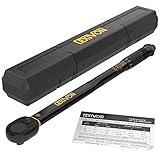
 LEXIVON Torque Wrench 1/2-Inch Drive Click 10~150 Ft-Lb/13.6~203.51/2"DR. 10-150 FT-LB2.5 x 3 x 18 inches3 PoundsCheck on Amazon


Best Click Torque Wrench: Quick Picks by Job
The best click torque wrench is the one that keeps your usual fastener settings well inside its rated range, makes those settings easy to read, and gives a distinct click without encouraging you to keep pulling. For general automotive work, the 3/8-inch Tekton 10–80 ft-lb wrench is a practical choice; for higher-torque jobs, the 1/2-inch CDI 40–250 ft-lb wrench offers broader capacity; and for occasional light work, a 1/4-inch wrench rated around 20–200 in-lb is easier to manage than an oversized tool.
Those are different tools for different jobs, not three interchangeable options. Before choosing, check the torque specifications you actually use, the wrench’s stated accuracy range, and whether its scale is legible in your working conditions. Torque values and included documentation can vary by model and market, so confirm the current manufacturer specifications for the exact part number.
As an Amazon Associate we earn from qualifying purchases at no extra cost to you.


Comparison: Range, Readability, and Ownership
| Example wrench | Drive and range | Best suited to | What to check before buying |
|---|---|---|---|
| Tekton 3/8-inch click wrench, model TRQ21101 | 3/8 in; 10–80 ft-lb (13.6–108.5 Nm) | Common automotive fasteners that fall in the middle of its range | Confirm your target torque is not near the bottom of the scale; check current certificate and accuracy documentation |
| CDI 1/2-inch click wrench, model 2503MFRPH | 1/2 in; 40–250 ft-lb (54–339 Nm) | Higher-torque wheel, chassis, and equipment fasteners within the tool’s capacity | Its lower limit is too high for many smaller fasteners; verify the exact model’s scale units and included calibration paperwork |
| Typical 1/4-inch click wrench | 1/4 in; about 20–200 in-lb (2.3–22.6 Nm) | Small fasteners and controlled low-torque assembly | Range, accuracy statement, and certificate vary substantially by manufacturer and model |
The ranges above illustrate useful categories, not a claim that every wrench in a category has the same accuracy or documentation. A stated range does not by itself establish accuracy across that range. Read the manufacturer’s accuracy specification and its stated conditions, including whether it applies clockwise, counterclockwise, or both.
How to Choose for Your Work
- Occasional small fasteners: Choose a 1/4-inch wrench whose working values sit comfortably within the rated range. It is usually easier to control than a larger wrench, and a fine in-lb scale helps avoid setting errors.
- General repair or woodworking machinery: A 3/8-inch wrench can cover many medium-torque tasks. For woodworking equipment, use torque values from the equipment or fastener manufacturer; do not assume that tighter is safer for wood, inserts, or threaded components.
- High-torque fasteners: Choose a 1/2-inch model rated for the specified value, with suitable sockets and clearance. Do not use an extension or adapter as a reason to exceed the wrench’s rating.
- Frequent professional use: Favor clear calibration intervals, accessible service, documented accuracy, and a durable case over extra range you rarely need. A certificate is useful only if it identifies the tool and provides meaningful calibration results or traceability.
- One-wrench budget: Buy for the most common torque band, not the widest advertised range. If your jobs span both tiny and very high values, two appropriately sized wrenches generally provide better coverage than one oversized tool.
What the Click and Scale Tell You
A click wrench signals that the preset threshold has been reached; it does not measure torque continuously or guarantee that the fastener is correctly tightened. The click should be distinct enough to notice, but click feel varies by design and can be muted by gloves, noise, awkward reach, or a fast pull. When possible, learn the tool’s signal in a clear, unobstructed setting before relying on it in a cramped assembly.
Scale readability matters as much as range. Look for markings that match your preferred units, a locking adjustment that stays put, and a handle or window that lets you see the setting without parallax. Some models use a micrometer-style handle: align the main scale first, then add the handle increment. If the markings are crowded or the unit conversion is easy to misread, write down the required setting in the wrench’s units before starting.
Adjustment locks also differ. A positive lock or secure collar helps prevent accidental changes while the wrench is moved or used. After setting the value, confirm the lock is engaged and recheck the scale. A lock prevents movement; it does not protect against setting the wrong value.
Range Overlap and Accuracy: A Practical Example
Suppose a job calls for 18 ft-lb. That is 216 in-lb. A 1/4-inch wrench rated 20–200 in-lb cannot reach the target, while a 3/8-inch wrench rated 10–80 ft-lb can. If a job instead calls for 30 in-lb, the 3/8-inch example is a poor fit because the target is below its minimum. This is why overlap between two wrenches is useful: it gives you a choice of tool around the boundary rather than forcing one wrench to operate at an unsuitable end of its scale.
Do not assume that a wrench is equally dependable at its minimum, midpoint, and maximum. Manufacturers commonly express accuracy as a percentage under defined test conditions; the actual allowed deviation depends on the particular specification. If a tool is specified at ±4%, a nominal 50 ft-lb setting could correspond to a 2 ft-lb deviation under those conditions. For a critical application, consult the manufacturer’s accuracy limits and use a recently calibrated wrench with the appropriate range. Avoid setting a click wrench below its rated minimum or above its maximum.
Setup and Care That Preserve Accuracy
- Check the specification. Find the fastener’s required torque and confirm units, tightening sequence, lubrication condition, and any special procedure. Torque values can change with lubrication or hardware condition.
- Inspect the tool. Check the ratchet head, selector, scale, adjustment lock, and handle for damage or contamination. Do not use a wrench that has been dropped or shows signs of malfunction until it has been checked.
- Set and lock the value. Adjust the scale slowly, verify the units and reading, then secure the lock. A second look prevents common errors such as confusing ft-lb with in-lb.
- Pull smoothly. Apply force at the intended grip area, steadily and at a right angle to the handle. Stop at the first click; repeated clicks or extra force can overtighten the fastener.
- Reset for storage. After use, return an adjustable click wrench to its lowest marked setting—not below the scale—unless the manufacturer specifies otherwise. Store it clean, dry, and in its case.
Common wear points include the ratchet mechanism, adjustment threads, locking parts, and internal spring or measuring mechanism. Keep the tool away from grit, moisture, impacts, and use as a breaker bar. If the click becomes inconsistent, the setting drifts, or the wrench has suffered a significant drop, arrange inspection or recalibration rather than relying on feel alone.
Which One Is the Best Click Torque Wrench for You?
For everyday medium-range work, start with a 3/8-inch click wrench whose capacity comfortably covers your most frequent settings. Choose a 1/4-inch model for low-torque fasteners and a 1/2-inch model for higher-torque jobs; add overlap if you regularly work near the edge of either tool’s range. Across all three, prioritize readable units, a secure adjustment lock, a clear click, manufacturer-stated accuracy, and calibration documentation appropriate to how critical and frequent the work is.