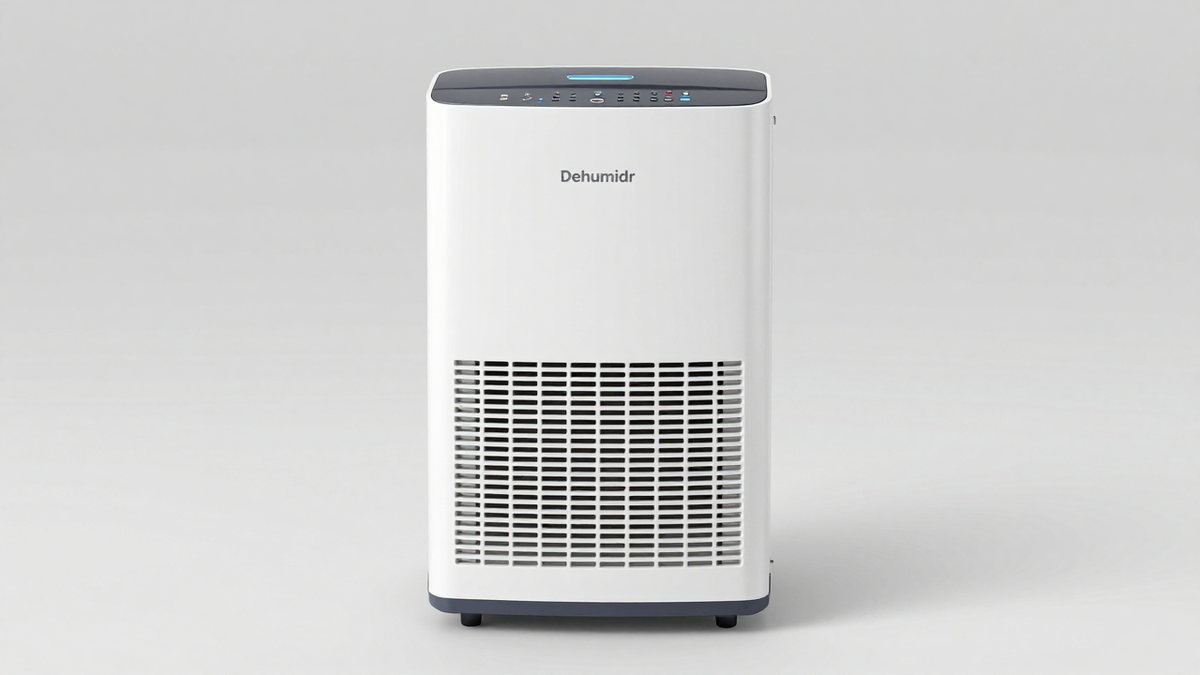
Our Top Picks
 KNKA 2500 Ft² Max 34 Pints Dehumidifier forMAX 34 Pints13.23 x 10.31 x 20.87 Inches17.6 PoundsCheck on Amazon
What's inside
As an Amazon Associate I earn from qualifying purchases. This post may contain affiliate links at no extra cost to you.
The best dehumidifier for a shipping container depends on one question before any product: do you have safe mains power at the container? If you do not, container-specific desiccant strips such as the Mytee set are the sensible pick. If you do, a compressor-style 34-pint unit with a drain hose, like the KNKA or VEAGASO models below, removes water continuously instead of filling up. Our overall pick for an unpowered box is the Mytee 4-pack, because its title is the only one written for containers. This guide walks through why steel boxes drip, how to decide between passive and powered options, and then compares eight products.
Nobody on the team used or measured these units. The comparison rests on product titles, published specifications, manufacturer documentation and buyer reviews, so anything we say about capacity, power draw or lifespan is a labeled estimate and a prompt to read the listing.
Why a steel box rains on your tools

Camco Moisture Absorber Bucket - Features Fast-Acting Moisture-Absorbing Agent - No-Fragrance Beads – Use with RV Storage, Camper Organization & More (44282)


As an Amazon Associate we earn from qualifying purchases. Product prices and availability are accurate as of the date/time indicated.

VEAGASO 34-36 Pint/D, 2500 Sq.Ft Dehumidifier for Basement with Drain Hose | Dehumidifiers for Home, Bathroom, Bedroom - 3 Modes, 24H Time, 40dB, 0.53 Gallon Water Tank, Intelligent Humidity Control




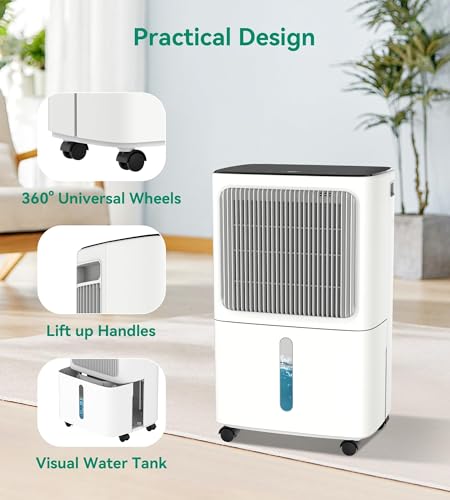
As an Amazon Associate we earn from qualifying purchases. Product prices and availability are accurate as of the date/time indicated.
KNKA 2500 Ft² Max 34 Pints Dehumidifier for Basement with Drain Hose, White | Dehumidifiers for Home, Bedroom, Bathroom, Large Room, Three Modes, Intelligent Humidity Control, Dry Clothes, 24HR Timer
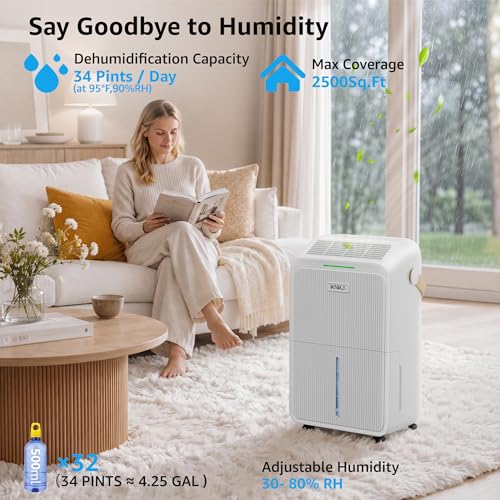

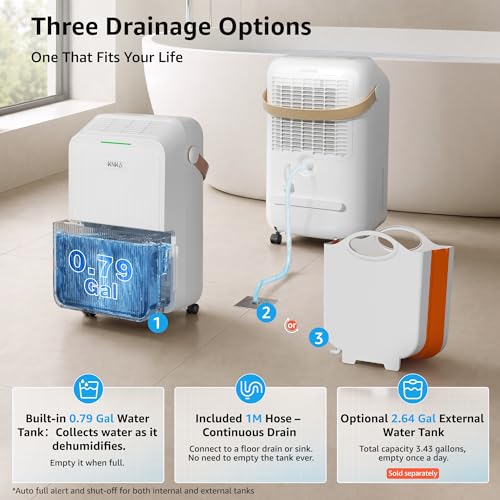


As an Amazon Associate we earn from qualifying purchases. Product prices and availability are accurate as of the date/time indicated.

4 Pack Moisture Absorber Hanging Bags, Boat Dehumidifier with Charcoal | Unscented, Removes Dampness and Musty Odors, Ideal for Basement, Closet, Home, Car, RV, and Boating


As an Amazon Associate we earn from qualifying purchases. Product prices and availability are accurate as of the date/time indicated.

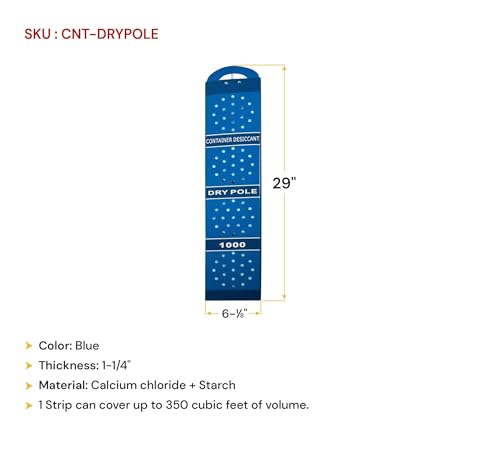
Mytee Products 4 Pack Shipping Container Desiccant Strip w/Hanger - 29"x6.5"x1.25" - Desiccant Strips for Upto 60 Days Moisture Absorption - Top Hook for Easy Hanging Inside Containers


As an Amazon Associate we earn from qualifying purchases. Product prices and availability are accurate as of the date/time indicated.

Vacplus Moisture Absorber, 10.5 OZ, Strong Absorption, Fragrance Free | Closet, Bathroom, Car, Odor Eliminator, Dehumidifier Bucket, 6 Pack





As an Amazon Associate we earn from qualifying purchases. Product prices and availability are accurate as of the date/time indicated.

Mytee Products 2 Pack Shipping Container Desiccant Strip w/Hanger - 29"x6.5"x1.25" - Desiccant Strips for Upto 60 Days Moisture Absorption - Top Hook for Easy Hanging Inside Containers


As an Amazon Associate we earn from qualifying purchases. Product prices and availability are accurate as of the date/time indicated.

Vacplus Moisture Absorber, 2 LB, Strong Absorption, Fragrance Free, 4 Pack | Closet, Bathroom, Basement, RV, Storage Areas, Odor Eliminator, Dehumidifier Bucket


As an Amazon Associate we earn from qualifying purchases. Product prices and availability are accurate as of the date/time indicated.
Condensation is simple physics with an annoying twist. Air holds water vapor, and the warmer the air, the more it can hold. At 77 degrees F, saturated air carries about 23 grams of water per cubic meter; at 50 degrees F, only about 9.4. When humid air touches a cold surface and its temperature falls to the dew point, the extra water has to go somewhere, and it condenses as droplets. A steel container is nearly the perfect condensation machine: thin metal walls with almost no insulation, a large roof facing the sky, and a wide daily temperature swing. The metal cools quickly at night, often below the dew point of the air inside, and rain forms on the ceiling, then drips on whatever is underneath.
Here is a rough estimate to put numbers on it. A 20-foot container has about 33 cubic meters of interior volume, roughly 1,170 cubic feet. Suppose the air inside is 77 degrees F at 80 percent humidity, holding around 18.4 grams per cubic meter. If the walls cool to 50 degrees F, the air can hold only 9.4 grams, so about 9 grams per cubic meter must condense, or roughly 300 grams for the box. That is about 0.6 pint. It sounds small. But a container is not airtight, and each cycle imports fresh humid air through door gaps and vents, while sunlight re-evaporates what dripped. Add wet cargo, a damp floor or stored tarps and firewood, and the total moisture moved in a month can reach many pints. These are planning estimates for illustration, not measurements.
Two things follow. First, the water in the air at any moment is not the problem; the repeated cycle and the continuous leakage are. Second, you can attack the problem from three angles: lower the water source (keep wet items out and seal obvious gaps), lower the swings (shade, reflective roof coating, insulation) and remove moisture (desiccant or powered unit). A dehumidifier addresses only the third, which is why it works best alongside the other two. If your gear includes small parts and fasteners, an airtight inner container adds a second barrier; the lids on the sets in our guide to glass food storage container sets show the kind of seal worth looking for.
Power or no power: a decision map
| Your situation | Better approach | Why |
|---|---|---|
| No power, small valuables, short storage | Hanging bags or small buckets | Cheap, silent, nothing to plug in, but capacity is limited |
| No power, long storage, humid climate | Container desiccant strips, replaced on a schedule | Larger capacity and a hook for hanging inside the box |
| Power at the door, workshop or heavy moisture | 34-pint compressor unit with a drain hose | Continuous removal and no consumables |
| Power only occasionally | Powered unit plus desiccant backup | Electric does the heavy lifting; desiccant covers outages |
The table hides one detail: power in a container is rarely as simple as an outlet. An extension cord through the door gap invites pinched insulation and a break in the weather seal, and it needs to be an outdoor-rated, appropriately sized cord on a GFCI-protected circuit. If you cannot arrange safe power, do not improvise; choose a passive option instead.
How much desiccant is that, really?
Passive products have a capacity ceiling, and it helps to work out what it means. Moisture-absorber buckets and strips commonly use a salt-type absorbent that can take up water on the order of its own weight or more under humid conditions, but none of the titles in this guide states the chemistry or capacity, so verify the figure on each listing. As a purely illustrative assumption, take a rate of roughly one pound of water per pound of absorbent. A 2 LB bucket would then hold about 2 pints of water at the limit, and the Vacplus 4-pack would hold roughly 8.
Now compare that with the load. If a damp container imports even 0.6 pint a day, that is about 18 pints a month, far beyond a few buckets. A drier climate or a tighter box might see a fraction of that. The practical point is that desiccants are monthly maintenance in a humid, leaky container, and a small bucket mostly protects a small enclosed space such as a cabinet inside the box. Strips designed for containers aim at the whole volume, and the Mytee titles claim up to 60 days of absorption, which is a more suitable figure for periodic replacement.
Desiccant options (no power needed)
These six cover a range from small buckets to container-specific strips. Because the products are consumables, the real cost is replacement over time, not the first purchase.
Mytee Products 4 Pack Shipping Container Desiccant Strip with Hanger
This is the one product in the guide named for the job. The title describes four strips, each 29 by 6.5 by 1.25 inches, with a top hook for easy hanging inside containers and up to 60 days of moisture absorption. Hanging from the ceiling matters because that is where condensation starts and where drips begin to fall onto cargo.
Estimate-based thinking: four strips in a 20-foot container, spaced along the ceiling rails, give a reasonable first line of defense in a dry or moderate climate. In a humid, leaky container you might need more, or you may need to shorten the replacement interval to a month. The title does not state absorption capacity or the absorbent type, so confirm whether the strips release liquid when full; any liquid-absorbing product should be hung above a tray or over a non-cargo area. Hang them with the hook in a spot that cannot swing into tools, and check them monthly rather than trusting the 60-day figure blindly.
A placement plan helps. In a 20-foot box, hang one strip within a few feet of the door end, one at the far end and two along the ceiling between them, using the top hooks on ceiling rails or shelving frames. Keep strips clear of the walkway so you do not knock them while loading, and away from electrical cords. Write the hanging date on masking tape beside each strip so you know when the 60-day window ends. Replace on schedule even if they look fine, because saturation is not always visible.
Pros
- Written for shipping containers, with a top hook for hanging
- Four strips can be spaced along the length of a 20-foot box
- Up to 60 days of absorption claimed in the title
Cons
- Consumable, so replacement is a recurring job
- Mid-range price tier for the 4-pack
- Capacity and chemistry are not stated in the title
Who it’s for: owners of an unpowered 20-foot container who want one purpose-built solution for months of storage.
Mytee Products 2 Pack Shipping Container Desiccant Strip with Hanger
The two-pack is the same strip, 29 by 6.5 by 1.25 inches with a top hook and a 60-day claim, in half the quantity. That makes it the entry point for smaller spaces: a half-height container, a modified box partitioned into a workshop and a store, or a single section of a long container you want to protect more heavily.
Two strips will not protect a full 20-foot container in humid weather, and the arithmetic is unforgiving. Two strips might hold half the moisture of four, so in a damp climate they may reach saturation in a month, not two. They do work well as a supplement: one strip near the door, where humid air arrives, and one at the far end, to catch what slips past. They also pair sensibly with a powered unit as backup during an outage. When the strips are full, follow the manufacturer’s disposal instructions rather than dumping liquid on the ground, and replace them before the container begins to drip again.
Think of layout in halves. If you have a 40-foot container, two strips protect one end, and you may want a second pair for the other. For a partitioned container with a dry store at the back, put one strip near the door where humid air arrives and one at the rear, and see how fast each fills. That small experiment shows how leaky the box is. If both are full in 30 days, the container needs gasket and vent work, or a powered unit, rather than more strips. If they are barely used after 60 days, you have a tight box and strips may be all you need.
Pros
- Same container-specific design in a smaller quantity
- Mid-range price tier, lower outlay than the 4-pack
- Good as a supplement or backup layer
Cons
- Not enough on its own for a full 20-foot box in humid weather
- Replacement cadence may be monthly in damp climates
- Absorption capacity not stated in the title
Who it’s for: small or partitioned containers, or anyone adding a secondary layer next to the door.
Vacplus Moisture Absorber, 2 LB, 4 Pack
Vacplus sells the heavier-duty bucket here: four 2-pound containers, fragrance free, for closets, bathrooms, basements, RVs and storage areas. In a container, these are not hung; they sit on a shelf or the floor. At roughly eight pounds of absorbent in total, the pack carries more raw material than the 10.5-ounce set, though capacity per pound is something the listing should state.
Think of them as zone protection. Place one on a shelf next to the toolbox, one in a cabinet, one near the door and one at the back. Using the illustrative assumption of about a pound of water per pound of absorbent, the set holds on the order of 8 pints in total, enough for a modest month in a moderately tight container and short of a damp one. A real hazard: if the absorbent is a salt that turns to brine, a spilled bucket will corrode steel tools and the container floor. Put each bucket in a tray, away from tool steel, and check the lids. In an unshaded container, summer heat inside the box may soften plastic, so avoid stacking.
Spill control is the main practical issue. Stand each bucket in a shallow plastic tray or on a lipped shelf, away from the edge, and never on top of a toolbox or a stack of tools. Brine from salt-type absorbents can corrode steel and stain concrete, so wipe up any spill and rinse the area with water. Check each bucket monthly, and swap it before the collected liquid approaches the fill line on the container. When you dispose of the contents, follow the label instructions, not a guess.
Pros
- Larger 2 LB units than the 10.5 OZ set
- Four-pack lets you spread protection across zones
- Fragrance free, sensible in a storage space
Cons
- Shelf or floor placement; the title mentions no hanging hook
- Liquid spill risk near tools, so use trays
- Not designed for a whole container’s volume
Who it’s for: tool cabinets, shelving bays and sealed zones inside a larger box.
Vacplus Moisture Absorber, 10.5 OZ, 6 Pack
Six 10.5-ounce buckets, fragrance free, for closets, bathrooms and cars, with an odor-eliminator pitch. The smaller size is the point: you distribute them in tight places such as cabinets, toolboxes and the cab of a stored vehicle, rather than relying on one big absorber to protect the whole box.
Smaller buckets fill quickly, and 10.5 ounces is not much. Using the same illustrative rate, six buckets might hold around four pints of water in total. That is useful inside a toolbox or a lockable cabinet, and it makes little difference to a whole container’s air. If you keep a motorcycle or a car inside, a bucket on the floor of the vehicle protects the interior from musty smells while a separate strip handles the box. Replace buckets when the absorbent has turned to liquid or hardened, and do it before the liquid reaches the rim. The title says nothing about the container environment, so use it where it makes sense: small and sealed.
Placement drives the value of small buckets. Think of the container as a collection of micro-environments: a toolbox with steel sockets, a cabinet of fasteners, a drawer with sandpaper, a crate of electronics. Each of those is a small sealed volume where a 10.5-ounce bucket can do real work, because the air is a few liters, not 33 cubic meters. Seal the cabinet door as well as you can with a strip of weatherstripping, drop a bucket inside and look at it after two weeks. A dry, unfilled bucket suggests the cabinet is tight; a full one shows moisture getting in. It is an inexpensive way to learn where the leaks are before buying a bigger solution.
Pros
- Six buckets spread across many small zones
- Budget tier, easy to restock
- Fragrance free
Cons
- Small capacity per bucket
- Needs frequent checking
- Not marketed for container use
Who it’s for: toolboxes, lockers and stored vehicles inside the container.
Camco Moisture Absorber Bucket (44282)
Camco’s bucket features a fast-acting moisture-absorbing agent and no-fragrance beads, and the title lists RV storage and camper organization as uses. It is a single unit and the cheapest way to try the idea. In a container, it makes sense as a small-space guard for a trailer, a boat or a camping kit parked inside.
The “fast-acting” claim is marketing, and it is useful to translate. Beads work fastest when humidity is high and slow when the air is already dry, so you will see the bucket fill quickly in a wet week and barely at all in a dry spell. That is arguably a feature: you can read the level as a crude humidity meter. Keep it upright on a stable shelf, away from edges, and check the cap. An RV stored in a container is a good use, because a camper has soft furnishings that hold odors and a bucket in its sink or shower helps a lot. Do not expect it to protect the entire box.
Cap and seal details matter with any bucket. Read the instructions for removing the seal so the absorber starts working, and keep the bucket upright. Place it on a flat shelf at hip height, not on the floor where it can be kicked, and keep it in a tray. When the bucket is full, the listing should tell you how to dispose of it and whether the liquid can go down a household drain. Mark the date on the bucket so you can see how quickly it fills in different seasons, which helps you judge whether the container needs a stronger solution.
Pros
- Budget price for a single unit
- No-fragrance beads suit stored gear
- Acts as a rough humidity indicator by its fill level
Cons
- Single small unit
- Capacity not stated in the title
- Spill risk if knocked over
Who it’s for: campers, boats and small items stored inside a container.
Better Boat 4 Pack Moisture Absorber Hanging Bags with Charcoal
The title calls these boat dehumidifier bags: four hanging bags with charcoal, unscented, said to remove dampness and musty odors for basements, closets, cars, RVs and boating. They hang, which is convenient for a container, and the bag format avoids a bucket that can tip over.
Be realistic about what charcoal does. It is generally better known for odor than for holding large volumes of water, and the title does not state how much moisture a bag takes. Treat these as odor and dampness helpers for enclosed zones, such as a tent bag, a cabinet or a stored boat cover, not as the main defense for a leaky box. Hanging bags need hooks or loops; a container’s corrugated walls and cargo-lashing rings offer a few attachment points, and you can clip them to shelving. Estimate: four bags are a low-capacity layer, best used alongside strips. Many charcoal products can be dried in sunlight and reused, but check the listing, and do not assume.
Hanging position decides performance. Bags need air to circulate around them, so hang them in open space, not pressed against the wall or tucked in a corner. Use S-hooks on shelving, cargo-lashing rings or a rod across the container. Keep them away from sharp edges and from direct contact with metal tools. After a few weeks, squeeze a bag gently: if it feels heavy or damp, it is doing work; if it feels unchanged, it may be spent or the air may be very dry. Check the listing for any instructions on recharging in sunlight before you consider throwing them away.
Pros
- Hanging format works from shelves and rails
- Unscented and no liquid-collecting bucket
- Budget tier
Cons
- Moisture capacity likely small, though the title does not say
- Better suited to odor than to heavy condensation
- Not designed for container volumes
Who it’s for: musty-smell control for stored textiles, covers and soft goods.
Electric options (power required)
If you can run a safe, GFCI-protected supply to the container, a compressor-style unit changes the economics: no refills, continuous drainage and a humidity setpoint. Both of these are 34-pint-class machines with a drain hose. A twenty-foot container has only about 160 square feet of floor, so the 2500 sq ft coverage claims are headroom, not a fit problem. The caveats are temperature and sealing, as covered below.
VEAGASO 34-36 Pint/D, 2500 Sq.Ft Dehumidifier with Drain Hose
VEAGASO lists 34 to 36 pints per day, 2500 sq ft of coverage, a drain hose, three modes, a 24-hour timer, 40dB operation, a 0.53-gallon water tank and intelligent humidity control. In a container, the hose and the humidity control are the essential words. Fill the tank every few hours in a damp box and the unit stops; run a hose to a bucket or out through a vent and it works unattended.
Operating temperature is the unknown. A compressor dehumidifier loses efficiency as air cools and can frost its coil in a cold box, and a steel container in direct summer sun can climb far above the temperatures a home unit is built for. Check the listing’s operating range before committing, and consider shade or a reflective coating on the container. Estimate: the machine might draw 300 to 400 watts while running, so running it six hours a day uses about 63 kWh a month, around 10 dollars at an assumed 16 cents per kilowatt-hour. The 40dB figure is irrelevant in a container but a bonus if the box is a workshop. A range of 34 to 36 pints is also a hint that the figure was measured at a particular condition, so check which one.
Run a trial before you leave it unattended: connect the hose, set the target, and check the drain after an hour. Look at the cord where it passes the door, and confirm the tank lid and the hose connector are secure. Then check the humidity reading after a day. A container that falls from 80 to 55 percent in 24 hours is behaving; one that never drops is leaking air faster than the unit can handle.
Pros
- Drain hose and humidity control in the title
- 24-hour timer and three modes
- Continuous removal with no consumables
Cons
- Needs safe power and a drain path
- Operating temperature range must be confirmed for a steel box
- Small 0.53-gallon tank fills quickly without the hose
Who it’s for: powered containers used as workshops, archives or long-term storage.
KNKA 2500 Ft2 Max 34 Pints Dehumidifier with Drain Hose
KNKA’s title matches the VEAGASO closely: 2500 ft2, Max 34 pints, drain hose, three modes, intelligent humidity control and a 24-hour timer, and adds a mode for drying clothes. The parallel specs make this a shopping decision on warranty, return policy and listing detail, not on features.
The clothes-drying mode is not obviously relevant to a container, but it hints at a higher-output setting that might help dry out a box after a wet event, such as pressure-washing or a leak, before you switch to a gentler humidity-controlled mode. After that, set the target to 45 to 55 percent, which is low enough to stop rust and mildew without grinding the machine nonstop. Seal the door gaps with weatherstripping, leave the factory vents as they are, and run the hose out so that the condensate never pools. Estimate: the same 300 to 400 watt band applies, and so does the same operating-range question. Max 34 pints probably refers to a warm test point, so a cool container will yield less.
Think about the cold season. When a container sits near freezing, a compressor machine can ice up and stop removing water, and condensate in a hose can freeze and block it. Check the listing for an automatic defrost feature and the minimum operating temperature, and in winter consider turning the unit off and switching to desiccant strips. In summer, check the maximum temperature as well. A powered unit is a three-season solution in many climates, and the desiccant backup covers the rest.
Pros
- Drain hose, timer and humidity control named in the title
- Extra mode for drying out wet items or a damp box
- Mid-range price tier
Cons
- Max wording leaves the test condition unclear
- Requires power and a drain
- May lose output in a cold container
Who it’s for: powered containers that have taken on water or hold cargo that must stay dry.
Setup that makes any of them work
- Cut the leakage first. Replace missing door gaskets, patch rust holes and close obvious gaps with weatherstripping. A leaky box imports humid air faster than any product removes it.
- Leave the vents. Most containers have small factory vents. Leave them unless a professional advises otherwise, so moisture released by contents can escape.
- Keep wet things out. Tarps, firewood, damp timber and unwashed equipment can add pints of moisture a week.
- Lift items off the floor. Pallets or shelving keep goods clear of the cold floor and the first drips.
- Tray every liquid-collecting product. Absorber buckets and strips can drip brine, which attacks steel. Keep them off tool cabinets.
- Power safely. GFCI-protected, outdoor-rated cord, no pinched door gaps, and a plug connection kept off wet ground.
- Plan the drain. A hose should slope down and exit through a vent or door gap, never loop into a puddle.
- Shade and reflect. A shade or reflective roof coating reduces temperature swings, which reduces condensation.
How we picked these
This is a documentation-based comparison by the Editorial team, using published specifications, manufacturer documentation and buyer reviews. Nobody on the team used or measured these units, and we make no claim that any of them has been in a real container.
We first split the eight into passive and powered, because power access is the deciding factor. We then ranked passive options by how well the title fits container use (hanging hook, stated duration) and by quantity, and powered options by drain hose, humidity control and coverage headroom. Every number about capacity, wattage and moisture load is an estimate with stated assumptions, and for each product we noted what the title leaves out, notably absorbent chemistry, capacity and operating temperature. Price tier is relative to the other items in this guide.
Verdict
For an unpowered 20-foot container, buy the Mytee 4-pack of container desiccant strips and check them monthly, adding Vacplus buckets in tool cabinets as zone protection. For a half-size or partitioned box, the Mytee 2-pack is enough. With safe power and heavy moisture, choose the KNKA or VEAGASO 34-pint unit, run a drain hose outside, hold 45 to 55 percent and verify the operating temperature range first. Camco and Better Boat are low-cost extras for campers, covers and soft goods. Whichever route you choose, reduce leaks and temperature swings first; a product only works well in a box that is not trading air with the outdoors all day.
Frequently asked questions
Why does the inside of a shipping container sweat?
A steel container swings in temperature faster than the goods inside it. When the metal cools at night or in a cold snap, humid air touching the walls and roof drops below its dew point and releases liquid water, which drips onto your contents. Sunlight then warms the box, evaporates moisture and sets up the next cycle. Reducing the water in the air and the temperature swings are the two levers.
Are desiccant strips better than an electric dehumidifier in a container?
Neither is better in every case. Desiccant products need no power, which suits remote containers, but they have a fixed capacity and must be replaced or recharged. An electric compressor unit removes water continuously and drains it away, yet needs a safe power supply, a drain path and temperatures within its operating range. A container with mains power and heavy moisture favors electric; an unpowered one favors desiccant.
How long do container desiccant strips last?
The Mytee strips in this guide advertise up to 60 days of moisture absorption in their titles, but real life depends on temperature, humidity, how leaky the container is and how much wet cargo it holds. As an estimate, a humid climate can exhaust a strip faster than a dry one. Check them monthly, replace saturated ones and treat the 60-day figure as a ceiling, not a promise.
Can I run a regular dehumidifier inside a shipping container?
Often yes, if you have safe power. Use a GFCI-protected supply, avoid pinching a cord in the door gap, route condensate to a drain hose that exits the container, and check the unit’s operating temperature range, because a steel box can get very hot in summer and very cold in winter. Keep the container fairly closed while it runs, or it will try to dry the outdoors.
Should a container be sealed or ventilated when using a dehumidifier?
Reasonably closed but not hermetic. A leaky container constantly imports humid air, which defeats a dehumidifier, while a fully sealed box may trap moisture released by wet items. Close obvious gaps around the doors, leave the factory vents unblocked unless a professional advises otherwise, and keep wet items out. Think of the goal as reducing air exchange so the dehumidifier or desiccant is working on the moisture already inside, not as eliminating air exchange entirely.