What's inside
As an Amazon Associate I earn from qualifying purchases. This post may contain affiliate links at no extra cost to you.
Our Top Picks
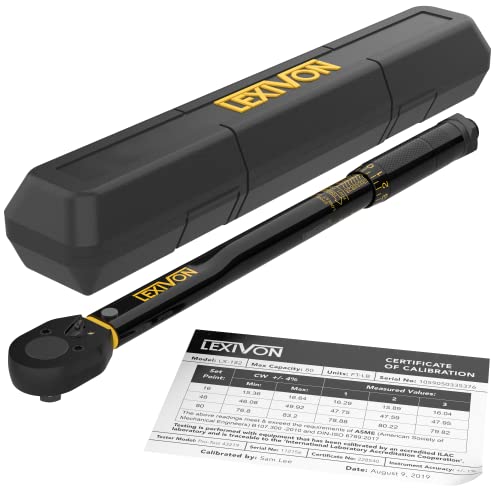 LEXIVON 3/8-Inch Drive Click Torque Wrench 10~80 Ft-Lb/13.6~108.53/8"DR. 10-80 FT-LB2.5 x 3 x 14 inches2.3 PoundsCheck on Amazon
 LEXIVON Torque Wrench 1/2-Inch Drive Click 10~150 Ft-Lb/13.6~203.51/2"DR. 10-150 FT-LB2.5 x 3 x 18 inches3 PoundsCheck on Amazon
 EPAuto 1/2-inch Drive Click Torque Wrench1/2 Inch Drive (10-150 ft.-lb.)17.4 x 3.3 x 2.6 inches3.5 poundsCheck on Amazon
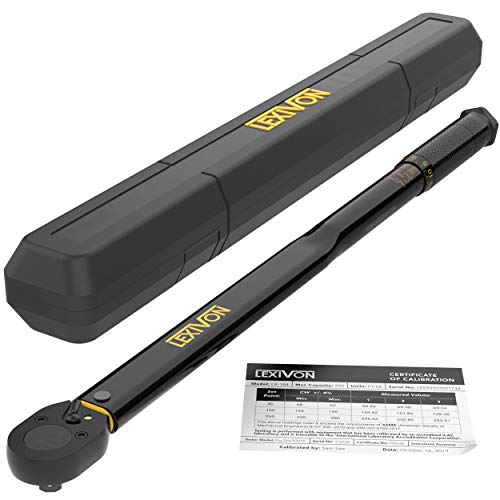 LEXIVON 1/2-Inch Drive Click Torque Wrench 25-250 Ft-Lb/33.9-338.91/2"DR. 25-250 FT-LB3 x 3 x 24 inches6.4 PoundsCheck on Amazon


Click Torque Wrench vs Split-Beam Torque Wrench
If calibration retention is your main concern, a split-beam torque wrench is usually the safer choice. It has a simpler measuring mechanism, fewer parts under spring tension, and normally does not need to be backed off after use. A click wrench can still be accurate and is often the better buy for general automotive work, but it is more sensitive to storage, adjustment, dirt, and rough handling.
That difference matters because a torque wrench can click normally while being several percent inaccurate. The click is a release mechanism, not proof that the wrench is calibrated. Both styles should be checked periodically, especially after a fall, over-torque event, or heavy professional use.
As an Amazon Associate we earn from qualifying purchases at no extra cost to you.


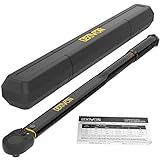
How the Two Wrench Designs Work
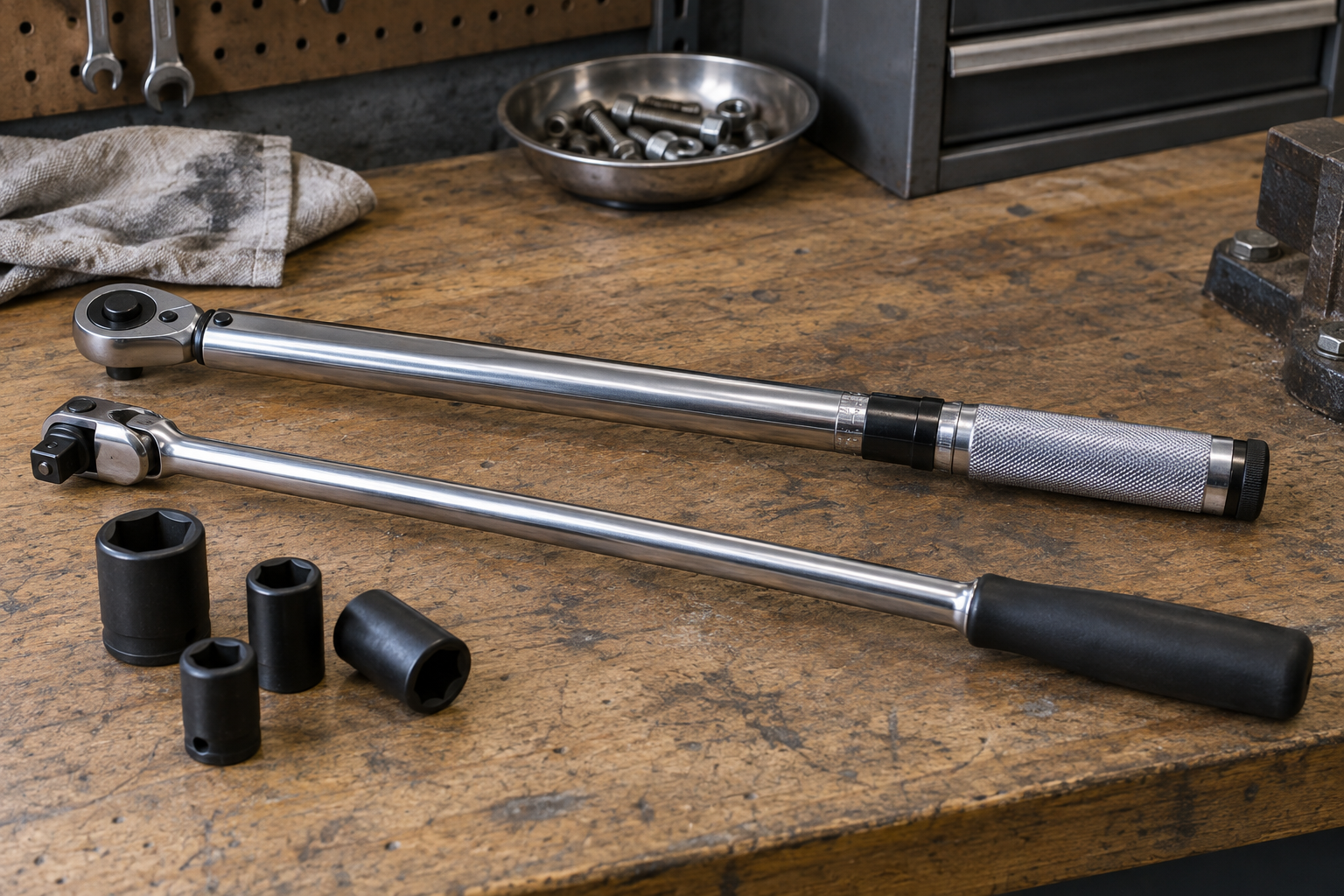
A click wrench uses a calibrated coil spring to load a clutch or ball-and-detent mechanism. You set the desired torque by turning the handle, then pull until the mechanism slips with an audible click. After the release, you stop pulling. Continuing to apply force can produce more torque than the setting.
A split-beam wrench uses a flexible beam and a separate indicating beam. The handle flexes under load, while the pointer shows the torque value on a scale. On many models, a cam or lever creates the release feel at the preset value, but the actual measurement comes from the beam rather than a heavily compressed coil spring.
That distinction is important for storage. A click wrench left set to a high value keeps its spring compressed. Over months or years, the spring can relax or the adjustment mechanism can change slightly. A split-beam wrench generally has no spring to unload, so its calibration is less affected by how it is stored.
Which Holds Calibration Better?
| Factor | Click wrench | Split-beam wrench |
|---|---|---|
| Long-term calibration stability | Good when stored correctly; more sensitive to spring fatigue | Usually excellent because the beam is not kept under constant spring tension |
| Storage requirement | Back the setting down to the minimum marked value | Usually no unloading procedure is required |
| Resistance to over-torque | Can be damaged if used past its range or as a breaker bar | Still vulnerable, but has fewer small clutch parts to upset |
| Ease of use | Audible and tactile click; useful in awkward positions | Requires reading the scale and keeping your eyes on it |
| Small torque settings | Often easier to use accurately | Scale readability varies and can be difficult at low values |
| Serviceability | May need adjustment or factory calibration | Simple designs are easier to verify and maintain |
In practical terms, a quality split-beam wrench can hold its calibration for a very long time if it is not overloaded or physically bent. The beam may eventually lose accuracy from abuse, but ordinary storage does not constantly stress it. A click wrench can hold calibration equally well for a period of time, but its spring and release mechanism give it more ways to drift.
Common Click-Wrench Failure Modes
The most common mistake is leaving the wrench set at 100 or 150 foot-pounds in a toolbox. The spring remains compressed, and the wrench may read low when it is eventually tested. The correct storage practice is to return the handle to the lowest marked setting, not necessarily below the wrench’s minimum range.
Another failure mode is using the wrench to loosen fasteners. Breakaway torque can exceed the wrench’s rated capacity even when the fastener was tightened to a lower value. A click wrench can also be damaged by using a cheater pipe, dropping it, or pulling outside the center of the handle.
Contamination is less obvious. Grit or corrosion in the adjustment threads can change the setting or prevent the clutch from releasing cleanly. A click wrench that feels gritty, clicks inconsistently, or has a loose handle deserves testing before it is trusted on cylinder-head bolts, wheel fasteners, or other critical hardware.
Split-Beam Limitations
Split-beam wrenches are not automatically perfect. The beam can be bent by using the tool as a pry bar or by dropping it. The pointer or scale can also be damaged. If the pointer is not aligned with zero when unloaded, do not assume the reading is still correct.
Most split-beam designs work best when you look directly at the scale. Reading from an angle creates parallax error, and poor lighting makes the fine graduations hard to see. This is a real disadvantage when tightening a fastener under a vehicle or inside an engine bay.
They also tend to have a narrower usable sweet spot than a good click wrench. If you regularly need both 20 and 150 foot-pounds, buying one wrench for that entire span is a poor plan. Accuracy is normally best in the middle portion of the range, so two properly sized wrenches are better than one oversized tool.
Which Type Should You Buy?
Choose a split-beam torque wrench if you want dependable long-term storage, use the wrench intermittently, and can see the scale while pulling. It is especially attractive for engine assembly, racing work, and owners who do not want to send a wrench out for frequent adjustment.
Choose a click torque wrench if you work in tight spaces, need a clear tactile signal, or frequently torque fasteners where reading a scale is impractical. A click wrench is also the more convenient choice for wheel lugs and routine suspension work.
The cheaper option is fine when the job is noncritical, the torque range is appropriate, and you will use sensible storage and handling. For example, an occasional DIY brake job does not require an expensive laboratory-grade tool. It does require a wrench with a readable scale, a sensible range, and a manufacturer that provides a stated accuracy specification.
How to Keep Either Wrench Accurate
Use the wrench only for tightening, and apply force through the marked grip area. Pull smoothly rather than jerking. Keep the wrench clean and dry, and store it in its case where it cannot be crushed or dropped.
For a click wrench, return the setting to its minimum after use. Do not force the handle past the range markings. For a split-beam wrench, check that the pointer returns to zero and that the beam has no visible bend.
Have the wrench tested at least annually if you use it professionally or on safety-critical assemblies. For occasional home use, testing every few years is reasonable, but test it immediately after a fall or suspected overload. A basic torque tester is useful if you own several wrenches; otherwise, a calibration service is cheaper than guessing.
For most buyers, the decision is simple: buy a split-beam wrench for maximum calibration stability, or a click wrench for convenience. Whichever style you choose, correct range selection and storage will affect real-world accuracy more than a small difference in the advertised accuracy percentage.