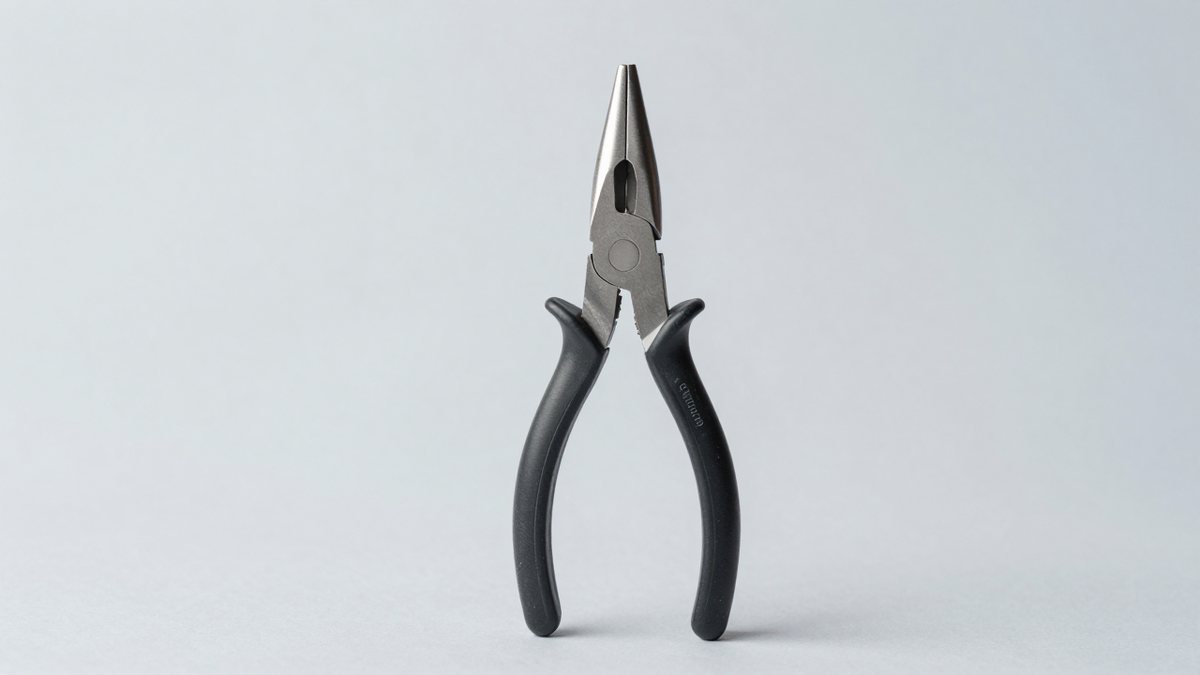
What's inside
As an Amazon Associate I earn from qualifying purchases. This post may contain affiliate links at no extra cost to you.
Our Top Picks
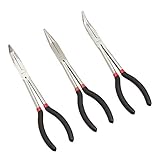
 Amazon Basics Extra Long Reach Needle Nose Pliers3 Count (Pack Of 1)12.69 x 3.01 x 4.12 inchesCheck on Amazon
 WORKPRO Premium 11” Extra Long Needle Nose Pliers11" Straight11 x 11 x 0 inches0.8 poundsCheck on Amazon


Best Long Needle Nose Pliers for Reaching Into Tight Spaces
The best long needle nose pliers for most workshop and electrical work are the Knipex 30 05 160: their 160 mm length, narrow 50 mm jaws, fine tips, and solid joint provide more reach without making delicate parts feel uncontrolled. Choose the Klein Tools D203-8 for electrician-focused work, the Channellock 317 for a comfortable general-purpose option, or Irwin Vise-Grip Long Nose Locking Pliers when the tool must hold a part without continuous hand pressure.
Longer jaws are not automatically better. Extra reach can make the tips spring apart, reduce squeezing force, and make it easier to twist a small connector or clip. The useful comparison is how much working depth you gain while retaining tip alignment, grip comfort, and a joint that does not develop side-to-side play.
As an Amazon Associate we earn from qualifying purchases at no extra cost to you.


Quick comparison
| Model or type | Overall length | Approx. jaw reach | Best use | Typical market range |
|---|---|---|---|---|
| Knipex 30 05 160 | 160 mm / 6.3 in | About 50 mm / 2 in | Precise workshop and electrical work | $30–$45 |
| Klein Tools D203-8 | 203 mm / 8 in | About 55 mm / 2.2 in | Electricians and general maintenance | $25–$40 |
| Channellock 317 | About 216 mm / 8.5 in | About 57 mm / 2.25 in | Long-reach household and shop tasks | $20–$35 |
| Irwin Vise-Grip 4LN / 6LN | 102 or 152 mm / 4 or 6 in | Varies by size | Holding, clamping, and awkward fasteners | $18–$35 |
| Extra-long slim long-nose pliers | 250–300 mm / 10–12 in | 70–100 mm / 2.75–4 in | Deep cavities and light-duty retrieval | $15–$45 |
Jaw dimensions vary slightly between production versions and regional catalogs, so treat the figures as buying-level comparisons rather than precision metrology. The most important measurement is the distance from the pivot to the usable tip: a long handle with a short working nose may not reach farther than a compact long-reach design.
Best picks by situation
Best overall: Knipex 30 05 160
The Knipex 30 05 160 is the strongest choice when precision matters as much as depth. Its relatively compact 160 mm body is easier to control than an 8- or 12-inch tool, while the slim, serrated jaws can reach into switch boxes, small assemblies, and recessed woodworking hardware. The machined joint and forged construction are valuable for frequent use because the pivot is less likely to loosen quickly under normal gripping loads.
Its main limitation is leverage. These are not wire cutters for heavy cable or substitute cutters for hardened fasteners. Use the cutting area only within its stated capacity, and use a dedicated cutter when the wire is thick, hard, or load-bearing.
Best needle nose pliers for electricians: Klein Tools D203-8
The Klein D203-8 is a practical electrician’s choice because it combines an 8-inch reach with long, narrow jaws and an integrated side-cutting area. That format is useful for bending solid conductors, positioning wire in crowded boxes, forming terminal loops, and pulling small components into view.
The longer handles provide better leverage than a 6-inch precision plier, but they also make it easier to over-bend a conductor. Keep the bend close to the tip when forming wire, and do not use the plier as a general-purpose wrench. The dipped or molded handles are comfortable for routine work, although they provide less insulation protection than a properly rated insulated tool. For work near energized conductors, select tools with the appropriate voltage rating and follow the applicable safety procedure; handle color alone is not an electrical safety specification.
Best comfortable general-purpose option: Channellock 317
The Channellock 317 offers a long, narrow profile with a familiar US-made plier feel and a useful balance between reach and hand comfort. It suits maintenance, hobby work, and occasional woodworking tasks such as retrieving washers, holding small nuts, or positioning hardware behind panels.
Its broader handle and long nose are more forgiving for general handling than very fine electronics pliers, but the tips are not intended for maximum-force prying. If you regularly work on tiny clips or miniature connectors, a shorter precision plier will usually give better fingertip control.
Best long nose locking pliers: Irwin Vise-Grip Long Nose
For the search “best long nose locking pliers,” the Irwin Vise-Grip 4LN or 6LN is the sensible starting point. Locking jaws solve a different problem from ordinary needle nose pliers: they hold a component while you reach for a screw, soldering tool, file, or second wrench. The smaller 4-inch version fits tighter spaces; the 6-inch version offers more clamping leverage and a longer reach.
Locking pliers are less suitable for delicate parts because their clamping force can crush thin tubing, mar plated surfaces, or deform soft wood. Wrap the jaws with leather or heat-shrink tubing when surface damage matters, and adjust the screw so the tool locks with firm pressure rather than excessive force.
How to choose the right jaw length
- 50–60 mm of jaw reach: best for electrical boxes, small mechanisms, appliance repairs, and controlled bending.
- 70–80 mm: useful for recessed assemblies, but tip flex becomes more noticeable and squeezing force falls.
- 90–100 mm or more: appropriate for light retrieval in deep cavities, not for high-force twisting or prying.
Measure the obstruction, not just the hole. If a cavity is 75 mm deep but only 18 mm wide, a long tool with a thick hinge may still fail to enter. Compare the nose width at the first 25 mm behind the tips, where many pliers become too bulky.
Tip precision, grip, and joint durability
Tip precision: Look for tips that meet evenly along their length without a visible gap or crossed point. Fine serrations improve grip on wire and small hardware, while smooth tips are less likely to mark finished surfaces. Needle nose tips should not be used to twist hardened steel; that can permanently misalign them.
Grip: A textured dipped handle is easy to clean and gives good feedback. Thick molded grips reduce pressure on the hand during repetitive work but can make a narrow access opening harder to navigate. If you wear gloves, avoid handles so bulky that your fingers cannot close around them.
Joint durability: The pivot is usually the first part to show wear. Check for a smooth opening action, consistent resistance, and no lateral movement when the handles are held closed. A tiny amount of lubricant at the pivot can prevent corrosion, but excess oil attracts abrasive dust. If the tips no longer meet, do not hammer the jaws back into alignment; replace the tool or have it serviced if the manufacturer supports repair.
Ownership costs and maintenance
Suppose a $35 pair is used twice a week for three years: 2 uses × 52 weeks × 3 years equals 312 uses, or about $0.11 per use before replacement. A $15 bargain pair used for only 60 jobs because its tips spread would cost $0.25 per use. The calculation favors the more expensive tool when accurate tips and a stable pivot prevent replacement, especially for paid maintenance work.
- Wipe the jaws after handling adhesive, flux, or damp metal.
- Dry the joint and apply one small drop of light machine oil when movement becomes stiff.
- Keep the pliers away from live circuits unless they are correctly rated and the work procedure permits it.
- Never use long nose pliers as a pry bar, hammer, drill chuck, or substitute for a cable cutter.
- Store them closed or lightly open in a dry toolbox so the fine tips cannot be knocked sideways.
Final recommendation
Buy the Knipex 30 05 160 if you want the best balance of deep access, tip control, and durable everyday construction. Choose the Klein D203-8 when electrical wire handling and an integrated cutter are central to the job. Pick the Channellock 317 for comfortable general maintenance, and choose Irwin Vise-Grip Long Nose locking pliers when holding force matters more than delicate manipulation. For unusually deep cavities, use extra-long slim pliers only for light loads and retrieval, where their added reach will not be mistaken for added strength.