What's inside
As an Amazon Associate I earn from qualifying purchases. This post may contain affiliate links at no extra cost to you.
Our Top Picks


Best Mini Pliers Sets for Precision Work and Tight Spaces
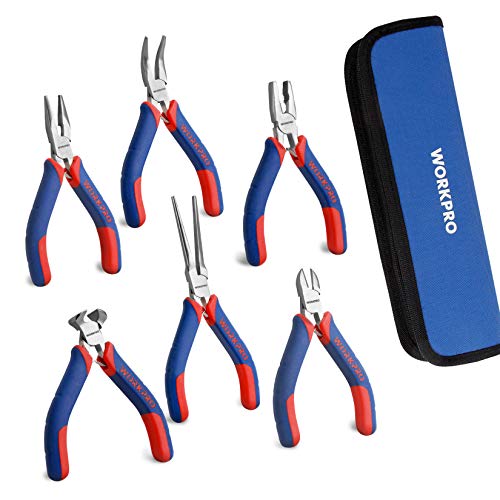
The best mini pliers set for detailed repairs is usually a compact 4- or 5-piece kit with long-nose, diagonal-cutting, and combination pliers, slim jaws, comfortable grips, and a case that keeps each tool in place. Choose a jewelry-focused set for fine wire and small components, or a set that includes mini locking pliers when you need to hold a part securely rather than simply grip or bend it.
What matters more than the number of tools
“Mini” is not a standard size. A 4-inch plier can be easy to carry but may lack leverage; a 5-inch model often gives a better balance for routine repairs. Compare the actual tool length, jaw profile, and cutting capacity—not just the number of pieces in the box.
As an Amazon Associate we earn from qualifying purchases at no extra cost to you.


- Plier types: Long-nose pliers reach into narrow openings; bent-nose pliers approach parts at an angle; diagonal cutters trim wire; round-nose pliers form loops; and combination pliers handle general gripping. A kit’s selection should match the work you do.
- Jaw reach: Slim, tapered jaws are useful in crowded assemblies, but very fine tips can twist if used to force stuck parts. Serrated jaws grip firmly but can mark soft metal or plastic.
- Handles: Spring-return handles can reduce repeated opening effort. A textured, cushioned grip may feel better during longer jobs, though bulky grips can make a small tool harder to maneuver in confined spaces.
- Case quality: A molded or fitted case prevents tools from rubbing against one another and makes missing pieces easier to spot. A loose pouch takes less room but offers less protection for sharp cutter edges and fine tips.
Compare mini plier set configurations
The figures below are practical size ranges for common compact tools, not specifications for a single manufacturer’s set. Check a product’s own documentation for exact dimensions and cutting limits.
| Set configuration | Typical tool length | Useful included tools | Best fit | Main trade-off |
|---|---|---|---|---|
| Basic repair set | 4–5 in (10–13 cm) | Long-nose, combination, diagonal cutters | Electronics enclosures, hobby repairs, household odds and ends | May lack round-nose or angled jaws for specialized work |
| Jewelry-focused set | 4–5 in (10–13 cm) | Round-nose, chain-nose, flat-nose; sometimes cutters | Making loops, opening jump rings, shaping craft wire | Fine tips are not intended for heavy gripping or hard wire |
| Access-focused set | 4–6 in (10–15 cm) | Long-nose, bent-nose, angled cutters | Reaching around obstructions or into recessed spaces | Specialized jaws may duplicate one another for general repairs |
| Holding-focused set | 4–6 in (10–15 cm) | Mini locking pliers, long-nose or standard pliers | Holding a small workpiece while adjusting a fastener or fitting | Locking jaws are bulkier and can damage delicate surfaces |
Choose by the repair you actually do
For small household and electronics repairs
Look for the basic repair configuration with long-nose pliers and diagonal cutters. The long-nose tool places or retrieves small parts; the cutters trim suitable wire or plastic ties. If access is the deciding factor, add bent-nose pliers rather than buying a larger assortment of tools with nearly identical straight jaws. Use cutters only within their stated capacity: cutting wire that is too hard or thick can nick the edges.
For jewelry and fine craft work
The best jewelry pliers set generally includes round-nose, chain-nose, and flat-nose pliers. Round jaws form loops, chain-nose jaws reach into small spaces, and flat jaws help hold a component without rolling it. Smooth or nylon-covered jaws are preferable when surface marks matter. For opening jump rings, twist the ends sideways relative to each other rather than pulling them apart; this helps preserve the ring’s shape.
When you need a secure hold
A mini locking pliers set is the better choice when a part must stay clamped while you work with the other hand. Check the jaw-opening range and whether the jaws have flat, curved, or needle-nose profiles. Locking pliers are not a universal substitute for a bench vise: excessive clamping force can crush tubing, mar plated parts, or distort thin sheet material. Place soft protective material between the jaws and a delicate workpiece when the job permits.
A quick decision matrix
| Your situation | What to prioritize | Set to look for |
|---|---|---|
| Occasional repairs, tight budget | Three useful tools over a large piece count; a case that closes securely | Basic repair set |
| New to detailed work | Comfortable grips, clear tool labels, versatile jaw shapes | Long-nose, combination, and diagonal-cutter set |
| Very limited drawer or travel space | Compact case dimensions and secure tool retention | Small 3- or 4-piece set with a fitted case |
| Frequent jewelry or craft work | Accurate, smooth tips and task-specific jaw shapes | Jewelry-focused set, ideally with surface-safe jaws |
| Repeated holding or assembly tasks | Adjustable lock and a jaw profile suited to the workpiece | Holding-focused set with mini locking pliers |
How to judge quality before buying
Check that the jaws meet evenly near the tips and that the pivot moves smoothly without obvious side-to-side wobble. Uneven alignment matters most on fine work: a gap at the tips can make it difficult to hold thin wire or a tiny component. Look for clearly stated steel and cutter-capacity information rather than assuming every tool in a set can cut the same material.
For buyers searching for the best plier sets tools, the best value is often a smaller set with distinct, well-made tools—not the kit with the highest piece count. A broad assortment can include duplicates or tools too large for precision work. Common tool brands such as KNIPEX, Xuron, and Wiha offer compact pliers in their respective ranges; compare the specific model’s dimensions and intended use, since a brand name alone does not establish that a tool is suitable for fine work.
Compact sets vary widely in price. Basic kits are generally available in the lower tens of dollars, while specialist tools or more refined sets can cost several tens of dollars or more. Treat those as broad market ranges, and compare the included tools, replacement availability, and case—not just the initial price.
Keeping small pliers accurate and usable
- Wipe jaws and pivots after use, especially after handling adhesives, flux, or damp materials. Residue can make the joint stiff and interfere with a precise grip.
- Apply a small amount of suitable light tool oil to a stiff pivot, then open and close the pliers and wipe away excess. Too much oil can transfer to a workpiece.
- Store cutters with their edges protected. Avoid using fine cutters on hardened wire, nails, or other materials outside their stated capacity.
- Use the right jaw shape instead of twisting a thin tool sideways. Fine tips can bend, and a bent jaw may no longer meet accurately.
For most buyers, a fitted 4- or 5-piece set with long-nose pliers, diagonal cutters, and one or two task-specific tools is the strongest all-round choice. Prioritize jaw access and a comfortable grip for repeated repairs; choose a dedicated jewelry or locking set when its specialized jaws solve a regular problem.