What's inside
As an Amazon Associate I earn from qualifying purchases. This post may contain affiliate links at no extra cost to you.
Our Top Picks
 LINCOLN ELECTRIC CO ED030584 .035"NR-211 Fluxco Wire010.5 x 6.75 x 4.25 inches1.12 poundsCheck on Amazon


Best Flux-Core Welders and Wire for Gasless Welding
For most home projects, choose a 120V flux-core welder rated for 0.030- or 0.035-inch wire if you’ll join mild-steel parts up to roughly 1/8 inch; choose a 240V machine for more frequent work or thicker steel, and use self-shielded wire outdoors where wind makes shielding gas impractical.
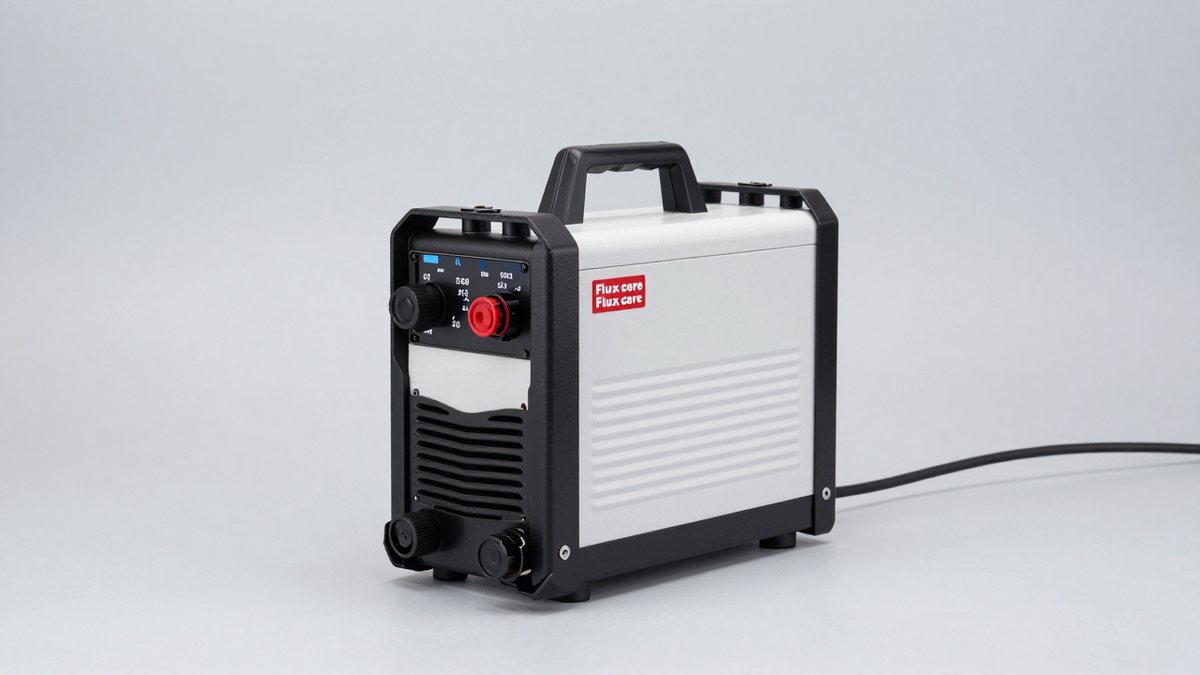
Flux-core welding—also called flux-cored arc welding or, informally, fluxcore MIG—uses a continuously fed tubular wire whose core supplies shielding and helps form the weld. A gasless machine is simpler to take outside than a conventional MIG setup, but “gasless” does not mean fume-free, wind-proof, or suitable for every metal. The recommendations below focus on common self-shielded wire and mild-steel projects.
As an Amazon Associate we earn from qualifying purchases at no extra cost to you.

Choose by project, not just by amperage
| Situation | Good starting choice | Why it fits | Trade-off |
|---|---|---|---|
| Occasional repairs, standard household outlet, thin steel | 120V inverter, about 90-140A maximum, 0.030-inch wire support | Portable and usually adequate for sheet, brackets, and small repairs with appropriate settings | Limited duty cycle and slower progress on thicker stock |
| General workshop use, up to about 1/8-inch steel | 120V machine rated around 140-160A, accepting 0.030- and 0.035-inch wire | More adjustment range and a useful balance of capacity and portability | Actual output depends on the circuit, wire, joint, and machine’s duty cycle |
| Repeated welding or thicker material | 240V machine, commonly around 180-220A, with a stated flux-core process and wire range | More headroom for larger wire and sustained work | Needs a compatible 240V outlet; heavier and often costlier |
| Outdoor work with unpredictable wind | Self-shielded flux-core wire and a machine with polarity instructions for that wire | No shielding-gas cylinder or regulator to move | More spatter and slag; wind can still disrupt the arc and contaminate the weld area |
Thickness figures are practical starting points, not guarantees. A machine advertised as capable of welding 1/4-inch steel may need multiple passes, a prepared joint, and suitable input power. Check the manufacturer’s process-specific output chart and duty cycle rather than relying on the maximum-amp number alone.
Machine picks by use case
Best for a compact 120V setup: Hobart Handler 100
The Handler 100 is a small, 120V flux-core-only option intended for light work. It is a sensible fit for a beginner who needs to repair thin mild-steel items and values a simple setup over a broad thickness range. Its limited output makes it a poor choice for frequent welding on heavier sections. Confirm the current model’s wire-size compatibility and recommended circuit before buying.
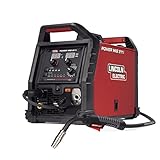
Best for a flexible home shop: Lincoln Electric POWER MIG 140 MP
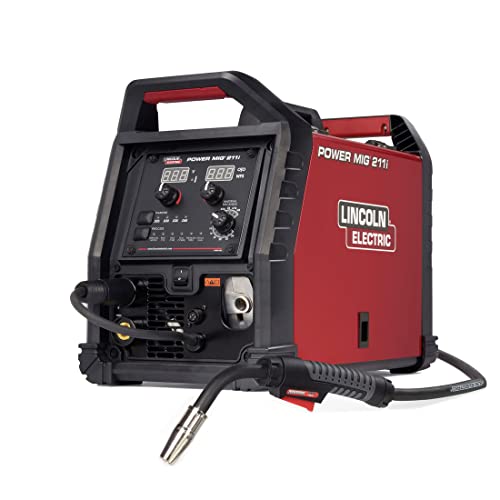
This 120V multiprocess machine supports flux-core welding as well as other processes, making it worth considering if you may expand beyond gasless wire. Its extra versatility does not remove the limits of 120V input: for sustained, heavier welding, a 240V machine is generally the better direction. Check the exact model’s included accessories and whether the spool gun or other process equipment is sold separately.
Best for a 240V shop: Hobart Handler 210 MVP
The Handler 210 MVP is a dual-voltage MIG machine that supports flux-core welding. Its 120V/240V input flexibility can suit a home shop that sometimes works from a household outlet but has a 240V circuit for demanding jobs. It is larger and more involved than a small flux-core-only unit, and its useful capacity depends on using the appropriate input voltage and wire. Verify the manual’s polarity, wire, and circuit requirements for gasless operation.
These models illustrate different machine classes, not a claim that one is best for every buyer. Prices vary by configuration and included accessories; as a broad market guide, basic 120V units are often in the low hundreds of dollars, while capable dual-voltage machines commonly cost several hundred dollars or more.
Wire choice changes the result
| Wire size | Typical use | What to check |
|---|---|---|
| 0.030 in (0.8 mm) | Thin-to-medium mild steel and many small 120V machines | Machine’s feed-roll groove, liner, contact tip, and wire chart |
| 0.035 in (0.9 mm) | General repair work where the welder can feed it reliably | Rated output and compatible drive components; do not assume every compact machine supports it |
| 0.045 in (1.1 mm) | Higher-output applications and machines designed for larger wire | Feeder, gun, and machine capacity; usually not a practical choice for small 120V units |
For mild steel, common self-shielded fluxcore wire classifications include E71T-11 and E71T-GS. They are not interchangeable in every application: follow the wire maker’s polarity and thickness guidance, and match the wire to the machine. Some self-shielded wires call for DC electrode negative, but polarity varies by product. With the machine unplugged, set polarity exactly as the machine and wire instructions specify.
Buy a spool size you can use before it rusts or gets contaminated. Keep wire sealed and dry; damp or dirty wire can feed poorly and produce unreliable welds. A 2-pound spool is convenient for occasional repairs, while a larger spool can lower cost per pound for regular work if your feeder accepts it.
Setup that prevents common problems
- Prepare the joint: Remove paint, rust, oil, and heavy scale near the weld. Flux-core handles some surface conditions better than gas-shielded MIG, but it cannot compensate for dirty base metal or a poor fit-up.
- Match the machine: Install the correct drive roll, contact tip, and wire diameter. Set polarity and the voltage and wire-feed speed using the machine and wire charts, then tune on scrap of similar thickness.
- Check the feed: Set enough drive-roll tension to feed consistently without crushing the wire. Cut off a damaged or bird-nested section rather than forcing it through the gun.
- Use a short, controlled stickout: Keep the contact tip-to-work distance consistent and use the travel direction recommended for the wire. Excessive stickout or erratic speed can cause a rough bead and poor fusion.
- Clean between passes: Chip and brush away slag before adding another pass. Slag trapped in the joint can become an inclusion and weaken the weld.
- Protect yourself and the space: Use a welding helmet with the correct shade, gloves, nonflammable clothing, and effective ventilation. Remove combustible material and keep a suitable fire extinguisher nearby. Flux-core welding produces fumes and spatter.
Outdoors, position a windbreak without creating a fire hazard. Self-shielded wire avoids the shielding-gas cylinder, but strong airflow can still disturb the arc, and rain or damp surfaces introduce electrical and weld-quality risks. Do not weld wet material or in unsafe weather.
What ownership costs and maintenance look like
Wire, contact tips, and nozzle or gun consumables are recurring costs. Flux-core also creates slag and typically more spatter than clean gas-shielded MIG, so budget time for cleanup and occasional nozzle maintenance. The contact tip is a common wear item: replace it when it is visibly worn, the wire feed becomes erratic, or the arc starts inconsistently. Keep the gun liner clear and inspect the drive rolls if feed problems persist.
Duty cycle matters for repeated jobs: a rating such as 20% at a stated amperage means the machine is intended to weld for two minutes in a ten-minute period at that output, followed by cooling time. Lower the amperage or pause as required rather than repeatedly overheating the welder. For a beginner doing short repairs, a compact 120V machine may be the right value; for long beads, production work, or thicker steel, pay for the input power and duty cycle the work actually demands.