What's inside
As an Amazon Associate I earn from qualifying purchases. This post may contain affiliate links at no extra cost to you.
Needle-nose and long-reach pliers overlap, but they solve different access problems. Needle-nose pliers are the general-purpose choice for gripping small parts and bending wire. Long-reach pliers put the jaws farther from your hand, which can make a recessed clip or hose clamp reachable without removing nearby parts. The useful question is not which is better overall, but how far in you need to reach—and whether you need precision, grip, or leverage once you get there.
As an Amazon Associate we earn from qualifying purchases at no extra cost to you.


Our Top Picks
 Amazon Basics Extra Long Reach Needle Nose Pliers3 Count (Pack Of 1)12.69 x 3.01 x 4.12 inchesCheck on Amazon

The basic difference
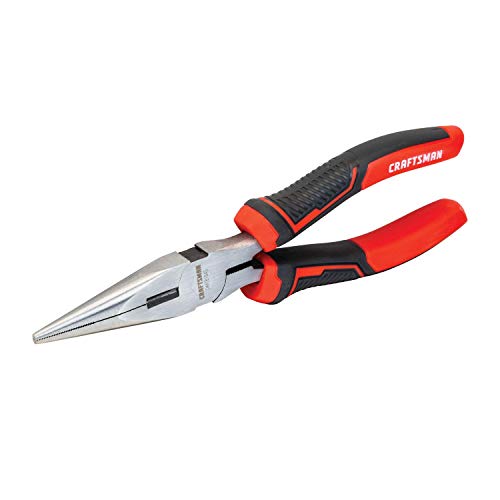
Standard needle-nose pliers have narrow, tapered jaws, usually around 1½ to 3 inches long. Their overall length is commonly 5 to 8 inches. That short handle-to-jaw distance gives you better control and more leverage than a much longer tool of similar handle size.
Long-reach pliers extend the jaws on a longer, slimmer neck. Depending on the design, the tool may be 11 to 16 inches long, with jaws straight, angled, or bent. The extra reach helps when a part sits behind a bracket, down a narrow cavity, or beyond a hose or wiring bundle. It also makes the tool less nimble: the jaws can be harder to position, and force applied at the handles feels less controlled at the tip.
Quick comparison
| Feature | Needle-nose pliers | Long-reach pliers |
|---|---|---|
| Best access | Open or shallow spaces | Deep, recessed spaces |
| Tip control | Better for careful positioning | Less precise, especially at full reach |
| Typical use | Wire, small clips, light bending and gripping | Retrieving parts, reaching clamps and recessed fasteners |
| Trade-off | Cannot reach as far | Less leverage and more flex |
When needle-nose pliers are the better pick
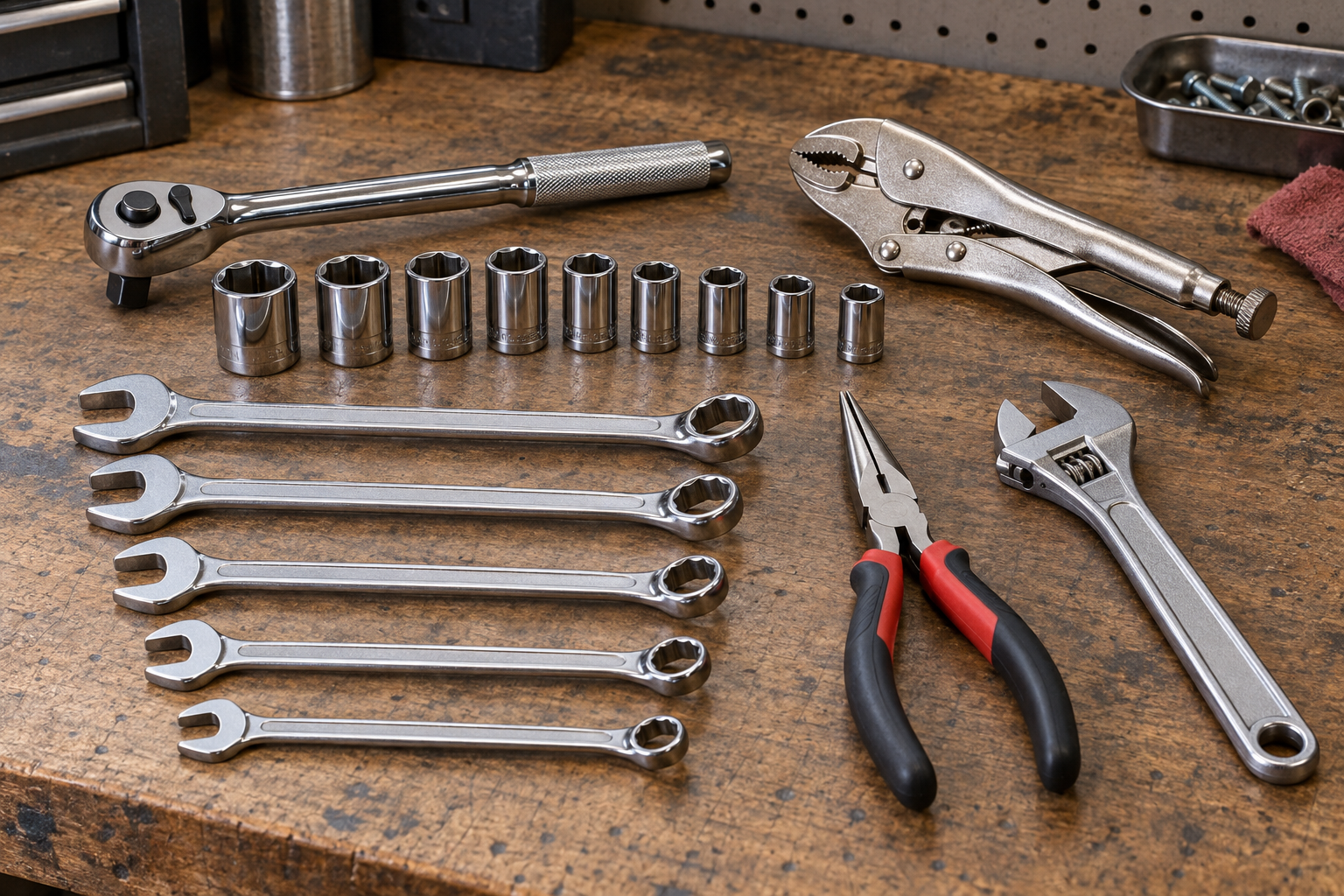
Choose needle-nose pliers when the part is close enough to see and reach directly, and you need to place the jaws accurately. They work well for holding a small nut, bending a cotter pin, shaping light wire, or pulling a connector in an open area. A shorter tool is also easier to use in a crowded space where a long handle would hit a fender, frame rail, or your other hand.
For general household and light mechanical work, ordinary straight-jaw needle-nose pliers are usually the cheaper and more versatile buy. Look for jaws that meet evenly at the tip and a pivot that moves without wobble. Fine tips help with tiny parts but can bend or chip if used to twist stiff wire or pry. For that kind of work, move up to a heavier combination or lineman’s plier rather than forcing the delicate tips.
A basic needle-nose plier is enough if most of your jobs involve small parts in accessible spaces. You do not need a long-reach set just because it looks more specialized.
When long-reach pliers earn their place
Long-reach pliers are useful when your fingers and standard pliers cannot get to the work. Common examples include retrieving a dropped clip from a narrow engine bay gap, reaching a spring clamp behind a component, or gripping a small part inside a machine housing. An 11- to 16-inch tool can reach noticeably farther, but measure the access path, not just the distance to the part. A long tool still cannot help if the opening is too narrow for its neck or if the jaws cannot turn into position.
Jaw shape matters. Straight jaws are a sensible first choice for reaching down into a cavity. A 45- or 90-degree bend can help around an obstruction, but the angle can make it harder to judge where the tips land. If you often work around hoses and wiring, slim smooth jaws reduce the chance of snagging insulation. Serrated jaws grip better, but can mark soft plastic or damage a wire’s outer jacket.
Long reach is not the same as high force. The extended neck flexes more, and the added distance reduces your sense of pressure at the jaws. Do not use long-reach pliers as a pry bar or to crush a stuck fitting. If you need serious clamping force, reposition the work or use a tool designed for that job. A straight-and-bent long-reach set makes sense when you regularly work in deep or obstructed spaces; occasional users can buy one shape at a time.
Buying and using the right pair
Before buying, check the tool’s overall length, jaw length, tip width, and maximum opening. A long tool with wide jaws may not pass through a tight gap. If the job involves a specific clip or clamp, compare the opening and jaw shape with the part while it is accessible. For electrical work, insulated handles alone do not make pliers safe for live circuits; use properly rated insulated tools and follow the equipment’s de-energizing procedure.
Use only enough grip to hold the part. Small clips can fly when released, so cover them with a hand or use a pickup tool when possible. Do not pull hard on a wire to remove a connector; grip the connector body instead. On delicate parts, test the pliers on an accessible edge first. A slip can cut a hose, score a plastic housing, or turn a simple retrieval into a repair.
What should you buy?
If you own no pliers for precision work, start with standard needle-nose pliers. They cost less, handle more everyday tasks, and are easier to control. Add long-reach pliers when a recurring job genuinely puts parts beyond the reach of your ordinary pair—not just because the tool might be handy someday. If access is the main problem, a long-reach needle-nose pair is the more useful specialist. If the part is already within reach, the shorter pliers are usually the better tool.