What's inside
As an Amazon Associate I earn from qualifying purchases. This post may contain affiliate links at no extra cost to you.
Our Top Picks
 Amazon Basics 3-Piece Quick Release Groove Joint Pliers3-Piece14.17 x 4.45 x 2.52 Inches2.2 poundsCheck on Amazon


Best Slip-Joint Pliers for Everyday Repairs
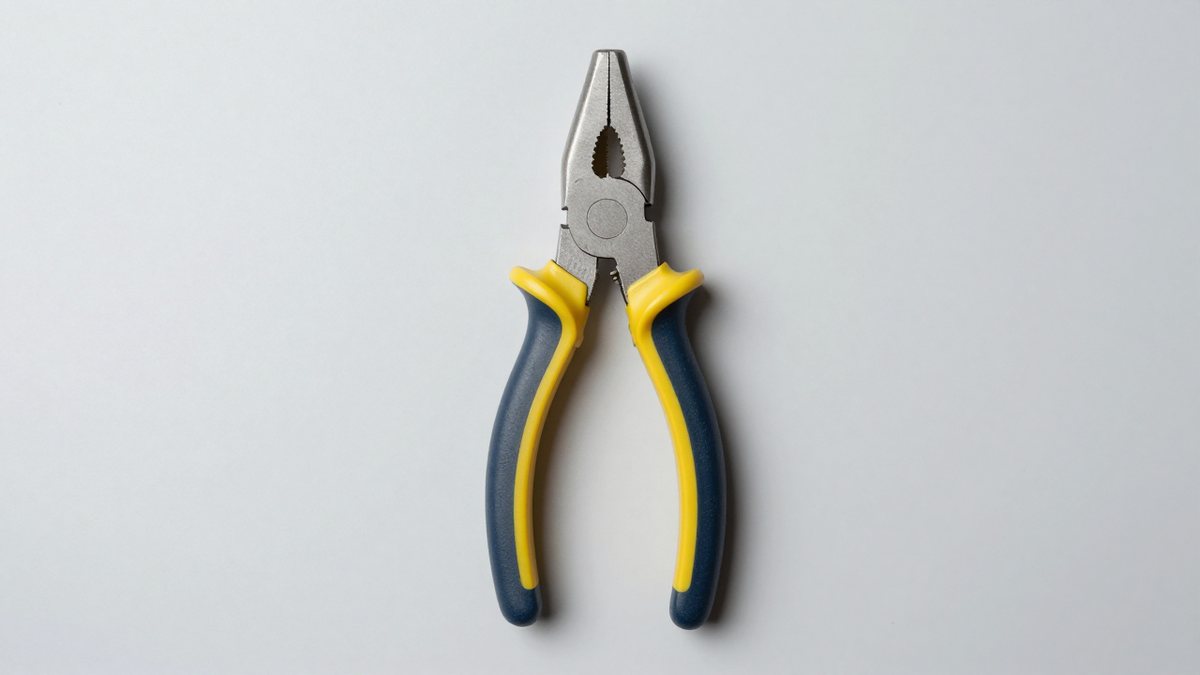
For most household repairs, the best slip joint pliers are a 6- or 8-inch model with two adjustment positions, accurately aligned jaws, and comfortable dipped handles; choose a larger, multi-position pair if you regularly work on plumbing fittings or bulky workshop parts. The right choice depends less on the number of features than on whether the jaws fit the objects you actually handle.
Quick picks by situation
- General household drawer: A 6-inch, two-position pair is compact and easy to control on small nuts, wire, and fixtures.
- One-pair household and workshop use: An 8-inch pair offers more reach and leverage without becoming cumbersome for ordinary repairs.
- Frequent work across different sizes: Choose a multi-position design with a broad jaw opening, especially if you often grip larger fittings.
- Occasional, low-force jobs: A basic forged-steel pair is usually sufficient. Pay for refined adjustment and handles if you use the tool regularly.
What matters when comparing slip-joint pliers
Slip-joint pliers change jaw opening by moving the pivot into another position. That simple mechanism makes them versatile, but they are not a substitute for groove-joint pliers, which generally offer more adjustment range, or a properly sized wrench when a fitting must not be marred.
As an Amazon Associate we earn from qualifying purchases at no extra cost to you.


- Jaw capacity: The maximum opening indicates the largest object the jaws can surround, not the largest object the tool can safely turn. Jaw shape and grip matter too.
- Adjustment positions: Two positions cover common light-duty tasks. More positions can improve fit across a wider range, but do not automatically mean stronger grip.
- Tooth grip: Opposing serrations help resist slipping on rounded or irregular parts. They can leave marks, so protect finished surfaces or use a smooth-jaw tool instead.
- Handle comfort: Dipped or dual-material grips make sustained work more comfortable. They do not make the jaws stronger, and bulky handles can be awkward in tight spaces.
Representative sizes and features
The figures below are practical size-class comparisons, not guarantees for every model. Manufacturers measure capacity differently, and exact jaw opening, weight, and adjustment count vary by product. Check the individual specification sheet before buying.
| Size class | Typical length | Typical adjustment positions | Typical maximum opening | Best fit |
|---|---|---|---|---|
| Compact | 6 in (about 150 mm) | 2 | About 1 in (25 mm) | Small household fixes, tool kits, tight access |
| General purpose | 8 in (about 200 mm) | 2–3 | About 1.25–1.5 in (32–38 mm) | Mixed home and workshop tasks |
| Large | 10 in (about 250 mm) | 2–3 | About 1.5–2 in (38–50 mm) | Larger parts where added reach is useful |
Opening figures are approximate class ranges, not a promise that every 6-, 8-, or 10-inch tool reaches the same capacity. Some designs use multiple pivot slots; others use a different adjustment mechanism. A product’s stated jaw opening is more useful than its length alone.
Which type should you buy?
For a compact home repair kit: 6-inch, two-position pliers
Choose these for light tasks such as holding a small part, turning a loose fastener, or gripping a fixture where access is limited. Their shorter handles make them easier to store and maneuver, but provide less leverage. If your usual repairs involve stiff fittings or larger objects, a compact pair can feel undersized quickly.
For one dependable all-rounder: 8-inch pliers
An 8-inch pair is the sensible middle ground for many homeowners. It gives more reach and leverage than a 6-inch tool while remaining manageable in a drawer or basic tool bag. Look for clean pivot movement, jaws that meet evenly, and a comfortable grip that does not obstruct a full handhold.
For varied workshop work: multi-position or larger pliers
If you regularly grip different diameters, additional adjustment positions can help keep the teeth engaged without forcing the handles too far apart. A 10-inch model can add leverage, but its size may make it a poor choice for cramped spaces or delicate work. For repeated gripping of large pipe, compare groove-joint pliers rather than expecting a slip-joint design to cover every job.
Check fit before relying on the advertised opening
Suppose a fitting measures 30 mm across and a pair’s stated maximum jaw opening is 32 mm. That leaves only 2 mm of total clearance—roughly 1 mm per side when centered. The tool may technically fit, but the jaws could engage near their limit, leaving little room for angled access. For a secure, comfortable grip, choose a tool with some capacity to spare and verify that its jaw shape suits the fitting.
Also consider the surface. Serrated slip-joint jaws can bite into soft metal, plastic, or polished finishes. If appearance matters, use a correctly sized wrench or protect the work with a non-slip pad, while recognizing that padding can reduce grip.
Comfort, durability, and care
On a well-made pair, the pivot should change positions without binding, and the jaws should close without a large sideways wobble. Slight movement is common in this simple joint; excessive looseness can make precise gripping frustrating. Forged steel is a familiar choice for general durability. Inspect the cutting edge only if the model includes one—small integrated cutters are for light wire, not heavy cable or hardened material.
The pivot and jaw teeth usually show wear before the handles do. Dirt and moisture can stiffen the joint or encourage corrosion, so wipe the tool clean after use and dry it before storage. A small amount of light oil at the pivot can help keep adjustment smooth; wipe away excess so it does not transfer to workpieces. Do not extend the handles with a pipe or use the pliers as a hammer: excessive force can damage the pivot, distort the jaws, or cause the tool to slip.
For occasional household use, a basic pair is often adequate. If you use slip-joint pliers weekly, the extra cost of a better-finished pivot and more comfortable handles may be worthwhile. General market pricing varies by brand and region: basic models commonly fall in the low-teens to low-twenties range, while premium or specialized designs can cost more. Compare the exact capacity, adjustment layout, and build quality rather than paying for length alone.
Bottom line
Pick a 6-inch pair for portability and small repairs, an 8-inch pair for the broadest everyday usefulness, or a larger multi-position model if your work regularly involves bigger parts. The best slip joint pliers are the ones whose jaw capacity fits your common tasks with room to spare, whose teeth grip without damaging the work, and whose handles let you apply controlled force comfortably.