What's inside
As an Amazon Associate I earn from qualifying purchases. This post may contain affiliate links at no extra cost to you.
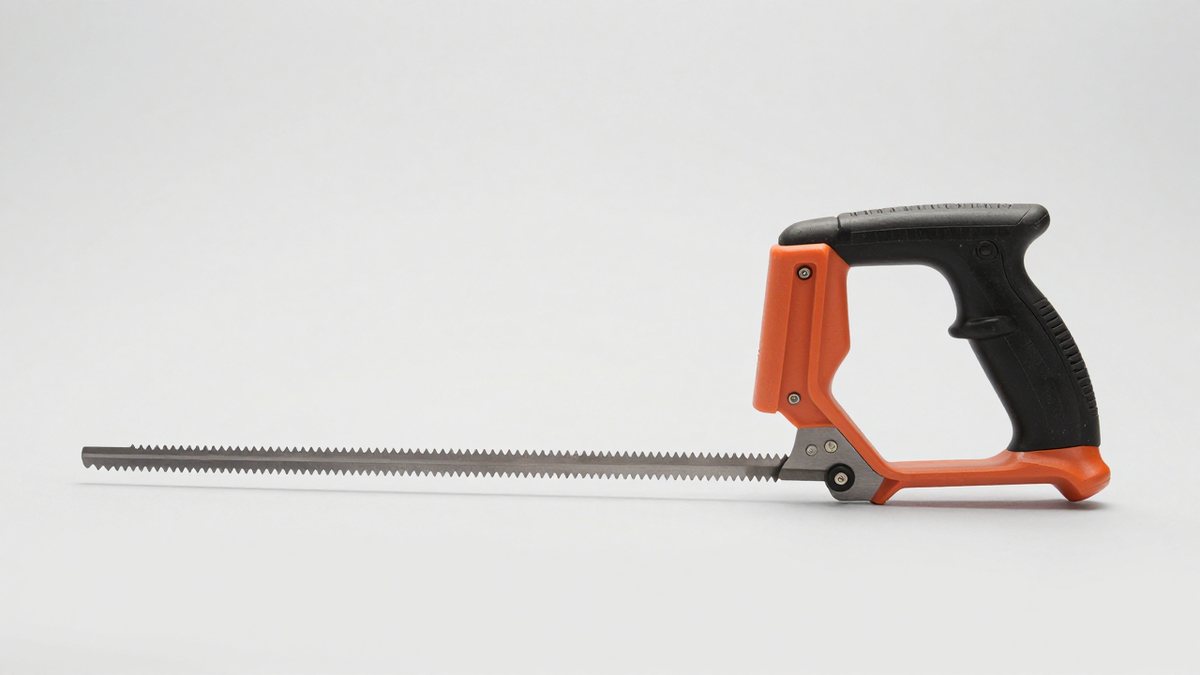
The best hand saw for cutting 2×4 lumber cleanly is usually a 15- to 20-inch universal or crosscut saw with about 9–11 teeth per inch (TPI): it removes wood quickly while leaving a controllable edge for framing, shelving, and general repairs.
As an Amazon Associate we earn from qualifying purchases at no extra cost to you.


Our Top Picks
 SUIZAN Ryoba Double Edge Saw 9.5" Assembly ver9.5 Inch (240mm)23.2 x 0.79 x 3.15 inches0.44 poundsCheck on Amazon


Quick picks by cutting situation
| Situation | Best saw type | Useful specification | Why it fits |
|---|---|---|---|
| Occasional 2×4 cuts on a budget | General-purpose panel or universal saw | 15–20 in. blade, 8–10 TPI | Fast enough for framing and forgiving for beginners |
| Cleaner crosscuts and repeated project work | Fine-tooth crosscut saw | 20–26 in. blade, 10–14 TPI | More controlled tracking and less breakout |
| Fine cutting in trim or small stock | Japanese pull saw or fine-tooth backsaw | 9–12 in. blade, 17–26 TPI | Thin kerf and precise cuts, but slower in thick lumber |
| Branches and small tree limbs | Pruning saw | 10–14 in. curved blade, roughly 5–8 TPI | Designed for green wood rather than construction lumber |
| Many rough cuts with minimal physical effort | Cordless reciprocating saw | 18V/20V-class tool, 6–12 in. wood blade | Fast and powerful, though less accurate than a hand saw |
What matters when cutting a standard 2×4
A nominal 2×4 measures approximately 1-1/2 by 3-1/2 inches after milling. A crosscut therefore passes through only 3-1/2 inches of material, but the saw still has to clear dust and chips without binding. Blade length, tooth count, tooth geometry, and stiffness all affect that job.
Blade length
A 15-inch saw can cut a 2×4 effectively, particularly in a cramped workshop. A 20-inch blade usually makes the work easier because each stroke removes more material and the longer plate tracks more steadily. Blades around 24–26 inches are comfortable for repeated framing cuts, but they need more clearance and can feel unwieldy for short workpieces.
For most buyers, 18–20 inches is the useful middle ground. A shorter blade is not automatically more accurate; it simply takes more strokes and can encourage a cramped, inefficient motion.
Tooth count and tooth shape
Lower TPI cuts faster because each tooth has a larger gullet for carrying chips away. Higher TPI produces a smoother edge but fills with sawdust more quickly in thick stock.
- 6–8 TPI: rapid rough cutting, demolition, and wet or resinous wood; the edge may be coarse.
- 9–11 TPI: the best general range for clean 2×4 crosscuts with reasonable speed.
- 12–14 TPI: smoother cuts in dry lumber and trim, but slower through a full 2×4.
- 17 TPI and above: fine joinery, dowels, and thin stock rather than routine framing.
Look for teeth labeled crosscut or universal. Crosscut teeth are shaped to sever fibers across the grain. “Universal” patterns are a practical compromise for users who cut both across and along the grain. Avoid choosing a fine-tooth backsaw simply because its teeth look neat: its rigid spine limits cutting depth and may not comfortably pass through a 2×4.
Head-to-head: the most useful saw types
General-purpose 15–20-inch hand saw
This is the strongest all-around choice for cutting 2x4s. A modern saw with induction-hardened teeth can stay sharp through a substantial amount of construction work, while a comfortable pistol-grip handle helps maintain a straight stroke. Models such as the Stanley FATMAX hand-saw range and Irwin Universal hand-saws represent this broad category, with variations in blade length and TPI.
Choose one around 9 TPI for speed or 11 TPI for a cleaner edge. A blade with a moderate set—the slight sideways offset of alternating teeth—reduces binding, although excessive set makes a wider, rougher kerf.
Fine-tooth crosscut saw
A 10–14 TPI crosscut saw is the better choice when the cut will remain visible or needs less splintering. It is the best hand saw for fine cutting among conventional push saws, especially in dry pine, spruce, and other softwoods. The tradeoff is effort: more teeth are engaging the wood, and each tooth removes less material.
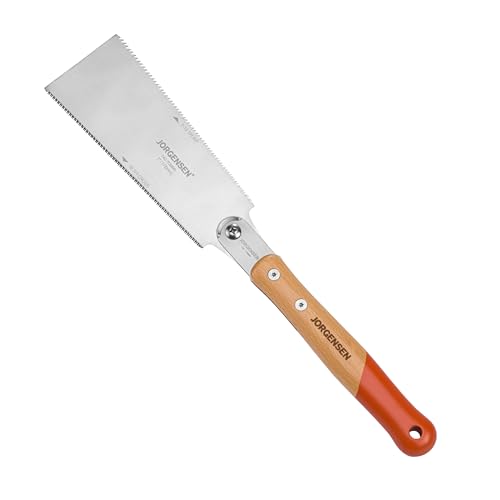
For furniture-quality work, a Japanese ryoba or dozuki can produce a very clean cut. These are pull saws, so they use thinner blades and should not be forced during the return stroke. A ryoba offers separate rip and crosscut edges; a dozuki has a backed blade for greater control but less cutting depth.
Pruning saw
The best hand saw for cutting trees is not a framing saw but a pruning saw. Its curved, coarse teeth are designed to clear chips from green wood and follow branches. Use it for limbs within the saw’s stated capacity, commonly branches several inches thick, and use a pole saw or professional arborist for high or hazardous branches. Do not substitute a pruning saw for accurate 2×4 joinery: its aggressive teeth and curved profile make a square cut harder.
Cordless reciprocating saw
The best electric hand saw for cutting wood when speed matters is generally a cordless reciprocating saw fitted with a wood-cutting blade. Common 18V and 20V-class tools can cut a 2×4 in seconds, but the blade flexes and the long stroke makes precision difficult. They are excellent for demolition, rough openings, and cutting lumber in awkward locations—not for a finished crosscut unless the cut will be hidden or you use a guide and take care.
Expect a general market price of about $20–$50 for a quality manual saw, $50–$120 for a premium hand saw or Japanese saw, and roughly $100–$300 for a cordless reciprocating saw kit, depending on whether the battery and charger are included.
Decision matrix for choosing your saw
| Your priority | Recommended choice | Target specification | Compromise |
|---|---|---|---|
| Lowest cost and occasional use | Universal hand saw | 15–18 in., 8–10 TPI | Rougher finish than a fine crosscut saw |
| Beginner wanting easy tracking | Stiff 18–20 in. crosscut saw | 10–11 TPI, ergonomic handle | Less convenient in tight spaces |
| Frequent framing or deck work | Long universal saw | 20–24 in., 7–9 TPI | Not ideal for delicate trim |
| Fine woodworking and visible ends | Japanese pull saw or fine crosscut | 9–14 in., 17–26 TPI for pull saws | Slower and more vulnerable to bending |
| Many cuts or demolition | Cordless reciprocating saw | 18V/20V platform, 6–12 in. blade | Noise, battery cost, and lower accuracy |
How to make a clean 2×4 crosscut
- Mark the waste side. Use a sharp pencil and mark around the board if the cut must be square. Keep the saw kerf on the waste side of the line.
- Support the lumber. Place the 2×4 on sawhorses or a workbench with the offcut supported. Unsupported stock can pinch the blade near the end of the cut.
- Start with short strokes. Set the toe of the blade on the waste side and make a shallow starting notch. A scrap block held against the blade can act as a temporary guide.
- Use the full blade. Once the groove is established, use long, relaxed strokes that involve much of the 18–20-inch blade. Let the teeth cut; pressing harder usually causes wandering.
- Slow near breakthrough. Support the offcut and reduce pressure during the final fibers to prevent tear-out. Cutting from both faces is useful when appearance matters.
As a rough effort comparison, a 9 TPI saw may make about 25–40 effective strokes through a typical 2×4, while a 14 TPI saw may require roughly 40–60 strokes. The exact number depends on tooth sharpness, species, grain, and stroke length, but the pattern is consistent: higher TPI improves finish at the cost of speed.
Durability, maintenance, and common mistakes
Teeth wear first, especially when the lumber contains grit, embedded nails, or dried concrete. Induction-hardened teeth resist dulling but are generally not practical to file once blunt; replace the blade or saw. Traditional unhardened teeth can be sharpened by an experienced user with a saw file, but sharpening may cost more time than a budget replacement.
- Brush resin and dust from the blade after use and wipe it dry.
- Apply a very light coat of rust-preventive oil for long-term storage; wipe excess before cutting.
- Store the saw where the teeth cannot contact tools or metal edges.
- Do not twist a thin blade in the kerf, particularly with a Japanese pull saw.
- Do not use a fine-tooth saw to rip long cuts or a pruning saw for precision carpentry.
For one dependable tool, select an 18–20-inch general-purpose crosscut or universal saw with 9–11 TPI. Add a fine-tooth pull saw if clean visible cuts matter, and choose a reciprocating saw only when speed and access are more important than a precise, finished edge.