What's inside
As an Amazon Associate I earn from qualifying purchases. This post may contain affiliate links at no extra cost to you.
Our Top Picks


Best Hand Saws for Woodworking and Home Projects
The best hand saws are matched to the cut: choose a 20–26-inch, 7–10-TPI panel saw for general-purpose crosscuts and rough sizing, a 12–15-inch fine-tooth saw for accurate joinery, or a pull saw when controlled, low-effort cuts matter more than easy sharpening.
“TPI” means teeth per inch. Lower counts generally cut faster and leave a rougher surface; higher counts cut more slowly but leave a finer one. Also check the cut direction: Western-style saws usually cut on the push stroke, while Japanese pull saws cut on the pull stroke. Those differences matter more than a long list of features when choosing a hand saw for wood.
As an Amazon Associate we earn from qualifying purchases at no extra cost to you.

Compare the main saw types
| Saw type | Typical blade length | Typical tooth count | Cut direction | Best suited to | Sharpening outlook |
|---|---|---|---|---|---|
| Western panel saw | 20–26 in. | 6–10 TPI | Push | Boards, studs, general home repairs | Sharpenable when teeth are filed to a consistent profile |
| Backsaw | 10–14 in. | 12–20 TPI | Push | Accurate joints, trim, small parts | Often sharpenable; the stiffening spine limits cut depth |
| Japanese ryoba | 9–12 in. | About 7–15 TPI, depending on edge | Pull | Crosscuts and rip cuts with one blade | Many replaceable-blade models are not intended for filing |
| Japanese dozuki | 7–10 in. | About 18–30 TPI | Pull | Fine joinery and shallow, precise cuts | Commonly replaceable blade; delicate teeth need careful handling |
| Keyhole saw | 6–12 in. | 8–12 TPI | Usually push | Curves or openings in drywall and thin panels | Usually replaced rather than sharpened |
These are useful shopping ranges, not fixed standards. Tooth shape, set, blade thickness, and whether the teeth cut across or along the grain also affect performance. Manufacturers may describe TPI or tooth spacing differently, so compare specifications within the same measurement system.
Choose by the job, not by the longest feature list
For general repairs and rough board cutting
A 20–26-inch panel saw around 7–10 TPI is a practical first choice if you need one saw for studs, shelving, and ordinary lumber. A longer blade can make a full-length cut more efficiently, but it needs room to travel. If you mostly work on short pieces or in cramped spaces, a 16–20-inch model may be easier to control. For smoother crosscuts, look for teeth designed for cutting across the grain; for ripping boards lengthwise, choose a rip-tooth pattern.
For furniture, trim, and accurate joinery
A backsaw or dozuki is easier to guide along a marked line than a flexible panel saw. The backsaw’s spine stiffens the blade, which helps with straight, shallow cuts but limits how deep it can go. A dozuki’s thin blade and fine teeth suit small joints and clean edges, but it is less forgiving of sideways twisting. For a first joinery saw, prioritize a comfortable handle and a blade length that fits your stock rather than chasing the highest TPI.
For one saw that handles both grain directions
A ryoba has two cutting edges: one typically suited to crosscutting and the other to ripping. It can be a compact, versatile option for a small workshop. Its pull stroke helps keep a thin blade in tension, but the motion takes practice if you are accustomed to pushing a Western saw. Keep the blade aligned with the cut; forcing or twisting it can damage fine teeth.
For openings and awkward cuts
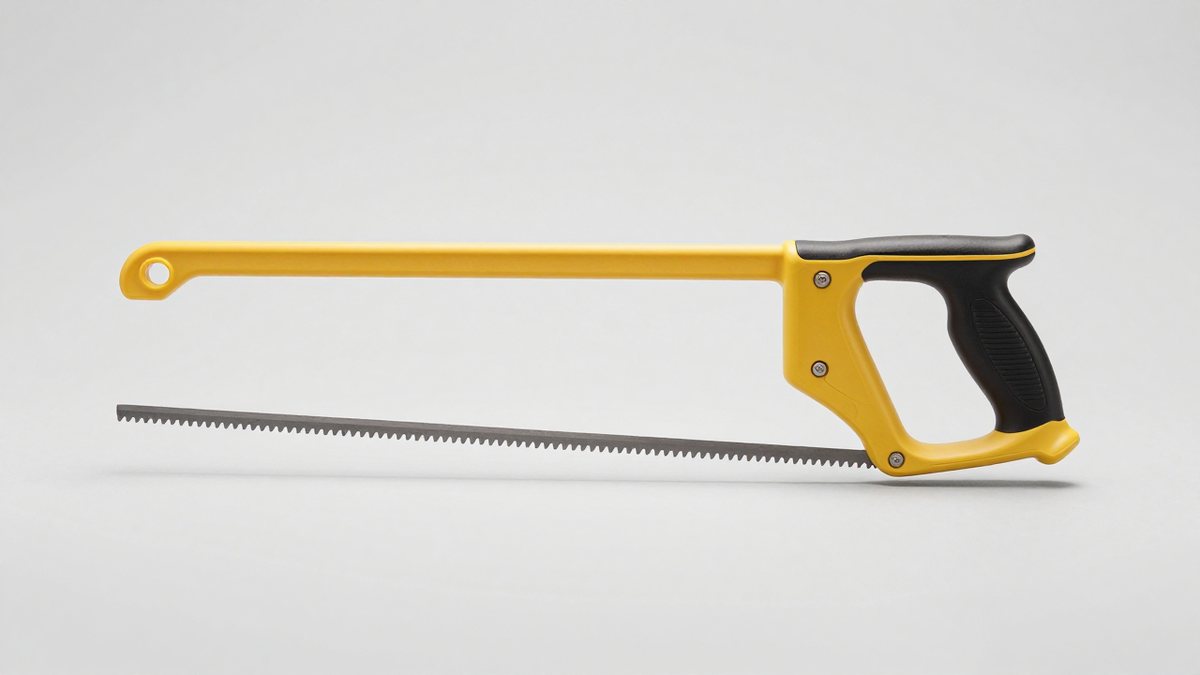
A keyhole saw has a narrow, pointed blade for starting openings or cutting curves in thin material. It is a specialist rather than a substitute for a panel saw. For a rough cut in thicker wood, its short blade can bind and wander; use the right tool for the material and cut shape.
A quick decision matrix
| Your situation | Good starting choice | Why |
|---|---|---|
| Occasional household repairs; limited budget | Basic 20–22-in. panel saw, about 7–10 TPI | Versatile, easy to find, and suitable for common rough cuts |
| Beginner learning joints | 12–14-in. backsaw, about 14–18 TPI | Stiff blade makes controlled, straight cuts easier to learn |
| Small workspace or portable kit | 9–12-in. ryoba | Compact and offers both rip and crosscut edges |
| Frequent, clean cuts with minimal sharpening upkeep | Replaceable-blade Japanese saw | Replace a worn or damaged blade instead of filing its teeth |
| Deep cuts in large boards | Long panel saw matched to the cut direction | More blade length supports a longer, steady stroke |
Sharpening, upkeep, and ownership costs
Traditional Western saws can be sharpened, but doing it well takes a suitable file, a way to hold the blade securely, and practice keeping the tooth angles and set consistent. For occasional users, a replaceable-blade saw may be more convenient even if replacement blades add ongoing cost. As a general market guide, basic hand saws often cost roughly $15–$40, while better joinery saws and quality replaceable-blade models commonly fall around $30–$100 or more. Specialty and premium saws can exceed that range.
Teeth usually lose sharpness first; rust, damaged tips, and a bent blade can also end a saw’s useful life. Brush off sawdust after use, wipe the blade dry, and store it so the teeth cannot strike tools or the floor. A light protective oil helps prevent rust in damp storage. Avoid cutting through screws or nails unless the saw is specifically designed for that material, and never twist a thin blade to free a binding cut.
To compare ownership cost, include blades or sharpening rather than looking only at the purchase price. For example, if a $30 replaceable-blade saw uses a $12 replacement blade after 20 substantial projects, the saw-and-blade cost is $42, or $2.10 per project before any further replacements. A sharpenable saw may cost more upfront but can be economical if you will maintain it; if you will not sharpen it, that advantage may never materialize.
How to get a cleaner, straighter cut
- Support the workpiece. Clamp it securely and leave the cut line accessible. Unsupported wood can vibrate, pinch the blade, or split near the end of a cut.
- Mark the waste side. Draw a clear line and cut just to the waste side so the finished piece stays near its intended size.
- Start with light strokes. Use short, controlled strokes to establish a kerf. Follow the saw’s intended direction—push for most Western saws, pull for Japanese saws.
- Let the teeth cut. Use steady strokes instead of pressing hard. Excess force can make the blade wander, especially on fine-tooth or thin-blade saws.
- Ease off near the end. Support the offcut and reduce pressure to limit splintering as the cut breaks through.
For the best hand saw for wood in a typical home toolkit, start with a panel saw if you mostly cut construction lumber and boards. Add a backsaw or fine pull saw when accurate joinery becomes a regular task. Choosing by cut direction, tooth count, blade length, and willingness to sharpen will usually produce a better match than buying the most specialized or highest-tooth-count saw.