What's inside
- Which Type of Electric Hand Saw Fits Your Work?
- Compact Electric Hand Saws Compared: Specs That Affect Real Use
- Corded vs. Cordless: Runtime, Power, and Practical Tradeoffs
- Control Features That Actually Prevent Mistakes
- Decision Matrix: Pick by Your Situation
- Durability and Ownership Realities
- Setup and Safe First Cuts: Step-by-Step
- FAQ
- Related Guides
As an Amazon Associate I earn from qualifying purchases. This post may contain affiliate links at no extra cost to you.
The best electric hand saw for most DIY and woodworking is a compact cordless circular saw with a 4-1/2 to 5-1/2 inch blade, like the DeWalt DCS571 or Makita SH02Z, because it balances straight-cut control, adequate cutting capacity for sheet goods and 2x material, and easy one-handed handling without the cord management of full-size 7-1/4 inch saws.
As an Amazon Associate we earn from qualifying purchases at no extra cost to you.


Our Top Picks
 Tietoc Chainsaw 6 Inch Mini Electric Chainsaw Cordless6inch16 x 4 x 3 inches3.3 poundsCheck on Amazon


Which Type of Electric Hand Saw Fits Your Work?
Electric hand saw covers several distinct tools, and choosing the right type matters more than brand. For DIY and woodworking, these three cover almost all needs:
- Compact circular saw (mini circular saw): 4 to 5-1/2 inch blade. Best for straight rips and crosscuts in plywood, MDF, hardwood, softwood, and thin non-ferrous metal or tile with the right blade. Offers the most control for woodworking joinery and shelving cuts.
- Reciprocating saw / one-handed hackzall: Push-pull blade. Best for demolition, pruning, cutting in tight spaces, flush trimming, and rough cuts in wood with nails, PVC, and drywall. Not ideal for straight, splinter-free woodworking cuts.
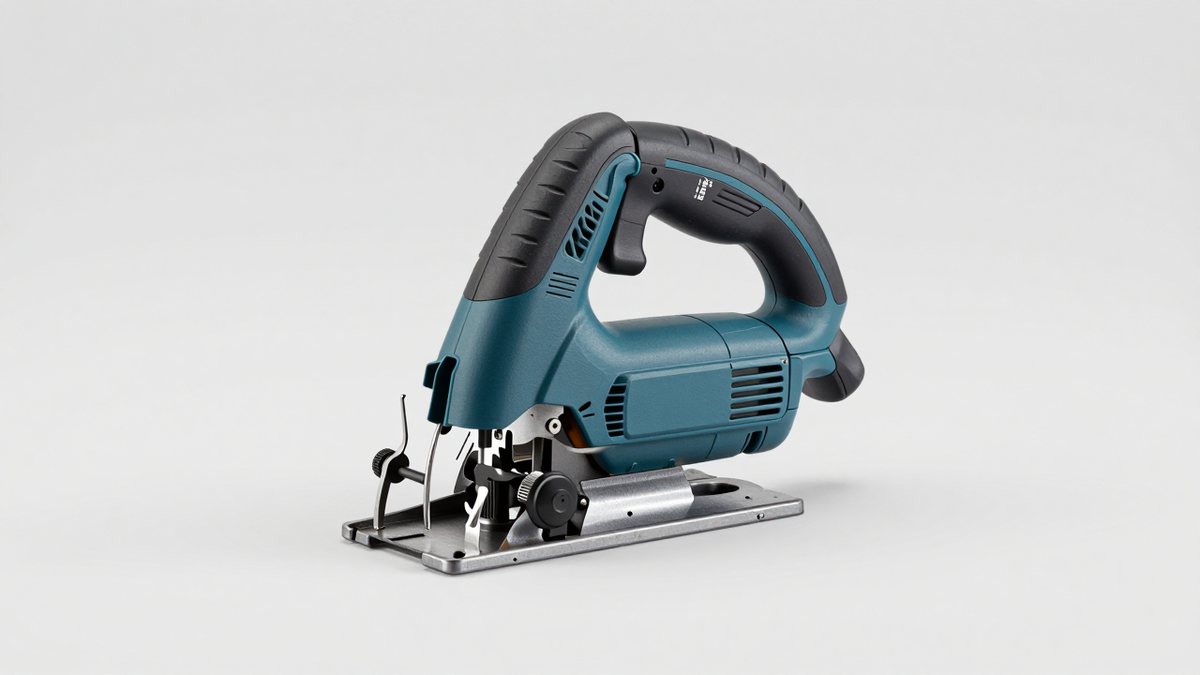
- Compact jigsaw: Up-down blade. Best for curved cuts, cutouts for sinks and outlets, and intricate patterns. Slow for long straight cuts.
If you can own only one electric hand saw for woodworking and general DIY, start with a compact circular saw. Add a cordless reciprocating saw second if you do renovation or outdoor cutting. Add a jigsaw third if you cut curves regularly.
Compact Electric Hand Saws Compared: Specs That Affect Real Use
Cutting capacity, weight, and blade system determine how a saw feels on plywood, 2x lumber, and trim. The table below compares common compact models available in 2026 by the numbers that change your workflow.
| Model (Type) | Blade Size | Max Cut at 90° | Bevel Capacity | Weight (with battery) | Power | Blade Change |
|---|---|---|---|---|---|---|
| DeWalt DCS571 (Compact Circular) | 4-1/2 in | 1-11/16 in (42.8 mm) | 0-45° | 6.0 lbs (2.7 kg) with 20V 2.0Ah | 18V/20V cordless | Tool-free spindle lock + hex key |
| Makita SH02Z 12V CXT (Compact Circular) | 3-3/8 in | 1 in (25.5 mm) | 0-45° | 3.6 lbs (1.6 kg) with 12V 4.0Ah | 12V cordless | Hex key, spindle lock |
| Bosch GKS18V-25GCL 18V (Compact Circular) | 5-1/2 in | 1-15/16 in (49 mm) | 0-45° | 6.6 lbs (3.0 kg) with 18V 4.0Ah | 18V cordless | Tool-free spindle lock |
| Worx WX429L WorxSAW (Compact Circular) | 4-1/2 in | 1-11/16 in (42 mm) | 0-45° | 4.9 lbs (2.2 kg) | Corded 4.0A | Hex key |
| Milwaukee M12 FUEL 2520-20 (Hackzall Reciprocating) | 1/2 in shank reciprocating | Up to 3 in wood (depends on blade) | N/A | 3.2 lbs (1.45 kg) with M12 2.0Ah | 12V cordless | Tool-free Quik-Lok |
| Bosch GST18V-155BC 18V (Jigsaw) | T-shank jigsaw | 4 in wood, 3/8 in steel | 0-45° | 4.8 lbs (2.18 kg) with 18V 4.0Ah | 18V cordless | Tool-free lever |
What those numbers mean for DIY materials
Cutting capacity: A 1-11/16 to 1-15/16 inch depth cuts 3/4 inch plywood and MDF in one pass with margin for a guide rail. It will cut a 2×4 (1-1/2 inch actual) at 90°, but only saws over ~1-15/16 inch can cut a 2×4 at 45° for miters. The 3-3/8 inch Makita is lighter and more controllable for trim and underlayment but requires two passes or a flip for 2x stock.
Weight and control: Under 4 lbs is genuinely one-handed for overhead cuts like drywall or soffit. Over 6 lbs needs two hands for straightness, especially at the end of a 4×8 sheet when you are reaching. If you have limited shop space and cut on sawhorses or the floor with a foam board, lighter saws reduce fatigue and wander.
Blade changes: Tool-free systems matter if you switch between wood, plywood-finishing, and metal/tile blades in one project. Compact circular saws still often need a hex key stored on the tool; check that the key has onboard storage so you do not lose it. Reciprocating and jigsaw tool-free clamps are standard and save significant time.
Corded vs. Cordless: Runtime, Power, and Practical Tradeoffs
Cordless dominates compact saws in 2026 because batteries have closed the power gap and eliminate trip hazards when cutting sheet goods on the floor. Corded still has a place for continuous workshop use.
- Cordless 12V: Lightest, best control for trim, craft, and light plywood. Runtime is typically 80-120 linear feet of 1/2 inch plywood per 2.0Ah battery. Ideal if you already own the battery platform. Limitation is depth and sustained ripping in hardwood over 1 inch.
- Cordless 18V/20V: Near corded performance for DIY thickness. A 4.0Ah battery typically delivers 150-220 linear feet of 3/4 inch plywood or 60-90 cuts in 2×4 SPF before recharge, depending on blade sharpness and feed rate. Weight penalty is 1.5 to 2 lbs over 12V.
- Corded 4-6A compact: Unlimited runtime, slightly higher sustained RPM under load, and lower upfront cost (generally $60 to $110 vs. $120 to $180 bare tool for cordless). Tradeoff is cord management and less portability for outdoor or ladder work.
Worked example: How many batteries do you need?
Estimate your job to avoid mid-cut power loss. For example, building a 4×8 foot plywood bookcase that requires 48 linear feet of 3/4 inch plywood rips and crosscuts plus 16 feet of 1x pine trim:
Total cut length = 64 feet. With an 18V compact circular saw and a 2.0Ah battery rated around 100 feet of 3/4 inch plywood per charge, one battery is technically enough, but voltage sag in the last 15% reduces cut quality. Plan on one 4.0Ah or two 2.0Ah batteries so you can swap at 50% and keep blade speed constant. For cordless reciprocating work, battery life is less about feet and more about strokes in nail-embedded wood; carry a second battery if you are demolishing more than a small vanity or fence section.
Control Features That Actually Prevent Mistakes
Specs alone do not guarantee a straight cut. These features affect accuracy for DIY woodworkers more than peak RPM:
- Flat, wide shoe (base plate): A stamped steel shoe flexes and rocks on warped boards. Look for a flat aluminum or magnesium shoe with a cut line notch for 0° and 45°. It rides more stably on a straight-edge guide.
- Laser or shadow cut line: Lasers help in demolition lighting; a bright LED shadow line is more accurate for fine woodworking because it shows the actual blade kerf.
- Spindle lock and guard retraction: A positive spindle lock prevents blade slip during changes, and a smooth, spring-return lower guard that you can retract with a lever (not your finger near the blade) improves plunge cuts in the middle of plywood.
- Variable speed trigger vs. dial: Triggers allow slow starts to avoid splintering plywood faces. Single-speed saws tend to grab at start-up.
- Dust port: Compact saws throw fine MDF dust forward. A 1-1/4 to 1-3/8 inch port that fits a standard shop vacuum hose keeps the line visible and reduces cleanup.
Decision Matrix: Pick by Your Situation
| Your Situation | Recommended Electric Hand Saw | Why |
|---|---|---|
| Small apartment shop, light DIY, mostly plywood and 1x boards | 12V compact circular (3-3/8 to 4-1/2 in) | Lightest weight, low noise, sufficient depth for 3/4 in sheet goods, easy storage |
| Garage woodworking, shelving, workbench, occasional 2×4 and hardwood | 18V/20V 4-1/2 or 5-1/2 in compact circular | Cuts 2x at 90° and 45° with guide, better bevel accuracy, shares batteries with drill/driver |
| Renovation, demolition, cutting nails, PVC, drywall, pallets | One-handed 12V reciprocating saw | Tool-free blade, cuts embedded fasteners, works in cavities circular saws cannot reach |
| Crafts, curved signs, cutouts, templates | Cordless jigsaw | Orbital action and scrolling control for curves that circular saws cannot do |
| Tight budget, workshop-only use, long rips | Corded 4-1/2 in compact circular | Lowest cost, no battery platform lock-in, continuous power for repeated cuts |
| Already invested in a battery platform | Stay on that platform | Batteries are 40-60% of long-term cost; cross-platform buying doubles charger and battery expense |
General market ranges in 2026: corded compact saws $60-$120, cordless bare tools $110-$190, kits with 2.0Ah or 4.0Ah battery and charger $160-$280. Blades are the recurring cost at $8-$18 each for wood/framing and $12-$25 for diamond or carbide-tipped specialty blades.
Durability and Ownership Realities
Compact electric hand saws are low-maintenance, but these are the parts that wear first and the mistakes that shorten tool life:
- Brushless motor vs. brushed: Brushless models run cooler, hold speed better under load, and eliminate brush replacement. They cost $20-$40 more upfront but extend service intervals significantly for frequent users.
- Shoe and guard: Dropping the saw bends the shoe and binds the blade. Store with the blade retracted and avoid using the shoe as a hammer. Clean pitch buildup on the guard pivot with dry compressed air, not solvents that swell plastic.
- Blades and consumables: Dull blades cause burning, tear-out, and motor overload. For plywood, use 40-60 tooth carbide blades; for framing, 18-24 tooth. A blade that screeches or requires pushing hard is overdue. Keep at least one fine-finish and one general-purpose blade.
- Battery care: Do not run lithium packs until the saw stalls. Recharge at 20-30% remaining to preserve cycle life. Store batteries at room temperature, not in a freezing garage or hot shed.
- Dust and cleaning: After MDF or drywall, vacuum the motor vents and shoe. Fine dust packs around the lower guard spring and prevents it from closing, which is a safety risk.
- Common mistakes: Forcing a curve with a circular saw (causes kickback), cutting without clamping or supporting both sides of the sheet (causes binding), and using a wood blade for metal (destroys teeth and overheats the motor). Use the correct blade material and let the saw reach full speed before entering the cut.
Setup and Safe First Cuts: Step-by-Step
For a compact circular saw on plywood or 1x pine:
- Install the correct blade with teeth pointing forward in the direction of rotation arrow on the guard. Tighten with the spindle lock engaged.
- Set depth so 1/4 inch of blade extends below the material. Less exposure reduces kickback and splintering.
- Clamp a straight edge or factory edge as a guide. Measure from the guide to the cut line to account for the distance between blade and shoe edge.
- Support the workpiece on foam insulation or sawhorses so the cutoff does not pinch the blade at the end. Keep the larger waste side supported.
- Start the saw off the material, reach full RPM, then ease forward without forcing. Keep the cord (if corded) behind you and the battery clear of the cut path.
- Release the trigger and wait for the blade to stop before setting the saw down. The guard should snap closed automatically.
FAQ
Can an electric hand saw replace a full-size 7-1/4 inch circular saw?
For DIY sheet goods, trim, and furniture built from 3/4 inch plywood and 1x hardwood, yes. A compact 4-1/2 to 5-1/2 inch saw handles 90% of cuts with better control and less space. You still need a full-size saw for regular 2×10 or 4×4 lumber, deep bevels, or production framing.
What blade should I use for clean plywood cuts?
Use a carbide-tipped blade with 40 teeth or more for 4-1/2 inch saws and 60 teeth or more for 5-1/2 inch saws, with alternate top bevel (ATB) geometry. Apply painter’s tape on the cut line and cut with the good face down, since circular saws cut on the upstroke.
Are cordless compact saws powerful enough for hardwood?
Yes for hardwoods up to about 1 inch thick, such as oak or maple for shelves and cutting boards, if you use a sharp blade and moderate feed rate. For 8/4 hardwood (2 inch thick), a corded compact or full-size saw will be faster and cooler.