What's inside
- Best Hand Saws for Cutting Wood
- Quick picks by cutting situation
- Tooth patterns: the feature that changes the cut most
- Head-to-head comparison
- Best choices for each type of user
- When an electric hand saw makes more sense
- Decision matrix: which saw fits your use?
- Ownership, maintenance, and common mistakes
- Related Guides
As an Amazon Associate I earn from qualifying purchases. This post may contain affiliate links at no extra cost to you.
Our Top Picks


Best Hand Saws for Cutting Wood
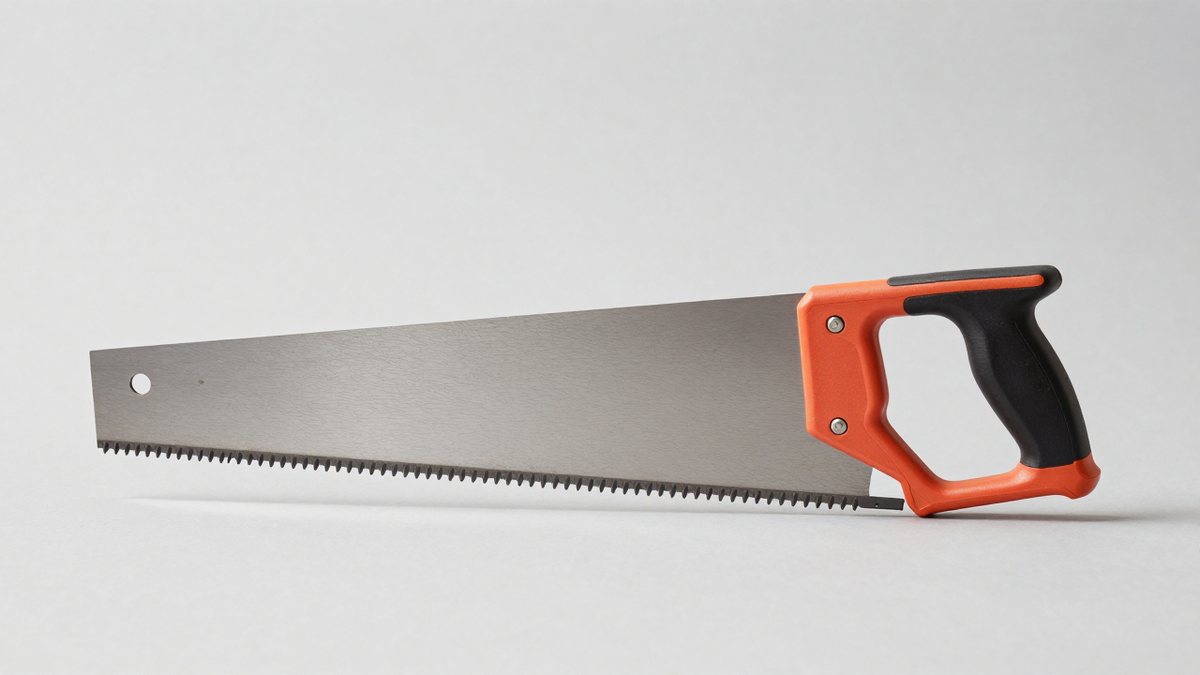
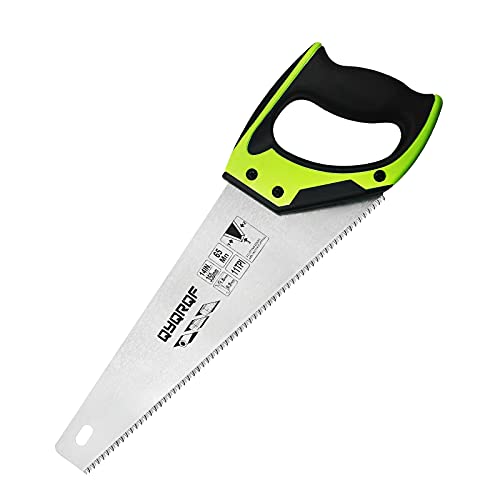
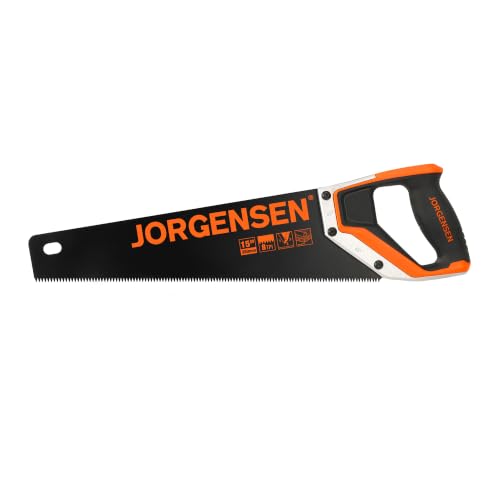
The best hand saw for wood cutting depends on the job: choose a coarse, long-bladed saw for framing, a fine-tooth pull saw for joinery, a compact curved pruning saw for branches, and a medium-tooth panel or general-purpose saw for routine workshop work.
Quick picks by cutting situation
- Framing and rough construction: a 20–26 inch, 7–9 TPI crosscut or combination saw with a rigid blade and reinforced handle.
- Joinery and accurate trim: a Japanese dozuki or ryoba with a 6–10 inch blade and fine teeth between 16 and 26 TPI.
- Pruning: a 7–14 inch curved pruning saw with hardened, impulse-set teeth and a secure non-slip grip.
- General workshop use: a 15–20 inch panel saw around 9–12 TPI, preferably with a replaceable blade or a comfortable two-material handle.
- Fast repeated cuts: an electric reciprocating saw or compact cordless circular saw, rather than a manual saw.
Tooth patterns: the feature that changes the cut most
Crosscut teeth
Crosscut teeth have angled cutting edges that sever wood fibres across the grain. They leave a cleaner surface than aggressive rip teeth and are the safest general choice for cutting boards, studs, moulding, and plywood. A 9–12 TPI crosscut pattern balances speed and finish for most household work.
As an Amazon Associate we earn from qualifying purchases at no extra cost to you.

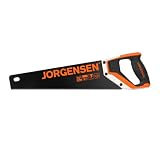

Rip teeth
Rip teeth are shaped more like small chisels and cut along the grain. They remove material quickly, especially in thick softwood, but can leave a rougher kerf across the grain. A rip saw is useful for dimensioning boards in a workshop, though many modern panel saws use a combination pattern instead.
Combination and hardpoint teeth
Combination teeth are designed to work both with and across the grain. They are convenient for framing and general repairs, where speed matters more than a furniture-grade finish. Hardened “hardpoint” teeth stay sharp longer than conventional teeth but usually cannot be filed effectively once dull; the blade is replaced instead.
Japanese pull-saw teeth
Dozuki, ryoba, and kataba saws cut on the pull stroke. This lets manufacturers use a thinner blade with less tendency to buckle, producing a narrow kerf and excellent control. A dozuki has a rigid spine and excels at fine joinery; a ryoba has rip teeth on one edge and crosscut teeth on the other. Pull saws reward light pressure—forcing them can bend the blade or damage delicate teeth.
Head-to-head comparison
| Saw type | Typical blade length | Typical tooth range | Best material or task | Expected cut character |
|---|---|---|---|---|
| Framing hand saw | 20–26 in | 7–9 TPI | Studs, joists, rough softwood | Fast, moderately rough |
| General panel saw | 15–20 in | 9–12 TPI | Boards, plywood, household repairs | Balanced speed and finish |
| Dozuki pull saw | 6–10 in | 16–26 TPI | Dovetails, mitres, trim | Very narrow, clean kerf |
| Ryoba pull saw | 8–10 in | 9–15 TPI | Joinery and longer straight cuts | Clean, controlled, versatile |
| Pruning saw | 7–14 in | 5–8 TPI | Green branches up to about 100 mm | Fast and aggressive |
| Reciprocating saw blade | 6–12 in | 5–14 TPI | Demolition and awkward access | Fast, vibrating, less precise |
Best choices for each type of user
For framing and construction
Choose a long, rigid 20–26 inch saw with a thick spine, a comfortable pistol-style handle, and 7–9 TPI hardened teeth. A traditional Stanley or Irwin-style panel or carpenter’s saw is suitable for occasional framing, while a dedicated framing saw is preferable when cutting many studs. The longer blade gives more teeth in contact with the timber and reduces the need for short, tiring strokes.
Look for a handle that accepts a gloved hand without forcing the thumb against the blade line. A pointed nose can start cuts in the middle of a board, while a reinforced heel is useful for controlled shallow starts.
For joinery and finish carpentry
A Japanese dozuki is usually the strongest choice when the cut must be narrow and accurate. Its fine teeth and rigid back help it track a marked line, but the blade is not intended for twisting or prying. For thicker stock or cuts where you need more clearance, a ryoba offers more capacity and two tooth patterns in one tool.
Western tenon and dovetail saws remain excellent alternatives. Their thicker blades tolerate more abuse, and many woodworkers find their push-stroke action easier to control at first. For the cleanest result, support the work firmly, start with short strokes, and let the teeth—not downward force—do the cutting.
For pruning
A folding pruning saw is convenient for occasional garden work, while a fixed-handle curved saw is faster and more secure for repeated cutting. Silky and Bahco both make established pruning-saw ranges, but the important specifications are tooth geometry, blade length, lock quality, and grip shape rather than brand alone.
Choose a blade long enough to pass through the branch in a few strokes without the heel binding. Hardened impulse-set teeth are durable and cut green wood efficiently, but they are normally replaced rather than sharpened. Clean sap from the blade after use and dry it before folding the saw.
For a general workshop
A 15–20 inch panel saw around 9–12 TPI is the most useful single manual saw for many homes. It can cut softwood, hardwood, plywood, and MDF, although MDF will dull teeth faster because of its abrasive resin and fibres. A replaceable-blade model can cost more initially but reduces waste when the cutting edge eventually wears out.
When an electric hand saw makes more sense
Searches for an “electric hand saw for cutting wood” usually refer to one of two tools. A small electric hand saw for cutting wood may be a compact reciprocating saw, which is useful for pallets, branches, demolition, and awkward cuts. It is maneuverable but vibrates and rarely produces a joinery-quality edge.
Electric hand saws for cutting wood also include compact circular saws. These cut straighter and faster than a reciprocating saw when guided against a base or straightedge, making them better for sheet goods and repeated crosscuts. A cordless hand saw for cutting wood is convenient where there is no outlet; compare the battery platform, bare-tool weight, maximum depth, and battery capacity rather than voltage alone.
As a rough sizing guide, a compact circular saw with a 165 mm blade commonly cuts about 55 mm at 90 degrees, while a small reciprocating saw has no single fixed capacity because blade length, stroke, tooth pattern, and material all affect the result. Use a fine-tooth blade for clean timber and a coarse blade for fast demolition.
Decision matrix: which saw fits your use?
| Your situation | Recommended choice | Why |
|---|---|---|
| Under £25/$30, occasional repairs | 15–20 in hardpoint panel saw | One inexpensive tool covers most household cuts |
| Small workspace and careful joinery | 6–10 in dozuki | Compact storage and a narrow, accurate kerf |
| Frequent construction work | 20–26 in framing saw | Long strokes and fast removal of softwood |
| Occasional garden pruning | Folding 7–10 in pruning saw | Safe storage and enough capacity for routine branches |
| Many cuts or demolition | Cordless reciprocating saw | Less physical effort and better access around obstructions |
Ownership, maintenance, and common mistakes
The teeth wear first, followed by the handle or blade coating. Hardpoint saws and impulse-hardened pruning saws are consumable tools: replace the blade when it drags despite proper technique. Conventional saws can be sharpened with a file, but sharpening requires the correct triangular file, tooth angle, set, and a secure vice. For an inexpensive general saw, replacement is often more economical.
- Brush away sawdust after each use; resinous wood may require a small amount of mineral oil on a cloth.
- Do not store a carbon-steel blade wet or pressed against bare concrete.
- Clamp the work and mark both faces when a cut must be square.
- Use the full available blade length instead of short, rapid strokes.
- Never twist a fine pull-saw blade to widen the kerf.
- Replace a cracked handle, loose blade, or damaged folding lock before cutting again.
For most buyers, start with a 15–20 inch combination-tooth panel saw. Add a dozuki when accuracy matters, a pruning saw for green wood, and a cordless reciprocating or circular saw only when the volume, access, or speed advantage justifies the added cost and maintenance.