What's inside
- Quick recommendations by situation
- What makes a saw good at ripping?
- Rip-cut saws: the fastest option for long boards
- Japanese saws: control, thin kerfs, and a strong alternative
- Blade length, TPI, and set: how to choose precisely
- Decision guide for budget, experience, and frequency
- Ownership, sharpening, and common mistakes
- Final choice
- Related Guides
As an Amazon Associate I earn from qualifying purchases. This post may contain affiliate links at no extra cost to you.
The best hand saw for ripping wood is a 24–26 inch rip-cut panel or carpenter’s saw with 5–7 teeth per inch (TPI), a moderate tooth set, and a rigid blade; choose a shorter ryoba or flush-style Japanese saw when control, portability, or clean cuts matters more than speed.
As an Amazon Associate we earn from qualifying purchases at no extra cost to you.


Our Top Picks

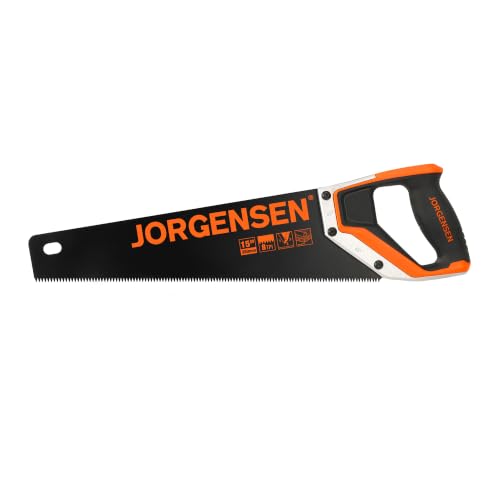

Quick recommendations by situation
| Situation | Best choice | Useful specification | Why it fits |
|---|---|---|---|
| Fast cuts in construction lumber | Traditional rip-cut panel saw | 20–26 in blade, 5–7 TPI | Long strokes remove material quickly and the coarse teeth clear chips well |
| Furniture parts and general shop work | Carpenter’s rip saw | 22–26 in blade, 7–9 TPI, moderate set | Balances tracking, cut speed, and finish quality |
| Small workshop or occasional use | Compact Japanese ryoba | 9–12 in blade, roughly 18–25 rip TPI | Light, easy to store, and efficient on boards and sheet goods |
| Very clean cuts in dry hardwood | Fine Japanese rip saw or dozuki-style saw | 8–10 in blade, approximately 20–26 TPI | Thin kerf wastes less wood and leaves a cleaner shoulder |
| Rough beams and green wood | Coarse bow saw or large pruning-style saw | 18–24 in blade, about 3–5 TPI | Deep gullets reduce clogging in thick or damp material |
What makes a saw good at ripping?
Ripping means cutting parallel to the grain. A rip tooth is shaped more like a small chisel than a knife: its leading edge works across the fibers and lifts out chips. This is different from a crosscut tooth, which has angled edges designed to sever fibers across the grain.
For efficient ripping, look at four related features:
- Tooth geometry: Rip teeth have a relatively square cutting edge. Sharpened, straight-faced rip teeth track efficiently along the grain.
- Tooth size: Low TPI cuts faster and clears chips better. High TPI produces a smoother kerf but requires more strokes and clogs sooner in resinous wood.
- Blade length: A longer blade gives more cutting per stroke, but a shorter blade is easier to control on narrow stock and in a crowded bench area.
- Set: Set is the amount each tooth bends away from the blade. More set creates a wider kerf with less binding, while less set reduces waste and can improve accuracy.
A saw can have aggressive rip teeth and still perform poorly if the blade is flexible, the teeth are unevenly set, or the handle prevents you from keeping the blade square. Geometry, stiffness, and ergonomics need to be considered together.
Rip-cut saws: the fastest option for long boards
A traditional Western-style rip saw is the strongest choice when the priority is removing a lot of wood. A 24- or 26-inch blade allows a long, steady stroke, which is less tiring than repeatedly moving a short blade through a thick board. A 5–7 TPI pattern is suitable for fast work in softwood, construction timber, and rough hardwood stock.
For furniture work, a 7–9 TPI rip saw is usually more manageable. It removes material fast enough for dimensioning while leaving a kerf that can be refined with a plane or jointer. A blade around 0.8–1.0 mm thick with moderate set is a useful compromise: rigid enough to track a line, but not so wide that it wastes substantial material.
Examples of established Western-style categories include traditional Disston-pattern hand saws, Stanley rip-cut panel saws, and Bahco carpenter’s saws. Exact tooth patterns and blade thicknesses vary by model, so confirm the product’s specification rather than relying only on the brand name.
Choose a Western saw when:
- You regularly rip boards longer than 600 mm.
- You work with thick softwood or rough-sawn stock.
- You prefer a stiff blade that can be sharpened and set repeatedly.
- You want maximum cutting speed rather than the narrowest possible kerf.
Japanese saws: control, thin kerfs, and a strong alternative
The best Japanese hand saw for wood ripping is usually a ryoba with rip teeth on one edge and crosscut teeth on the other. This gives one tool two useful cutting patterns. A compact ryoba is especially practical for a small shop because it stores easily and can start a cut with little effort.
Japanese saws cut on the pull stroke. Pulling keeps the blade in tension, allowing a thin blade to remain surprisingly straight without the heavy spine used on some Western backsaws. The result is a narrow kerf and low cutting resistance. However, the thin blade can kink if twisted, and many replaceable Japanese blades are not intended to be filed and reshaped like a traditional Western saw.
Look for a rip edge with approximately 18–25 TPI for general boards. Finer teeth, around 20–26 TPI, are appropriate for thin stock and clean joinery but will cut slowly through thick material. Gyokucho and Suizan both offer recognizable Japanese-style saws, including ryoba designs; check whether the model is intended for rip, crosscut, or both before buying.
Japanese saw trade-offs
- Advantages: thin kerf, low weight, clean entry, excellent control, and inexpensive replacement blades on many models.
- Limitations: teeth are often impulse-hardened and difficult or impossible to sharpen with ordinary files; replacement blades become a consumable.
- Technique change: use light pressure and let the teeth cut on the pull stroke. Forcing the saw can bend the blade or damage the teeth.
Blade length, TPI, and set: how to choose precisely
| Workpiece and goal | Recommended blade | Expected behavior |
|---|---|---|
| Up to 25 mm thick, clean furniture parts | 9–12 in Japanese blade, 18–26 TPI | Controlled cut with a narrow kerf; slower in dense hardwood |
| 25–50 mm boards for general woodworking | 20–26 in Western blade, 7–9 TPI | Good balance of speed, straight tracking, and manageable finish |
| 50–100 mm softwood or rough stock | 24–28 in Western blade, 5–7 TPI | Fast chip removal and fewer strokes; leaves a rougher kerf |
| Thin plywood or veneer-faced panels | Fine-tooth ryoba or panel saw, 12–20 TPI | Less breakout when supported and guided carefully |
As a practical sizing calculation, suppose a 24-inch saw provides an effective 18-inch stroke and a 10-inch saw provides an effective 7-inch stroke. The longer saw moves about 2.6 times as much blade length through the work per full stroke. It will not literally cut 2.6 times faster—wood species, tooth shape, and user technique matter—but it explains why long saws are noticeably more efficient on long rip cuts.
Do not choose TPI by number alone. A coarse saw with deep gullets can outperform a finer saw in thick stock because it carries chips out of the kerf. Conversely, a fine saw may be the better choice when the cut must end at a shoulder or when the offcut is narrow and prone to splintering.
Decision guide for budget, experience, and frequency
- Occasional DIY user: choose a mid-priced 20–22 inch rip-cut panel saw with around 7 TPI. It is simple, durable, and does not require learning saw filing immediately.
- Beginner learning accurate joinery: choose a 240–300 mm ryoba or a 12–14 inch backsaw-style rip saw. The shorter blade makes it easier to follow a marked line, while the narrow kerf limits wasted material.
- Frequent furniture maker: invest in a quality 22–26 inch saw with a stiff plate and teeth that can be sharpened. Ownership cost is lower over time because sharpening replaces the entire blade less often.
- Limited storage: select a replaceable-blade ryoba. Store it in a sheath or blade guard so the fine teeth do not catch on other tools.
- Mixed construction and shop work: keep one coarse Western rip saw for speed and one fine Japanese or backsaw-style rip saw for controlled cuts. One saw rarely excels at both tasks.
Ownership, sharpening, and common mistakes
On a traditional sharpenable saw, the teeth usually wear first at the heel and near the toe because those areas receive inconsistent stroke pressure. Dull teeth make the saw wander, increase force, and encourage the user to twist the blade. A saw file, saw set, and simple jointing block can restore performance, but sharpening requires maintaining consistent tooth height and rake. If several teeth are damaged or the plate is kinked, replacement may be more economical.
Japanese replacement blades are easier to maintain but should be treated as consumables. Wipe resin from the blade with an appropriate non-abrasive cleaner, dry it immediately, and apply a very light protective oil to carbon-steel surfaces. Keep saw teeth away from screws, nails, and bench edges; one accidental metal strike can remove the advantage of a finely pitched blade.
Before ripping, mark the waste side clearly and support the board close to the cut. Start with short, light strokes using the near corner of the blade, then lengthen the stroke once the kerf is established. Keep the blade aligned with the line rather than correcting aggressively after it wanders. If the kerf closes behind the blade, add support, reduce twisting, or use a saw with slightly more set.
Final choice
For one all-purpose purchase, choose a 24-inch rip-cut saw with 6–8 TPI and moderate set if speed and long-board capacity matter most. Choose a 9–12 inch ryoba if you value low weight, thin kerfs, and compact storage. The right answer to “best hand saw for ripping wood” is therefore determined less by the brand than by matching rip-tooth geometry, blade length, and set to the thickness of your material and the accuracy your work demands.