What's inside
- Quick picks by woodworking situation
- What makes a hand saw good for fine woodworking?
- Head-to-head: western backsaws versus Japanese pull saws
- Decision matrix: match the saw to your work
- How to choose tooth count in practice
- Setup and cutting technique for cleaner results
- Durability, maintenance, and ownership cost
- Final recommendation
- Related Guides
As an Amazon Associate I earn from qualifying purchases. This post may contain affiliate links at no extra cost to you.
The best hand saw for fine woodworking is a backsaw with a stiff, thin blade, roughly 14–20 teeth per inch for joinery, and a handle that lets you control the cut without forcing it; for most woodworkers, a quality dovetail saw or small carcass saw is the most versatile starting point.
As an Amazon Associate we earn from qualifying purchases at no extra cost to you.



Our Top Picks


Quick picks by woodworking situation
| Situation | Best saw type or pick | Why it suits the job | Typical market range |
|---|---|---|---|
| One saw for dovetails and small joinery | 14–16 tpi dovetail backsaw, such as the Veritas Dovetail Saw | Thin plate, fine teeth, and a compact handle provide accurate starting and controlled tracking | $60–$100 |
| Frequent cabinet and furniture work | Premium brass-backed dovetail saw, such as the Lie-Nielsen Dovetail Saw | Rigid blade, refined handle geometry, and durable construction reward repeated precision work | $125–$175 |
| Fast cuts across boards and sheet goods | 14–16 inch carcass or tenon saw, 10–14 tpi | Longer stroke and slightly coarser teeth remove material faster than a dovetail saw | $35–$150 |
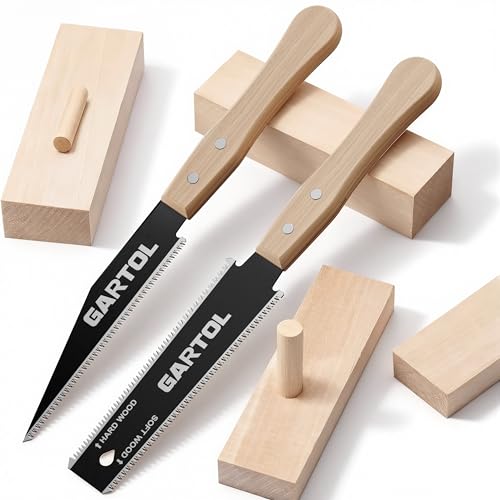
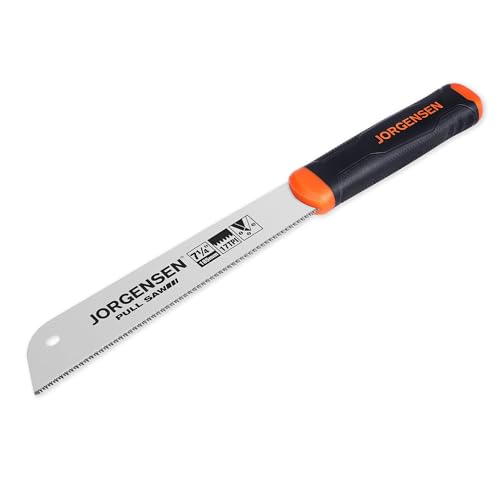
| Very thin stock and flush trimming | Japanese dozuki or flush-cut saw, approximately 0.2–0.5 mm blade | Extremely narrow kerf and pull-stroke tension make clean cuts with little material loss | $20–$60 |
| Occasional use on a limited budget | Replaceable-blade Japanese backsaw or dependable western backsaw | Low initial cost and inexpensive replacement blades reduce ownership risk | $15–$45 |
What makes a hand saw good for fine woodworking?
Fine woodworking is less about maximum sharpness than about matching the saw’s tooth geometry, blade stiffness, kerf, and handle to the cut. A saw that is excellent for ripping a tenon shoulder may be frustrating for crosscutting a narrow molding. The most useful specifications are below.
Tooth count and tooth geometry
Tooth count is normally given in teeth per inch, or tpi. Higher tpi generally produces a finer surface, but it also removes waste more slowly and can clog more easily in softwood. For small dovetails, 14–20 tpi is a practical range. For general carcass and tenon work, 10–14 tpi is faster. A flush-cut or very thin-stock saw may use 17–26 tpi.
Tooth count alone is not enough. A rip-filed tooth cuts along the grain and is usually the right choice for dovetail baselines and the long edges of tenons. Crosscut teeth have additional beveling that severs fibers across the grain. Combination filing is useful when one saw must handle both directions, but a dedicated rip saw often starts and tracks more predictably in joinery.
Blade thickness and kerf
Blade thickness affects rigidity; kerf is the width of the slot removed by the teeth. These are related but not identical. A 0.5 mm blade may create a kerf around 0.6–0.8 mm, depending on tooth set. A thicker western backsaw may use a 0.8–1.0 mm blade and cut a kerf around 1.0–1.3 mm. Japanese saws commonly use blades around 0.2–0.5 mm thick and create narrow kerfs, but their thin plates can be more vulnerable to bending or kinking.
For dovetails, a narrow kerf wastes less stock and makes it easier to sneak up on a line. For deep tenons or long shoulder cuts, extra blade thickness is valuable because the saw is less likely to wander under side pressure. Do not choose the thinnest blade automatically: rigidity is part of precision.
Handle control
A good handle places the index finger along the saw plate or in a natural pointing position, while the remaining fingers provide a relaxed grip. This helps you steer with small wrist and fingertip movements rather than twisting the blade. A pistol-style handle can feel secure, while a traditional open handle often gives more direct feedback near the tooth line.
Balance matters more than raw weight. A saw that is too light may require downward pressure and chatter; one that is overly heavy can make delicate starts tiring. Look for a handle that fills the palm without forcing the thumb or index finger into an awkward angle. Wood handles are pleasant and repairable, while molded handles are often cheaper and more resistant to workshop abuse.
Head-to-head: western backsaws versus Japanese pull saws
Western backsaws
Western dovetail, carcass, and tenon saws cut on the push stroke. Their steel backs or spines stiffen the blade, making them easy to hold against a guide or reference face. Many premium models use high-carbon steel and a folded brass or steel back. The limitation is that the rigid back restricts cutting depth, and sharpening a fine saw requires suitable files, a saw vise, and practice.
The Lie-Nielsen Dovetail Saw is a premium example of this category, with a compact form intended for small joinery and a rigid metal back. The Veritas Dovetail Saw offers a more accessible precision option and is available in configurations intended for fine joinery. These are strong choices when repeatable starts, a traditional grip, and a stable push stroke matter most.
Japanese pull saws
Japanese saws cut on the pull stroke, which places the blade in tension. This allows a very thin plate without a heavy back. The result is a narrow kerf and a light saw that can cut quickly with little force. A dozuki is the Japanese equivalent most closely suited to delicate joinery because it has a back supporting the blade. A ryoba has teeth on both edges, commonly one rip edge and one crosscut edge, but it lacks a rigid back and is less ideal for very deep, guided cuts.
Pull saws are especially attractive for beginners, cramped benches, and occasional work because replacement blades are widely available and sharpening is usually unnecessary. Their weakness is vulnerability: twisting, cutting into a hidden nail, or storing the blade loose can permanently damage the teeth or plate.
Decision matrix: match the saw to your work
| Your priority | Choose | Avoid |
|---|---|---|
| Maximum control on dovetails | 14–20 tpi rip-filed dovetail saw, 0.5–0.8 mm blade | Long, coarse panel saws that are difficult to start on a short baseline |
| Speed on tenon shoulders | 10–14 tpi carcass or tenon saw with a 12–16 inch blade | Ultra-fine 20-plus tpi blades that fill with waste quickly |
| Minimal kerf and thin stock | Dozuki or fine flush-cut saw with a 0.2–0.5 mm plate | Heavy backsaws that remove unnecessary material |
| Learning basic joinery | Moderately priced saw with visible tooth alignment and a comfortable handle | Extremely aggressive teeth that punish an uneven starting angle |
| Infrequent use and little sharpening equipment | Replaceable-blade pull saw | High-end saws that need periodic filing unless you intend to learn sharpening |
| Frequent professional or serious hobby use | Refined western backsaw or a replaceable-blade system with spare blades | Buying only on the lowest price when handle fatigue and replacement availability matter |
How to choose tooth count in practice
Start with the material thickness rather than the advertised tpi. Aim to keep at least three teeth engaged in the work during the cut. For a 6 mm board, a 20 tpi saw gives about 3.3 teeth in the material thickness; a 10 tpi saw gives only 1.7 teeth and is more likely to catch or chatter. For a 25 mm tenon shoulder, a 10–14 tpi saw provides enough tooth depth to clear waste quickly without becoming excessively coarse.
This is a guideline, not a rule. Softwoods tolerate more aggressive teeth, while brittle hardwoods often benefit from a finer tooth pattern and a slower feed. If the saw binds, check whether the stock is closing on the blade or whether the teeth are packed with resin before assuming that the tpi is wrong.
Setup and cutting technique for cleaner results
- Mark the waste side clearly and knife the shoulder or baseline. A knife line gives the first teeth a small groove to follow and leaves a sharper edge than pencil alone.
- Clamp the work firmly at a comfortable height. Movement makes a fine saw appear inaccurate even when the blade is straight.
- Start with short, light strokes using the teeth nearest the heel. Keep the blade at the intended angle before lengthening the stroke.
- Let the teeth cut; do not force the saw downward. Excess pressure increases wandering and can distort a thin pull-saw blade.
- Check both faces on through-cuts. If the exit line begins to drift, stop and correct the angle rather than trying to steer aggressively.
- Use a backing board for fragile or splinter-prone stock, especially when using a fine crosscut saw.
Durability, maintenance, and ownership cost
The teeth wear first, particularly when cutting abrasive plywood, dirty reclaimed timber, or wood with hidden fasteners. On a western saw, a quality blade can be sharpened repeatedly, but the service requires files matched to the tooth size and accurate jointing and setting. On a Japanese saw, replacement blades are usually the practical maintenance route. Keep at least one spare if the saw is important to a project.
After use, brush away dust and resin, wipe uncoated steel with a lightly oiled cloth, and store the saw so its teeth cannot contact tools or the bench. Do not flex a thin Japanese blade to remove it from a cut. If a backsaw binds, inspect the set and the cut alignment instead of levering the blade sideways. A protective sheath is useful for pull saws; a dedicated rack or sleeve prevents western saw teeth from being dulled by contact with metal.
For example, suppose a $30 replaceable-blade saw lasts through three blades costing $12 each, with each blade completing 20 projects. The approximate saw cost is ($30 + $36) ÷ 60, or $1.10 per project. A $150 premium backsaw used for 300 projects costs about $0.50 per project before sharpening, but it makes financial sense only if its comfort, repairability, and precision will actually be used.
Final recommendation
For most people seeking the best hand saw for fine woodworking, begin with a 14–16 tpi dovetail or small carcass saw, a blade around 0.5–0.8 mm thick, and a handle that supports a relaxed pointing grip. Choose a premium western dovetail saw when controlled, repeatable joinery is your main work. Choose a dozuki when narrow kerfs, low maintenance, and occasional use matter more. Add a coarser 10–14 tpi tenon or carcass saw later if your projects involve thicker stock or longer shoulder cuts.