What's inside
As an Amazon Associate I earn from qualifying purchases. This post may contain affiliate links at no extra cost to you.
Our Top Picks


Best portable band saw stands: choose by saw fit and the work you do
The best porta band saw stand is one that matches your saw’s mounting points, holds the work at a comfortable height, and stays rigid when you feed stock through it. For frequent cutting of long pipe or conduit, choose a heavy, wide-base stand with generous clamping capacity; for occasional jobs and limited storage, a folding stand is easier to live with—provided its legs lock firmly and the saw is explicitly compatible.
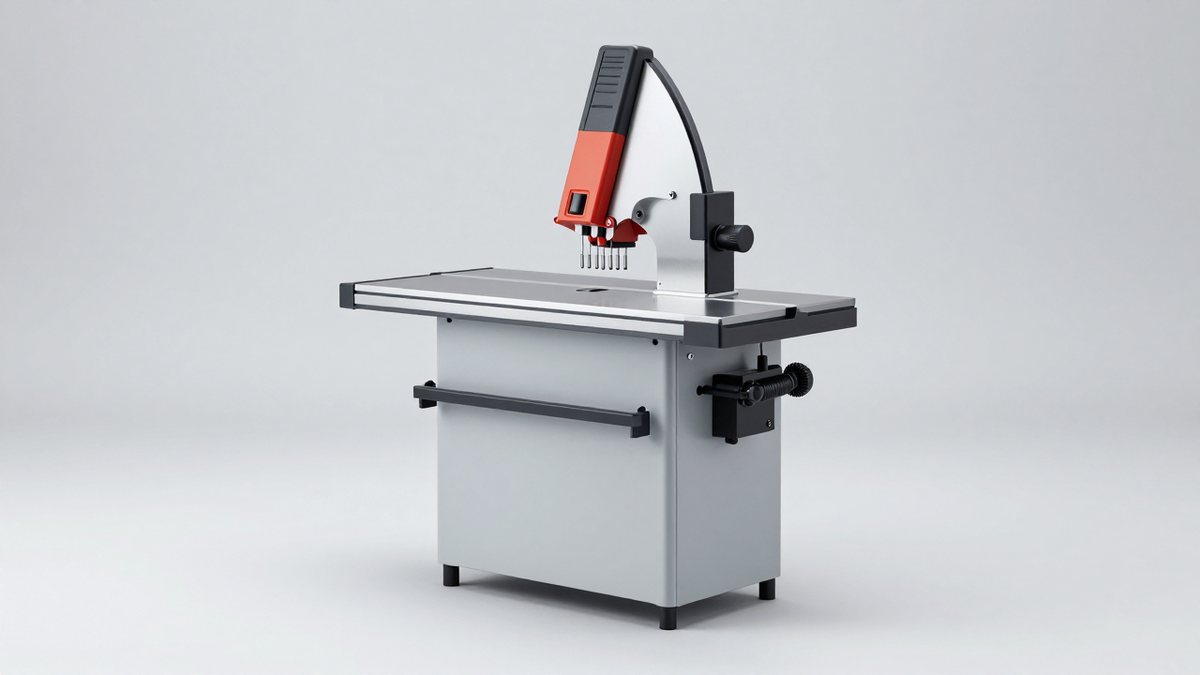
There isn’t one universal fit. Some stands convert a compatible portable band saw into a stand up band saw with the blade fixed in place; others are purpose-built bases or tables for specific saw models. Check the manufacturer’s fit list and mounting instructions before comparing convenience or price. A clamp that holds the work is not the same thing as a mount that safely secures the saw.
As an Amazon Associate we earn from qualifying purchases at no extra cost to you.


Compare stand types before you buy
| Stand type | Typical working height | Typical work capacity | Portability and stability | Best fit |
|---|---|---|---|---|
| Dedicated model-specific stand | About 30–36 in. | Set by the saw’s cutting throat; often suited to stock around 4–5 in. across | Usually rigid; some designs fold or detach | Owners who want a direct fit and repeatable setup |
| Universal portable-saw conversion stand | About 30–36 in.; often fixed | Depends on saw and clamp; commonly intended for pipe, tube, or bar up to roughly 4 in. | Varies widely; verify mount and leg-lock design | Users whose saw is listed as compatible and who want a lower-cost conversion |
| Folding work stand or table | About 28–36 in.; adjustment may be limited | Depends on table surface and any supplied vise | Compact to store; hinges and feet need checking for wobble | Occasional cutting, small shops, and job-site transport |
| Bench-mounted base | Set by bench height, commonly 30–36 in. | Limited by bench space and the saw’s cutting capacity | Stable when bolted down, not portable in use | Dedicated workshop use with a sturdy bench |
These are useful comparison ranges, not specifications for every product. Capacity figures can mean different things: a stand may list the maximum workpiece it can clamp, while the saw’s throat determines how much material can pass through the blade. Confirm both numbers in the manuals before ordering. A stand up bandsaw setup also needs blade clearance around the table or base; a large clamping rating cannot compensate for inadequate cutting clearance.
Choose by your material and workspace
For regular pipe, conduit, and metal stock
Prioritize a rigid saw mount, a vise with enough opening for your largest routine stock, and a broad footprint. A built-in vise that grips round pipe securely is more useful than a high headline capacity if the jaws cannot hold your actual material without rolling. Look for replaceable or adjustable jaws and a feed path that lets long pieces extend without striking a wall, bench, or leg.
For repeated cuts to the same length, an adjustable stop can save measuring time, but check that it doesn’t interfere with the blade or pinch the offcut. Never hold short offcuts by hand close to the blade; arrange the work so both the stock and cut piece are controlled.
For mixed jobs and changing operators
Work-height adjustment matters when different people use the saw or when you alternate between short parts and long stock. A height range of around 28–36 inches covers many shop setups, but assess it against your own posture and the height of the material supports. The saw should sit level, and the operator should be able to feed stock without leaning on the frame.
Adjustment is only useful if it locks securely. Prefer positive pins, locking collars, or clearly defined stops over a single friction knob supporting a loaded saw. If the stand offers no adjustment, a stable fixed height is safer than improvised blocks under the legs.
For a small shop or a vehicle kit
A folding stand saves storage space and makes transport easier. Check the folded dimensions and weight, but give equal attention to the deployed stance: legs should lock open, feet should sit flat, and the saw mount should not twist under ordinary feeding pressure. A lightweight frame can be practical for short, light stock; it is a poor match for heavy material that shifts or needs forceful clamping.
If you need a porta band saw table rather than a simple conversion mount, look for a stable surface designed for the specific saw, with blade clearance and a safe way to secure the saw. A generic table that merely supports the tool may leave the blade exposed or allow the saw to move during a cut.
A quick decision matrix
| Your situation | Best starting point | What to prioritize |
|---|---|---|
| Occasional home repairs; tight budget | Compatible conversion stand | Verified saw fit, secure mount, stable feet |
| Frequent shop use; varied stock sizes | Dedicated stand with vise and adjustment | Clamp opening, repeatable positioning, rigid frame |
| Job-site work; little storage space | Folding stand | Positive leg locks, folded size, manageable weight |
| One permanent cutting station | Bench-mounted base or dedicated table | Bolted mounting, bench strength, unobstructed feed path |
Check fit and stability before the first cut
- Confirm the exact saw model. Compare the model number—not just the brand—with the stand’s compatibility list. Check mounting-hole pattern, handle clearance, trigger access, and whether a switch lock or other control is required by the stand instructions.
- Measure the work. Record the largest stock width or diameter you expect to clamp, then confirm the vise opening and the saw’s cutting capacity separately. Leave room for the blade and for the stock to travel past it.
- Set up on a level surface. Fully open and lock folding legs, then check for rocking before mounting the saw. On uneven ground, reposition the stand rather than relying on loose scrap to level it.
- Test the clamp without running the saw. Secure a representative piece of stock and check that it cannot rotate, lift, or slide. Keep the blade path clear and make sure the offcut will not trap the blade.
- Make a short trial cut. Start with a manageable piece and feed it without forcing the blade. Stop if the stand shifts, the stock vibrates, or the cut binds; address the setup before continuing.
Ownership details that affect value
On a folding stand, hinges, pins, feet, and adjustment locks take the most abuse from transport and repeated setup. On a vise-equipped stand, jaw surfaces and screw threads collect metal chips and can wear or bind. Brush away chips after use, keep threads clean, and inspect fasteners and leg locks periodically. A loose mount or packed vise is not just inconvenient—it can let the work move and spoil the cut.
Portable band saw blades are consumables. The right tooth pitch depends on the material and its thickness; using a blade with too few teeth engaged in thin-wall tubing can catch or damage teeth, while an overly fine pitch can cut slowly in thick stock. Follow the saw and blade makers’ guidance, and replace a dull or damaged blade instead of compensating with extra feed pressure.
Bottom line
Choose a dedicated stand when you cut often and want a secure, repeatable station; choose a folding model when storage and transport matter most; and consider a conversion stand only after confirming exact saw compatibility. For any option, match the vise to your real stock, treat height adjustment and leg locks as safety-critical features, and judge stability with the stand fully deployed—not by the folded size or advertised capacity alone.