What's inside
- The Short Answer: Match the Box to the Weight You Actually Carry
- Steel vs. Plastic vs. Soft-Sided: What Each Material Actually Handles
- The Specs That Matter (and the Ones That Don’t)
- Decision Matrix: Which Toolbox for Your Situation
- Situation Picks for 2026
- Ownership Realities: What Actually Wears Out
- FAQ
As an Amazon Associate I earn from qualifying purchases. This post may contain affiliate links at no extra cost to you.
Our Top Picks


The Short Answer: Match the Box to the Weight You Actually Carry
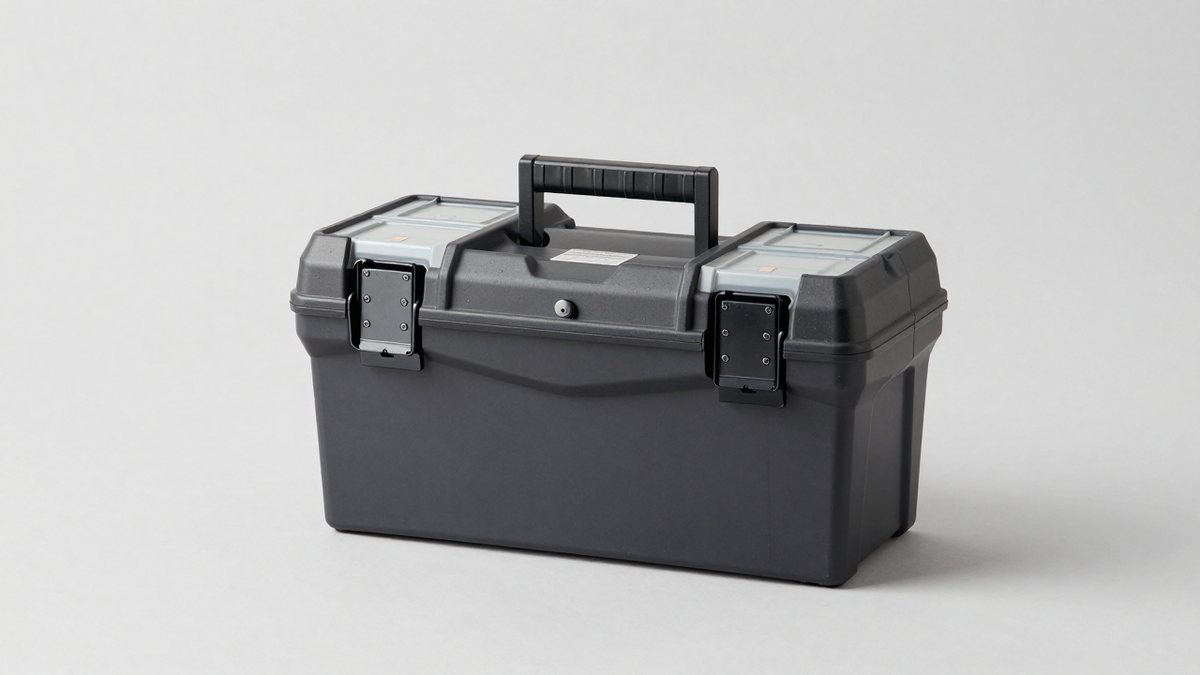
The best toolbox for most people in 2026 is a mid-size steel or structural-foam box rated for at least 75 lbs of internal load, with metal latches rather than plastic ones — because the two failure points that retire toolboxes are latch mechanisms and overloaded handles. Beyond that baseline, the right choice depends on your situation: portable steel boxes suit hand-tool collections under 60 lbs, rolling toolboxes serve anyone hauling 100+ lbs across a jobsite, and soft-sided tool bags win for tradespeople who climb ladders or work in finished interiors where a hard shell would scuff surfaces.
Steel vs. Plastic vs. Soft-Sided: What Each Material Actually Handles
Material choice determines load rating, impact behavior, and longevity more than any other spec.
As an Amazon Associate we earn from qualifying purchases at no extra cost to you.



- Steel toolboxes (typically 20–22 gauge) handle the heaviest concentrated loads — 100–150 lbs on quality models — and resist denting from dropped tools inside. Their weakness is corrosion in damp trucks or garages and their own empty weight: a 26-inch steel box weighs 12–18 lbs before you put a single wrench in it.
- Plastic / structural-foam toolboxes weigh 40–60% less than equivalent steel, shrug off moisture, and typically carry 50–100 lbs. The failure mode is different: plastic latches and hinges fatigue, and cheap resin boxes crack at the handle mounts when overloaded in cold weather.
- Soft-sided tool bags (1680D ballistic nylon or similar) carry 30–50 lbs comfortably, open wide for visibility, and conform to truck beds and tight spaces. They protect tools least from crushing but best from scratching finished surfaces — a real consideration for electricians and HVAC techs working in occupied homes.
The Specs That Matter (and the Ones That Don’t)
Product listings advertise capacity in liters or “number of compartments.” What predicts satisfaction is internal dimensions versus your longest tool, the rated load on the handle, and latch construction.
| Toolbox Type | Typical Internal Length | Realistic Load Rating | Empty Weight | Latch Durability | Best For |
|---|---|---|---|---|---|
| Portable steel box (20–26″) | 17–23 in. | 100–150 lbs | 9–18 lbs | Steel draw latches — decades of life | Mechanics’ hand tools, socket sets |
| Plastic toolbox (19–26″) | 16–23 in. | 50–100 lbs | 4–9 lbs | Metal latches good; all-plastic latches fail first | Homeowners, DIY kits, marine use |
| Rolling toolbox / tower | 20–30 in. (per module) | 150–250 lbs combined | 20–45 lbs | Varies; metal side-latches hold up | Jobsites, full cordless kit transport |
| Soft-sided tool bag | 14–24 in. | 30–50 lbs | 2–6 lbs | Zippers wear; buy brands with replaceable pulls | Ladders, service calls, tight spaces |
Internal length is the spec most buyers skip. A 24-inch level, a framing hammer, or a pry bar needs a box that’s 26 inches on the inside, not the outside — external dimensions include the lid ribs and end walls, so subtract roughly 2–3 inches from the advertised length. If your longest tool is 22 inches, buy a box advertised as 25–26 inches.
Load rating applies to the handle, not just the box. A box body may survive 150 lbs while the stamped-steel handle flexes at 90. On plastic boxes, look for handles that are molded through the body or metal-reinforced, not surface-mounted.
Decision Matrix: Which Toolbox for Your Situation
| Your Situation | Recommended Type | Why |
|---|---|---|
| Homeowner, tools live on a garage shelf, used monthly | Plastic toolbox, 19–22″ | Light, rust-proof, cheap; load rating is irrelevant at 25 lbs |
| DIYer with a growing hand-tool collection (60–100 lbs) | Steel portable box with cantilever or drawer trays | Steel handles the weight; tiered trays prevent the “dig to the bottom” problem |
| Contractor hauling cordless tools to sites weekly | Rolling toolbox or modular stacking system | 200+ lb capacity; wheels save your back; modules separate power tools from hand tools |
| Service tech in occupied homes / on ladders | Soft-sided bag with rigid base | Won’t scratch floors, carries over the shoulder, open top for fast access |
| Tools stored in a truck bed year-round | Steel or structural-foam with gasketed lid | Weather sealing matters more than capacity; cheap plastic goes brittle |
Situation Picks for 2026
Best Portable Steel Toolbox
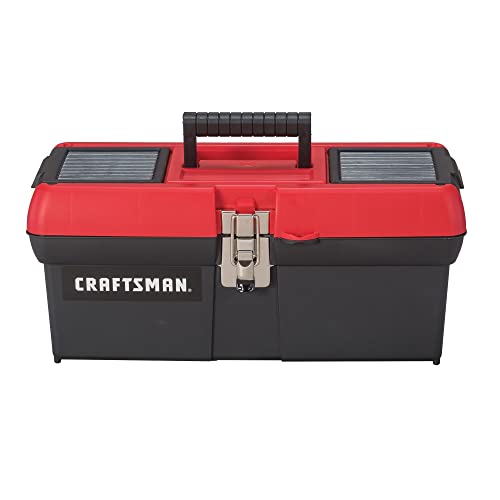
The classic cantilever steel box in the 20–22 inch range remains the benchmark — models from established makers like Kennedy, Homak, and the Craftsman metal line all use 20-gauge steel with steel draw latches and carry 100+ lbs. Expect to pay $50–$120 depending on tray count. Choose a three-tray cantilever over a single lift-out tray if you own sockets: loose sockets in a single-tray box turn into a 40 lb rattling pile.
Best Plastic Toolbox
Structural-foam boxes from DeWalt, Milwaukee’s Packout-compatible organizers, and Stanley’s FatMax line dominate this category. The key discriminator is metal latches and a metal-reinforced handle — these versions cost $10–$20 more than all-plastic-latch variants and roughly double the box’s working life. Internal load ratings run 66–110 lbs on current models.
Best Rolling Toolbox
Rolling towers from Milwaukee Packout, DeWalt ToughSystem 2.0, and Ridgid’s modular line carry 150–250 lbs combined across stacked modules, with 9-inch wheels that handle gravel and cords. Street prices run $150–$350 for a three-module stack. The underrated spec: check that the bottom module’s wheels are at least 8 inches in diameter — 6-inch wheels stall on jobsite debris and crack first.
Best Soft-Sided Option
Open-top tool bags in 1680D fabric from brands like Klein, Veto Pro Pac, and CLC hold 30–50 lbs and survive years of daily service work. Veto-style vertical pocket layouts cost more ($150–$300) but keep meters and drivers upright and visible, which is worth the premium if you bill by the hour.
Ownership Realities: What Actually Wears Out
- Latches die first on plastic boxes. All-plastic snap latches typically survive 2–4 years of weekly use; metal draw latches on steel boxes last decades. If a plastic box you like has metal latches, that’s the version to buy.
- Wheels are consumables on rolling boxes. Budget for replacement wheels every 2–3 years on a working rig; modular systems sell them separately.
- Zippers on soft bags fail when packed past 80%. Buy a size up, or buy bags with replaceable zipper pulls.
- Steel rusts at the corners. The powder coat chips where tools bang the bottom. A $6 sheet of drawer liner or an old rubber mat eliminates both the rust path and the noise.
- Common mistake: buying capacity by volume. A 30-liter box full of wrenches weighs 80+ lbs — over the handle rating of most plastic boxes. Weight, not volume, is the binding constraint.
FAQ
Is a steel or plastic toolbox better?
Steel if your tools exceed ~60 lbs or live in a fixed location; plastic if you carry the box often, work around moisture, or store it in a vehicle. The deciding spec is the handle and latch construction, not the body material.
What size toolbox do I need?
Measure your longest tool and add 3 inches — that’s your minimum external length. Then weigh your full collection: under 40 lbs suits any material, 60–150 lbs needs steel or reinforced plastic, over 150 lbs needs a rolling system.
Are modular stacking toolboxes worth it?
Yes if you transport tools to different sites — the ability to unstack and carry one module instead of the whole tower is the entire point. For a garage, they’re a poor value compared to a plain chest or drawer cabinet.