What's inside
As an Amazon Associate I earn from qualifying purchases. This post may contain affiliate links at no extra cost to you.
For cutting threaded rod on a jobsite, a portable band saw is usually the cleanest power-tool choice: it makes a square cut with less burr and heat than an angle grinder, and it is easier to control overhead or near finished work. The right saw depends less on brand than on rod diameter, how often you cut, and whether you can support the material securely.
As an Amazon Associate we earn from qualifying purchases at no extra cost to you.


Our Top Picks
 DEWALT DCS374P2 20V Max Deep Cut Band SawOne Size22.08 x 7.88 x 17.75 inches24.97 PoundsCheck on Amazon


Quick pick
For occasional cuts on common 3/8-inch or 1/2-inch rod, a compact cordless saw is convenient and typically has enough capacity. For frequent cuts, larger rod, or bundled stock, choose a full-size portable saw with a deeper throat and a stable shoe. If you only need a few cuts and already own a grinder, a thin metal-cutting wheel can be the cheaper answer—provided sparks and rougher ends are acceptable.
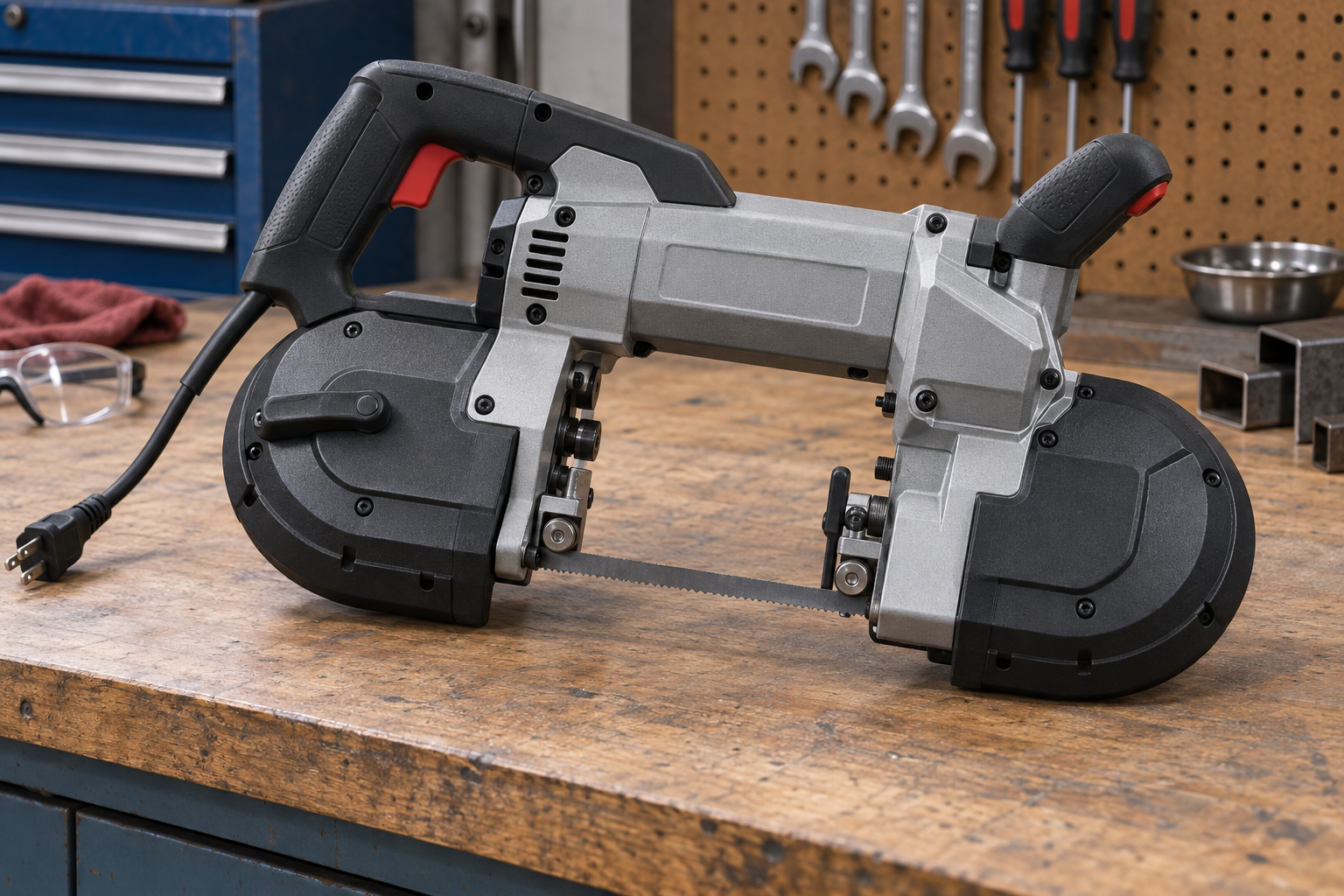
Shop by capacity and blade rather than buying the biggest saw available. A compact compact cordless portable band saw is easier to carry and position. A deep-cut portable band saw is more versatile for larger stock, but adds size and weight you may not need for threaded rod.
What matters for threaded rod
Capacity: The saw’s maximum cut depth must exceed the rod diameter, with room to keep the shoe steady. A 1/2-inch rod fits nearly any portable band saw; larger rod, strut, and grouped pieces may call for a deeper-cut tool. Check the actual capacity before buying, especially if the tool will also cut pipe or angle stock.
Blade pitch: Threaded rod is a small, hard-edged workpiece. Use a metal-cutting blade with enough teeth engaged in the cut; a coarse blade can catch or chatter on the threads. Around 14–18 teeth per inch is a practical starting range for common rod sizes, while finer pitches can improve control on smaller stock. Follow the saw maker’s guidance, and don’t assume the blade supplied with the saw is ideal for every material.
Control and weight: The blade must enter the rod without the saw twisting or bouncing. A light compact saw is easier to hold one-handed, but it is not an excuse to cut unsupported stock. A heavier saw can feel steadier in a bench or floor cut and tiring overhead. Variable speed is useful when you need to ease into a cut, but a stable grip and proper support matter more.
Portable band saw options compared
| Option | Best for | Trade-off |
|---|---|---|
| Compact cordless saw | Scattered cuts on small rod; working from a ladder or lift | Limited capacity and runtime; small grip can be tiring |
| Full-size portable saw | Repeated cuts, larger stock, and mixed jobsite materials | Bulkier to carry and position for a single rod |
| Corded portable saw | Long cutting sessions near reliable power | Cord management and less convenient movement |
| Angle grinder | A few inexpensive cuts when sparks are safe | Noisier, more sparks, more burr, and greater risk of an angled cut |
Buying advice: cordless, corded, or grinder
Choose cordless if you already own that battery platform and cuts are spread around the site. Battery compatibility can make the saw substantially cheaper than starting with bare tool, batteries, and charger. For repeated cutting, carry a spare charged battery; thick material and a dull blade drain it faster. A corded saw makes sense at a bench or in a shop where uninterrupted run time matters more than mobility.
Don’t buy a large deep-cut saw solely because it sounds more capable. If your work is limited to 3/8-inch and 1/2-inch rod, a compact unit generally handles the job with less fatigue. Spend the difference on quality replacement blades and a proper clamp. For regular rod cutting, compare metal-cutting portable band saw blades by length and tooth pitch; blade length must match the saw exactly.
A grinder is a reasonable low-cost option for a handful of cuts, particularly outdoors and away from combustible material. It is less appealing near finished surfaces, indoors, or where sparks can reach insulation, dust, or fuel. The cut end is usually rougher and hotter, so allow it to cool and remove the burr before installing nuts. For recurring work, the saw’s cleaner cut and lower spark output are often worth paying for.
How to cut threaded rod cleanly
Mark the cut and clamp the rod close to the mark. A vise or secure clamp prevents the rod from vibrating, twisting, or pulling the saw off line. If the rod is long, support the free end as well; a sagging length can pinch the blade near the end of the cut. Keep the saw shoe against the work where possible and let the blade do the work. Forcing the saw can deflect the blade, produce an angled end, or strip teeth prematurely.
After cutting, file the end or use a deburring tool to remove sharp edges. If the first thread is damaged, a nut may start poorly or bind. Before cutting a batch, thread a nut onto the rod past the cut location; after the cut, backing the nut off can help clear a small burr, though it does not replace filing. Wear eye protection, keep hands out of the blade path, and secure the work before starting the saw.
Common problems and what they mean
Blade wanders: The rod may be loose, the saw may be entering at an angle, or the blade may be dull. Re-clamp close to the cut and start slowly. Teeth strip or chatter: Check for the wrong tooth pitch, excessive pressure, or a blade that is not suited to metal. Cut takes too long: A worn blade is a common cause; changing speed alone will not fix it. Nut will not start: File the cut end square and remove the burr rather than forcing the nut onto damaged threads.
For most crews cutting threaded rod regularly, a cordless portable band saw already matched to the site’s battery system is the practical buy. For occasional small-rod cuts, a compact model—or the grinder you already own—can be enough. Let the frequency, material size, and need to control sparks decide the purchase.