What's inside
As an Amazon Associate I earn from qualifying purchases. This post may contain affiliate links at no extra cost to you.
Our Top Picks
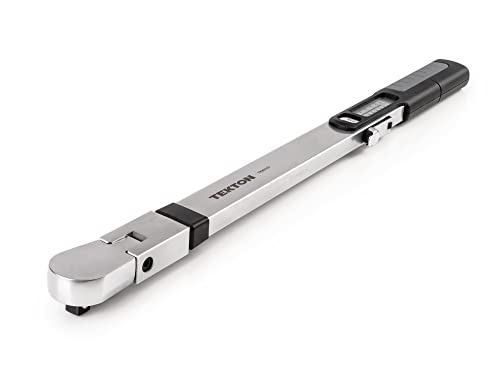 TEKTON 1/2 Inch Drive 72-Tooth Split Beam Torque1/2 Inch Drive (40-250 ft.-lb.)22.8 x 1.7 x 1.4 inches3.7 poundsCheck on Amazon
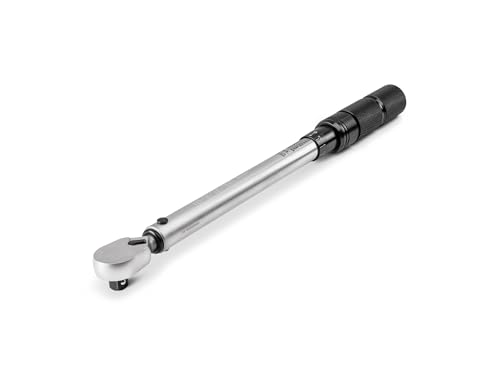


Best Torque Wrenches for Automotive Work: Shop-Ready Picks
For most automotive work, a 3/8-inch click-type torque wrench covering roughly 10–100 ft-lb is the best first buy; add a 1/2-inch wrench for lug nuts and higher-torque fasteners, and a 1/4-inch wrench for low-torque, small fasteners. The right choice depends less on drive size alone than on whether the fastener’s specified torque sits comfortably within the wrench’s range.
Automotive torque wrenches compared
The models below are established examples of the three drive sizes. Capacities are listed in foot-pounds and approximate newton-meters; verify the exact model and scale before buying, since manufacturers may offer similar names with different ranges. Weights are approximate and can vary by configuration.
As an Amazon Associate we earn from qualifying purchases at no extra cost to you.


| Pick | Drive and range | Approx. length and weight | Accuracy and mechanism | Best fit |
|---|---|---|---|---|
| TEKTON 24320 | 1/4 in; 20–200 in-lb (about 1.7–16.7 ft-lb) | About 8 in; about 1 lb | Click type; stated ±4% accuracy | Small, low-torque fasteners |
| TEKTON 24330 | 3/8 in; 10–80 ft-lb (about 13.6–108.5 Nm) | About 14.5 in; about 2.2 lb | Click type; stated ±4% accuracy | General service and moderate-torque fasteners |
| TEKTON 24340 | 1/2 in; 10–150 ft-lb (about 13.6–203.4 Nm) | About 18.5 in; about 3.5 lb | Click type; stated ±4% accuracy | Lug nuts and higher-torque jobs |
| GearWrench 85077 | 1/2 in; 30–250 ft-lb (about 40.7–339 Nm) | About 25 in; roughly 5 lb | Electronic; stated ±2% clockwise accuracy | Higher torque and users wanting an audible or visual alert |
Manufacturer accuracy figures describe specified conditions, not a guarantee that a worn, dropped, or poorly stored tool remains within tolerance. Check current manufacturer specifications and calibration guidance, especially for electronic models.
Choose by the job, not by the largest range
For low-torque work: 1/4-inch drive
A 1/4-inch wrench is the better match for many small fasteners where a typical 3/8-inch tool starts too high. Depending on the vehicle and component, that may include interior hardware, sensor fasteners, and some covers. Always use the service manual’s torque value; these examples are not universal specifications.
Its compact head and short handle help in cramped spaces, but the smaller square drive and ratchet are not intended for breaking loose stubborn fasteners. Loosen with a separate ratchet or breaker bar, then switch to the torque wrench for final tightening.
For everyday service: 3/8-inch drive
This is the most useful single-wrench size for many DIY automotive owners. Its range often covers moderate-torque fasteners, and the smaller head can reach places where a 1/2-inch tool is awkward. If your work centers on engine-bay and general service tasks rather than wheels, start here.
Mind the lower limit. A wrench rated from 10 ft-lb should not be used for a 6 ft-lb fastener, even if you can turn the handle carefully. Accuracy is generally specified over the tool’s usable range, not below it.
For lug nuts and higher torque: 1/2-inch drive
A 1/2-inch wrench gives you a stronger drive and usually a longer handle for higher torque. It is the natural choice when your vehicle’s specified wheel-fastener torque falls within the tool’s range. Confirm the vehicle specification rather than relying on a generic “typical lug nut” number.
For a high-torque fastener near the top of a wrench’s capacity, a model with a suitable range and adequate length is preferable to forcing a shorter tool. A long electronic wrench may offer useful alerts, but it needs batteries and more careful protection from impacts and moisture.
What the specs mean in a real purchase
- Accuracy: Compare the manufacturer’s stated tolerance, and check whether it applies clockwise, counterclockwise, or both. A tighter stated tolerance can be valuable, but only if the tool is maintained and used within its rated range.
- Reach: A longer handle makes higher torque easier to apply, but may not fit between a wheel and bodywork or in a crowded engine bay. Consider the access you actually have.
- Ratchet strength: A torque wrench ratchet is a measuring tool, not a substitute for a breaker bar. A finer tooth count can help in restricted spaces, but neither fine nor heavy-duty ratchets should be used to free seized hardware unless the manufacturer specifically permits it.
- Storage: A fitted case protects the head and keeps accessories together. Confirm the tool returns to a low setting as directed by its manual; do not wind a micrometer-style wrench below its stated minimum.
- Scale: Dual scales in ft-lb and Nm reduce conversion errors. If the scale is hard to read, a digital display may help, but it adds battery and electronics upkeep.
Decision matrix: the sensible first purchase
| Your situation | Best starting choice | Why |
|---|---|---|
| Occasional DIY; one tool only | 3/8 in, about 10–80 or 10–100 ft-lb | Useful middle range and manageable size for common service work |
| Mostly wheel removal and installation | 1/2 in, with capacity above the vehicle’s specified torque | Stronger drive and suitable range for many wheel-fastener jobs |
| Small fasteners or limited access | 1/4 in, roughly 20–200 in-lb | Lower operating range and compact head |
| Frequent shop use or torque-sensitive work | Two or more ranges; consider a quality electronic or calibrated tool | Better coverage without using a wrench near its limits; calibration matters more with frequent use |
For example, suppose your intended jobs call for 8 ft-lb, 35 ft-lb, and 90 ft-lb. A 10–80 ft-lb wrench misses both the 8 ft-lb job and the 90 ft-lb job. One 1/2-inch wrench with a broad range may cover 35 and 90, but not 8. A 1/4-inch plus 1/2-inch pair covers all three more appropriately; the calculation is simply to compare each required value with each wrench’s rated minimum and maximum.
Use and care that preserve accuracy
- Look up the specified torque. Use vehicle service information for the exact fastener and application. Clean or lubricated threads can change clamping force, so follow the specified thread condition.
- Select a wrench that covers the value. Choose a tool whose rated range includes the target; do not use it below its minimum or as a general-purpose ratchet.
- Set and tighten as directed. For a click wrench, hold the marked grip area and pull smoothly. Stop at the click; repeated clicks or a fast, jerking pull can add torque beyond the setpoint. Follow the manual for electronic alerts and direction of measurement.
- Store and inspect it. Keep it clean and dry in its case. After use, return adjustable click wrenches to the manufacturer’s recommended storage setting. Avoid dropping the tool, using it to loosen hardware, or adding a pipe to the handle.
Ratchet pawls, square-drive detents, and the calibration mechanism are common wear or damage points. Grit and corrosion can affect moving parts, while a drop or overload can compromise calibration without obvious external damage. If a wrench is used heavily, has been overloaded, or must meet a critical tolerance, arrange calibration or service according to the manufacturer’s guidance. Click wrenches generally do not need to be “exercised” by repeated clicks after storage unless their instructions say so.
Bottom line
The best torque wrenches for automotive work are usually a matched set, not one oversized all-purpose tool: 1/4-inch for low torque, 3/8-inch for general service, and 1/2-inch for wheels and higher-torque fasteners. If buying one, choose the drive and range that cover your actual jobs first, then compare stated accuracy, access, ratchet construction, and case protection.