What's inside
As an Amazon Associate I earn from qualifying purchases. This post may contain affiliate links at no extra cost to you.
Our Top Picks
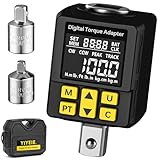
 ACDelco 1/2" Heavy Duty Digital Torque Adapters 14.81/2” (14.8 to 147.6 ft-lbs.)1.75 x 1.75 x 3 inches0 poundsCheck on Amazon


Best Torque Wrench Calibration Tool: Accurate Testers and Adapters
The best torque wrench calibration tool for most woodshops is a digital torque tester sized to cover the wrench’s working range; for occasional checks on one drive size, a compatible calibration adapter is usually the lower-cost choice. Match the tool’s capacity and connection to your wrench, then treat its stated accuracy and setup conditions as limits—not as a guarantee that every reading will be exact.
Quick picks by situation
- Frequent checks or several wrenches: Choose a bench-style electronic torque tester with a display, peak-hold mode, and capacity suited to your tools. It is easier to use repeatedly and can cover more than one wrench when paired with the right adapters.
- One or two occasional checks: A digital torque adapter can be a practical, compact option if its drive fits your wrench and its range covers the target torque.
- Low-torque work: Prioritize resolution and accuracy near the lower end of the range. A high-capacity tester may technically accept a small torque value but still be a poor choice for checking it.
- Critical or documented work: Use a tester or calibration service with traceable calibration documentation and a procedure appropriate to the required tolerance. A consumer adapter is not automatically a substitute for a certified calibration service.
What to compare before buying
Range, drive size, and stated accuracy
First note the torque values you actually use, in the units printed on your wrench. Select a tester whose operating range includes those values without putting them close to the bottom or top of its scale. A broad range is useful only if the tool can also measure accurately where you need it.
As an Amazon Associate we earn from qualifying purchases at no extra cost to you.


Check the accuracy specification carefully. Manufacturers may state accuracy as a percentage of reading or of full scale; those are not interchangeable. For example, at 20 ft-lb, a hypothetical ±1% of reading specification implies ±0.2 ft-lb, while ±1% of a 200 ft-lb full scale implies ±2 ft-lb. Confirm the product’s actual specification and how it is defined.
Drive compatibility matters too. A tester may use a 1/2-inch input, while your wrench is 3/8-inch or 1/4-inch. A suitable, well-fitting adapter can bridge the size difference, but extra connections introduce more opportunities for looseness or misalignment. Avoid improvised extensions and mismatched square drives.
Electronic tester or calibration adapter?
A bench tester is generally more convenient for regular checks: it provides a stable mounting point, a dedicated display, and often multiple modes or selectable units. It takes more storage space and costs more. A digital adapter is portable and typically less expensive, but it must be held in line with the wrench and can be awkward to load consistently. Neither type corrects a torque wrench; it measures its output so you can decide whether adjustment or service is needed.
Representative specifications to compare
The figures below are comparison points for choosing a product class, not specifications for a particular model. Verify the exact range, accuracy, drive, and included accessories in the manufacturer’s current documentation before purchase.
| Tool type | Typical range | Common drive | Stated accuracy to look for | Setup and best use |
|---|---|---|---|---|
| Digital torque adapter | About 5–150 ft-lb | 3/8 in. or 1/2 in. | Often around ±2–3%; check basis and range limits | Fits between a ratchet or wrench and socket; portable spot checks |
| Compact electronic tester | About 10–200 ft-lb | Often 1/2 in. | Model-dependent; compare the specified percentage and calibration status | Needs a firm bench or suitable fixture; repeat checks in a small shop |
| Higher-capacity bench tester | About 25–600 ft-lb | Commonly 1/2 in. or 3/4 in. | Model-dependent; confirm accuracy across the range, not just at one point | Larger and heavier; for high-torque tools or frequent shop use |
| Calibration service | Depends on service equipment | Matched to the wrench | Defined by the provider’s procedure and documentation | Best when traceability, adjustment, or formal records are required |
Choose by workload, not maximum capacity
| Your situation | Practical choice | Why |
|---|---|---|
| Infrequent checks, tight budget, one drive size | Digital torque adapter | Lower storage and purchase burden; accept the extra care needed to hold it straight |
| Several wrenches checked through the year | Bench-style electronic tester | More repeatable positioning and a simpler routine across multiple tools |
| Most work falls at low torque | Low-range tester or adapter | Better suited to the readings that matter than an oversized high-capacity unit |
| Formal records or demanding tolerance | Documented calibration service or traceably calibrated tester | Provides a clearer basis for records and acceptance decisions |
How to check a torque wrench consistently
- Inspect the equipment. Check the wrench, tester, sockets, and adapters for damage, wear, or a loose fit. Confirm the tester’s calibration status and battery condition if applicable.
- Secure the tester as instructed. Use its specified mounting arrangement on a stable surface. A moving base or flexible support can affect the reading and make the test harder to repeat.
- Match the units and range. Set the display to the wrench’s units and select the appropriate measurement mode. Record the target values you plan to check.
- Apply force smoothly. Keep the wrench aligned with the tester’s drive axis and load it gradually at the manufacturer’s recommended hand position. Jerking, twisting sideways, or changing leverage can distort a comparison.
- Repeat and compare. Take several readings at each selected setting, following the tester and wrench instructions. Compare the results with the acceptance tolerance specified for that wrench or application; do not assume one reading proves calibration.
- Decide what to do next. If readings are outside the required tolerance, or are inconsistent, stop relying on the wrench for critical work. Follow its manual for adjustment or arrange professional calibration.
Ownership details that affect accuracy
The most common source of a misleading check is setup, not the display: a loose adapter, an unsupported tester, an off-axis pull, or a rushed application can change the result. Keep mating surfaces clean and dry, use only compatible drive adapters, and avoid stacking extensions unless the instructions explicitly allow it.
Protect electronic units from impact, moisture, and workshop dust; store them in their case when possible. Batteries are a consumable, and a weak battery can interrupt a measurement or produce a low-power warning. Follow the manufacturer’s storage guidance for both the tester and torque wrench. Many click-type wrenches should be returned to their minimum marked setting—not forced below it—after use, but the wrench manual takes precedence.
Finally, a calibration check is not the same as calibration. A tester helps reveal whether a wrench appears to meet a chosen tolerance under a particular setup. Adjustment, repair, and traceable certification may require appropriate standards, procedures, and trained service. For a woodshop checking fasteners during routine maintenance, a correctly ranged digital adapter may be enough; for repeated checks or documented accuracy, a bench tester or qualified calibration service is the more defensible choice.