What's inside
As an Amazon Associate I earn from qualifying purchases. This post may contain affiliate links at no extra cost to you.
Our Top Picks
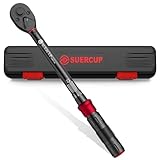
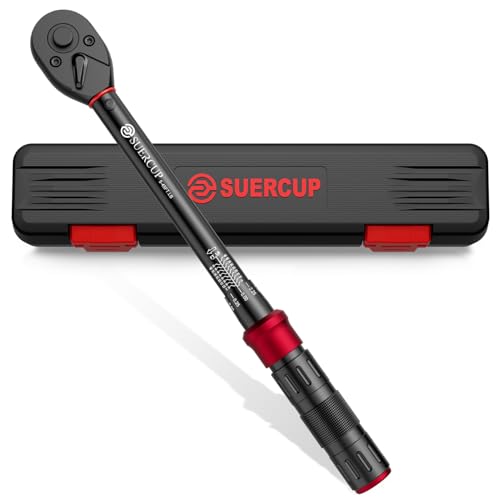 SUERCUP 3/8" Click Torque Wrench3/8" 5-45 Ft.Lb/6.8-61 N.m11.8 x 1.02 x 1.2 Inches1.5 poundsCheck on Amazon
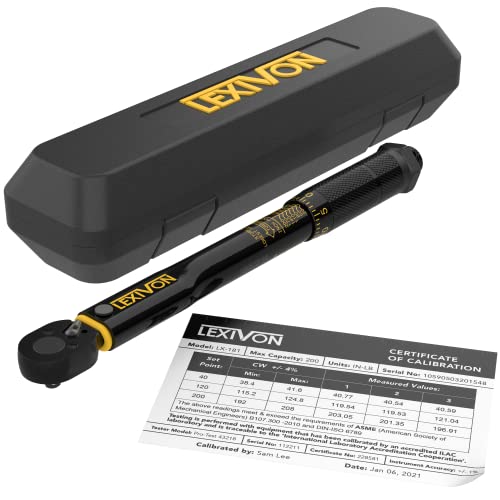
 LEXIVON Bike Torque Wrench 1/4-Inch Dr. 15-Piece Kit1/4"DR. 1.48-19.18 FT-LB Kit4.69 x 10.35 x 2.28 inches1.3 poundsCheck on Amazon

The best torque wrench for low-torque work depends on the fastener
For delicate fasteners and small assemblies, choose a wrench whose working torque falls in the middle of its rated range—not at the bottom—and whose scale is fine enough for the setting you need. A small-range 1/4-inch click wrench is a practical choice for general workshop work; for very low settings, a calibrated inch-pound wrench or a preset torque driver is usually a better fit. The right option depends on the required torque, the tool’s stated accuracy range, and whether its drive fits the fastener or adapter.
“Low torque” can mean anything from a few inch-pounds on a small instrument fastener to several dozen foot-pounds on a compact machine. Since 12 inch-pounds equal 1 foot-pound, check units before comparing tools. A wrench that reads in foot-pounds may technically cover a low setting but still be difficult to adjust precisely.
As an Amazon Associate we earn from qualifying purchases at no extra cost to you.


Compare the useful range, not just the maximum
Torque-wrench accuracy is normally specified as a percentage of the reading or setting over a stated portion of the tool’s range. Do not assume the claimed accuracy applies all the way down to the minimum marking. If the manufacturer specifies accuracy only from 20% to 100% of capacity, a setting below that band is outside the stated accuracy range—even if the scale includes it.
The examples below are representative tool formats, not a ranking of individual models. Published specifications differ by model and revision; confirm the manual for the exact wrench before buying.
| Tool type | Typical rated range | Common stated accuracy | Scale or setting step | Drive | Best fit |
|---|---|---|---|---|---|
| Small-range micrometer click wrench | 20–200 in-lb | Often ±4% clockwise, within specified range | Commonly 1 in-lb | 1/4 in | Repeated small-machine and workshop fasteners |
| Compact foot-pound click wrench | 5–25 ft-lb (60–300 in-lb) | Often ±4% clockwise, within specified range | Commonly 0.5 ft-lb | 3/8 in | Small assemblies whose targets are above the very-low-torque range |
| Beam-style inch-pound wrench | 0–150 in-lb | Varies; check the manufacturer’s specification | Usually read from a graduated scale | 1/4 in or 3/8 in | Occasional use where direct indication and simple construction matter |
| Preset torque screwdriver | Model-dependent; some are set in in-lb | Model-dependent; verify calibration specification | Fixed setting or fine adjustment, depending on model | Usually 1/4-in hex bit | Repeated low-torque screws and small, consistent assemblies |
These ranges and increments describe common formats, not guarantees for every product in a category. Accuracy and resolution are different: a wrench with 1 in-lb graduations is easier to set finely than one marked every 5 in-lb, but its actual accuracy still depends on its design, calibration, condition, and where the setting falls in its rated range.
Choose by the job you actually do
- For occasional fasteners around 20–150 in-lb: Look for a 1/4-inch inch-pound wrench whose manual explicitly includes your target within its accuracy range. A clear micrometer scale helps when settings change from job to job.
- For repeated identical screw settings: Consider a preset torque screwdriver. It avoids repeatedly interpreting a longer wrench scale and is often easier to handle when access is tight. Confirm that its range and bit interface suit the fastener.
- For a target below the click wrench’s reliable range: Choose a dedicated low-range tool rather than setting a larger wrench near its minimum. If the required torque is only a few inch-pounds, look for a tool specifically rated for that region.
- For an occasional job on a limited budget: A beam-style wrench can be a simple option, provided its scale is legible at the desired setting and the manufacturer provides suitable accuracy information. It requires a steady pull and a clear view of the indicator.
- For mixed fastener sizes: Match the drive to the smallest practical socket or bit setup. A 1/4-inch drive is usually more convenient on small hardware; a 3/8-inch tool may suit larger sockets but can be bulky or awkward on tiny assemblies.
Why low-end accuracy is easy to misjudge
Suppose a wrench has a 20–200 in-lb range and its stated accuracy band begins at 20% of capacity. That boundary is 40 in-lb: 200 × 0.20 = 40. A 30 in-lb target may appear on the scale, but it is below that specified band. For that job, select a tool whose documented accuracy range includes 30 in-lb, rather than relying on the presence of a low number on the handle.
Also consider the size of the expected error. At a 50 in-lb setting, a ±4% specification corresponds to ±2 in-lb, if that specification applies at the setting. If a component calls for a narrow tolerance, that uncertainty may be too large; use a more suitable instrument or follow the assembly maker’s instructions. An adapter can also affect access and leverage. Keep any extension inline with the fastener where possible, and follow the wrench manufacturer’s guidance for crowfoot or offset adapters.
Drive size, fit, and handling
A smaller drive is not automatically more accurate, but it usually pairs better with small sockets and compact hardware. Avoid stacking adapters simply to make a large-drive wrench fit a small fastener: extra length can make the setup harder to control, and an offset adapter may change the effective lever arm. Use the correct socket or bit, keep it fully seated, and make sure the wrench can be pulled smoothly without side-loading the fastener.
For delicate assemblies, the feel of the tool matters too. A long wrench can make it easier to overshoot a low target, while a screwdriver-style tool offers more controlled handling on small screws. Neither replaces a correctly specified torque range. If the fastener maker provides a torque value, use that value and the specified thread condition; lubrication, thread-locking compound, and material can change the clamping force produced by the same torque.
Care that preserves low-torque performance
- Store click wrenches at the manufacturer’s recommended setting. Many micrometer click wrenches should be returned to their lowest marked setting, not forced below it. Check the manual; storage procedures vary.
- Do not use a torque wrench as a breaker bar. High breakaway force can damage the mechanism and affect calibration.
- Use a smooth, steady pull. Jerking, gripping far from the handle’s marked grip point, or pushing sideways can produce inconsistent results.
- Keep the scale clean and readable. Dust and residue can obscure fine graduations or interfere with a locking collar. Wipe the tool with a clean, dry cloth and avoid unapproved solvents.
- Arrange calibration or verification for the work’s requirements. Frequency depends on use, handling, and the consequences of error. A dropped wrench or one used heavily deserves attention sooner; follow the manufacturer’s service guidance.
Bottom line
The best torque wrench for low torque is the one whose documented accuracy range covers your target with room to spare, whose graduations make that target easy to set, and whose drive fits the assembly without awkward adapters. For adjustable small-workshop jobs, start with a 1/4-inch inch-pound wrench and check its lower accuracy boundary. For repeated tiny fasteners, compare a dedicated torque screwdriver. If your target falls below a candidate tool’s stated accuracy range, choose a lower-range instrument rather than trusting a convenient scale marking.