What's inside
As an Amazon Associate I earn from qualifying purchases. This post may contain affiliate links at no extra cost to you.
Our Top Picks
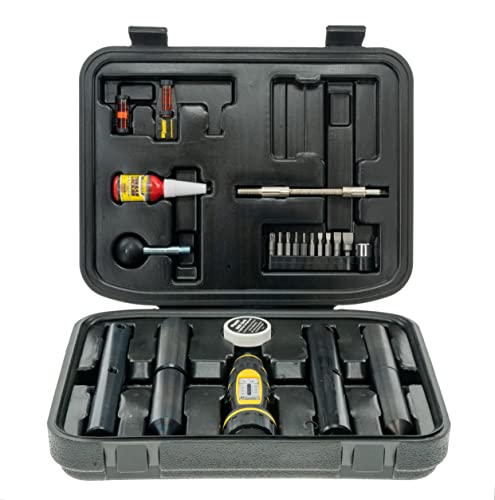 Wheeler Scope Mounting Combo Kit with FAT Wrench1-Inch/30mm14 x 11 x 4 inches2.4 poundsCheck on Amazon

Best torque wrench for rifle scope rings: the quick answer
For most scope-ring and mount jobs, the best torque wrench for rifle scope rings is a calibrated, inch-pound screwdriver-style torque driver with a 10–65 in-lb range, clear settings, and bits that fit your fasteners. A Wheeler FAT Wrench is a widely available example; choose a fixed-setting driver instead if you only use one torque value, or a compact preset kit if you work in tight spaces and can verify that its range covers your hardware.
There is no single correct torque for every ring. Ring-cap screws, crossbolts, and rail fasteners may have different requirements—even within one mounting system. Use the number supplied by the scope, ring, or mount manufacturer, and do not treat a tool’s maximum setting as a recommended setting.
As an Amazon Associate we earn from qualifying purchases at no extra cost to you.


Compare the main options
| Option | Typical range | Best for | Trade-off |
|---|---|---|---|
| Wheeler FAT Wrench | 10–65 in-lb | One tool for common scope and accessory screws | Bulkier than a compact preset driver; setting and storage require care |
| Fix It Sticks All-in-One Torque Driver | 15–65 in-lb | Compact kits and field or bench use with a defined torque range | Does not cover settings below 15 in-lb |
| Preset torque driver | One fixed setting; varies by model | Repeated jobs at the same specified torque | Limited flexibility if your rings and mounts call for different values |
| Beam-style inch-pound wrench with suitable bits | Varies by model | Readers who want a visible reading without a preset clutch | Needs a clear line of sight and controlled, steady force |
Ranges and included accessories can vary by version or kit, so confirm the current manufacturer specifications before buying. The figures above describe commonly listed ranges, not a guarantee that every package includes the same bits.
Which one fits your situation?
| Your situation | Practical choice | Why |
|---|---|---|
| First scope installation; occasional use | Adjustable driver with a readable scale and common bits | One tool can handle several fastener specifications without requiring a separate driver for each value. |
| Frequent work at one known setting | Preset driver, after confirming the specified torque | Fewer adjustments reduce the chance of dialing in the wrong value between jobs. |
| Small bench or limited access | Compact driver or short bit holder | A shorter setup can clear an optic tube or nearby hardware more easily. |
| Several brands of rings, mounts, and accessories | Adjustable 10–65 in-lb-class driver | A broader usable range is more versatile, provided the required settings fall within its calibrated range. |
What matters more than the maximum torque
Inch-pound precision and repeatability
Scope fastener values are commonly specified in inch-pounds (in-lb), not foot-pounds (ft-lb). The conversion is 12 in-lb per 1 ft-lb: for example, 18 in-lb equals 1.5 ft-lb. A driver graduated in inch-pounds makes small settings easier to select and helps avoid unit-conversion errors.
Look for a clear scale, a positive indication when the selected torque is reached, and manufacturer guidance on accuracy and calibration. “Repeatable” means the tool can apply its setting consistently when used correctly; it does not mean the displayed number is automatically right forever. Calibration can drift with wear, impact, or poor storage.
Bits that fit the fastener
Common scope-mounting hardware may use Torx, hex, or slotted heads. The exact size depends on the screw; do not assume every ring uses the same bit. A bit that is too small, worn, or poorly seated can round the screw head before the torque setting is reached. Choose a kit with well-fitting bits, and replace damaged ones rather than trying to compensate with extra force.
Compact access and control
A long handle may be comfortable on an open bench but awkward between a scope tube and ring. A compact driver, short bit, or low-profile holder can improve access. Avoid adding a long extension or an improvised adapter unless the tool maker explains how it affects the reading. Keep the driver aligned with the screw and apply smooth pressure; twisting off-axis can damage the bit or fastener.
Set up and tighten ring screws consistently
-
Check the manuals. Find the specified torque for each fastener group: ring caps, mount crossbolts, and rail screws may differ. Follow the instructions for the exact components you own.
-
Confirm units and tool range. Match in-lb to in-lb. Do not use a driver outside its stated calibrated range or estimate a setting beyond the scale.
-
Inspect the hardware. Clean debris from screw heads, check that threads and bits are undamaged, and use thread treatment only if the component maker calls for it. Lubrication can change clamping force at a given torque.
-
Seat the optic and start screws by hand. Make sure the scope is positioned and aligned as intended, then engage screws without cross-threading. Tighten gradually and evenly in the sequence recommended by the ring maker.
-
Stop at the tool’s signal. Apply steady force until the driver indicates the setting, then stop. Repeatedly clicking or pulling past the signal can overtighten a fastener.
-
Reset and store the tool as directed. For adjustable models, follow the manufacturer’s storage guidance; some recommend returning the setting to its minimum. Keep the driver and bits clean, dry, and protected from impact.
Ownership details that affect long-term accuracy
Bits are usually the first consumable: their tips wear, chip, or deform, especially when used at an angle or on dirty fasteners. Keep frequently used sizes organized and inspect them before important work. The driver mechanism can also lose accuracy after a drop or years of use, so check the maker’s calibration and service recommendations rather than assuming a torque click remains precise indefinitely.
For occasional home use, a quality adjustable driver may offer better value than several fixed tools. If you mount optics often, handle different hardware, or cannot afford uncertainty in a critical fastener setting, prioritize calibration support and a documented accuracy specification over a large assortment of accessories.
Bottom line
Choose an adjustable inch-pound torque driver with a useful range, readable settings, and correctly sized bits for general scope work. Pick a compact preset model for repeated jobs at one verified torque, or a beam-style tool if you prefer a visible reading and have room to use it properly. In every case, the component manufacturer’s torque specification—not a generic rule or the wrench’s maximum capacity—should determine the setting.