What's inside
As an Amazon Associate I earn from qualifying purchases. This post may contain affiliate links at no extra cost to you.
Our Top Picks
 Milwaukee 2457-20 M12 Cordless 3/8" Sub-Compact 35 ft-Lbs3/8"9.47 x 2.94 x 1.76 inches1 PoundsCheck on Amazon


Best Cordless Ratchets for Home and Shop Repairs
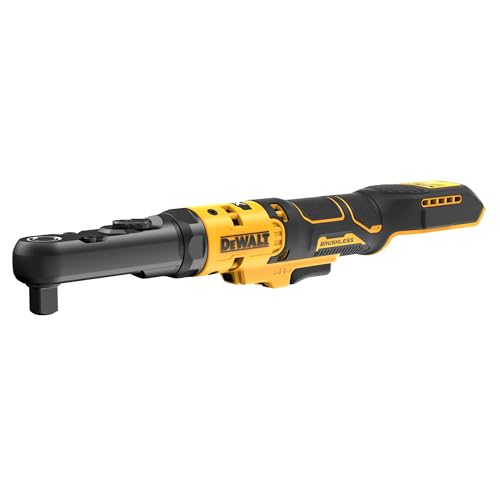
The best cordless ratchet for most home and shop repairs is the Milwaukee M12 FUEL 3/8-inch ratchet: it combines useful speed and torque with a compact 12-volt battery platform. Choose the compact Milwaukee M12 FUEL 1/4-inch model for cramped engine bays, the Makita 18V LXT 3/8-inch ratchet when you already own Makita batteries, or a lower-cost 12-volt tool for occasional maintenance.
A cordless ratchet spins a fastener after you have started it, saving repetitive hand movement; it is not a substitute for a breaker bar or a calibrated torque wrench. The rankings below weigh torque, speed, head access, platform value and tool weight together. Published specifications can vary by model and market, so check the exact model number before buying.
As an Amazon Associate we earn from qualifying purchases at no extra cost to you.



Ranked picks by repair situation
1. Milwaukee M12 FUEL 3/8-inch ratchet — best all-around
Milwaukee’s M12 FUEL 3/8-inch extended-reach ratchet is the strongest all-around choice for regular automotive and home maintenance if you want a familiar square-drive size and already use, or are willing to invest in, the M12 platform. Published specifications list up to 55 ft-lb of fastening torque and a maximum speed of 450 rpm. That is a useful balance for brackets, covers and many accessible under-hood fasteners.
Its extended neck reaches beyond some bulky compact-head tools, but the head still needs room to swing onto the fastener. At roughly 2.4 lb bare, it is not the lightest option, and a battery adds weight. Use the tool to run fasteners down, then finish tightening by hand to the vehicle or equipment maker’s specification.
2. Milwaukee M12 FUEL 1/4-inch ratchet — best for tight engine bays
When clearance matters more than socket size, the 1/4-inch M12 FUEL ratchet is a better fit. Its smaller drive and compact head help with light fasteners and limited-access work, while its listed top speed is also up to 450 rpm. The tradeoff is less leverage and a smaller selection of sockets suited to larger fasteners. Don’t choose it to break loose stubborn bolts.
For technicians or careful DIYers dealing with small fasteners behind components, a slim 1/4-inch setup can save more time than a higher-torque tool that cannot fit. A short socket often helps preserve clearance.
3. Makita 18V LXT 3/8-inch ratchet — best for existing Makita owners
Makita’s 18V LXT ratchet makes the most financial sense if you already own compatible LXT batteries and chargers. The platform battery may make the tool feel heavier than a 12-volt ratchet, but it avoids buying into a second battery system. Check the specific ratchet’s published torque and speed against the M12 options before choosing: tool generations and regional versions differ, and an 18-volt label alone does not mean it is faster or more powerful.
4. A compact 12V 3/8-inch ratchet — best for occasional general maintenance
If you only work on lawn equipment, furniture, household fixtures and occasional vehicle jobs, a basic 12V cordless ratchet can be the sensible value pick. Many toolmakers offer compact ratchets in this category. Compare the exact model’s head size, speed, included battery and warranty; lower-priced kits may save money upfront but have less headroom under load. Pick a complete cordless ratchet set if you need a battery and charger, or a tool-only version if your compatible batteries are already in the workshop.
Key specifications at a glance
Weights below are approximate tool-only figures and can differ with model revision. Published torque ratings are not directly comparable across brands because test conditions and rating methods may differ. Treat them as a guide, not a promise that a ratchet can safely loosen a particular fastener.
| Pick | Drive | Published torque | Max speed | Approx. bare weight | Best reason to choose it |
|---|---|---|---|---|---|
| Milwaukee M12 FUEL extended-reach ratchet | 3/8 in | Up to 55 ft-lb | 450 rpm | About 2.4 lb | Balanced choice for frequent repairs |
| Milwaukee M12 FUEL ratchet | 1/4 in | Up to 40 ft-lb | 450 rpm | About 2.0 lb | Small fasteners and tight access |
| Makita 18V LXT ratchet | 3/8 in | Check exact model | Check exact model | Varies by model | Uses an existing LXT battery platform |
| Compact 12V ratchet, category | 1/4 or 3/8 in | Varies by model | Varies by model | Varies by model | Lower-cost, occasional maintenance |
Choose by clearance, workload and battery ownership
| Your situation | What to prioritize | Best fit |
|---|---|---|
| Working between hoses or behind engine components | Small head, short socket, slim profile | 1/4-inch compact ratchet |
| Regular vehicle repairs and mixed 3/8-inch sockets | Useful torque, speed, replaceable platform batteries | M12 FUEL 3/8-inch |
| Already own Makita LXT tools | Battery compatibility and kit price | Makita 18V LXT ratchet |
| Only occasional household or mower repairs | Kit value, warranty, adequate access | Basic 12V ratchet set |
| Very tight space, infrequent use | Manual access and control over raw speed | Hand ratchet, or compact 1/4-inch cordless |
A 3/8 cordless ratchet is the most versatile size for many automotive users because 3/8-inch sockets are common for medium fasteners. A 1/4-inch model is easier to place in restricted spaces but is not a smaller substitute for every job. For larger fasteners, use the correct hand tool to loosen them first; forcing a powered ratchet can damage its gear mechanism or round the fastener.
How to use one without damaging fasteners or the tool
- Break the fastener loose manually. Use a hand ratchet or breaker bar for initial loosening, especially if corrosion or thread-locking compound is involved. Cordless ratchets are designed primarily to spin fasteners, not deliver high breakaway force.
- Choose the shortest socket that clears the work. Long sockets can add wobble and make a cramped access problem worse. Keep the socket fully seated.
- Run the fastener gently. Use the trigger carefully and stop before the fastener seats hard. Finish by hand, using a torque wrench when the service specification requires one.
- Keep oil, grit and moisture away from the head. Wipe the tool after use and inspect the drive and housing for damage. Follow the manufacturer’s instructions for lubrication; adding oil where it is not specified can attract debris.
In normal ownership, the most vulnerable parts are the ratchet head, anvil and internal gear train, particularly after repeated high-load use or drops. Keep the tool from twisting sideways under load, avoid using it as a lever, and remove the battery before inspecting or cleaning the head. Batteries are consumables too: store them within the maker’s recommended temperature range and avoid leaving them fully discharged for long periods.
What a cordless ratchet is—and isn’t—good for
For repeated fasteners in accessible locations, a cordless ratchet can save time and hand effort. For occasional repairs where access is extremely tight, a slim hand ratchet may be quicker to position and easier to control. For rusted fasteners, high torque, or final tightening, reach for the appropriate manual tool. The right choice is the ratchet that fits the space and your battery platform—not simply the model with the highest advertised torque.