What's inside
As an Amazon Associate I earn from qualifying purchases. This post may contain affiliate links at no extra cost to you.
Our Top Picks
 Amazon Basics Extra Long Reach Needle Nose Pliers3 Count (Pack Of 1)12.69 x 3.01 x 4.12 inchesCheck on Amazon

Best Needle-Nose Pliers for Precision Work
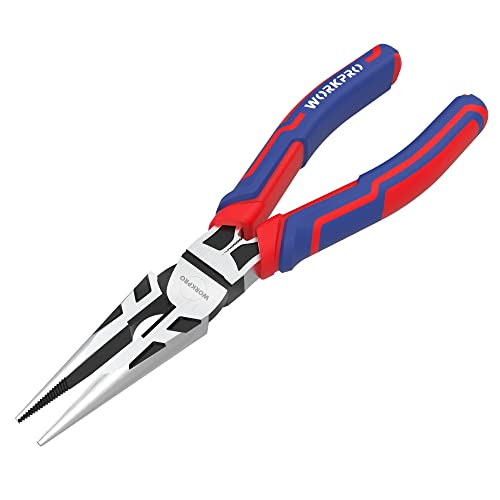
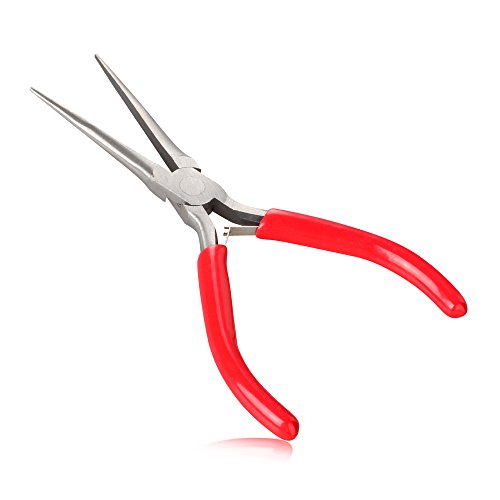
The best needle nose pliers for precision work are the ones whose jaw length and tip profile fit the space, whose closed tips meet evenly, and whose handles let you control pressure without slipping. For electrical work, choose insulated pliers only when they carry the appropriate voltage rating; for crafts, prioritize fine alignment and a smooth grip; for general workshop access, a sturdier, moderately long pair with a cutter is often more useful.
Choose by the job, not by jaw length alone
Longer jaws reach farther into a housing or around an obstruction, but they flex more under force and can be awkward in tight spaces. Shorter jaws are easier to steer and generally feel more rigid, making them better for close-up work. Jaw shape matters just as much: slim straight jaws suit direct access, while bent or curved noses can reach around a lip or keep your hand out of the line of sight.
As an Amazon Associate we earn from qualifying purchases at no extra cost to you.


- Electrical access: Look for a suitably rated insulated model, a narrow straight jaw, a secure grip, and a cutter if the job involves small wire. Insulation is not a substitute for safe isolation procedures, and the tool’s rating must match the work.
- Crafts and small components: Favor short-to-medium jaws, finely aligned tips, and a smooth internal gripping surface. A cutter is optional and can add bulk near the pivot.
- Workshop reach: A longer, narrow jaw helps retrieve or position parts behind other components. Choose a solid pivot and enough handle length to apply controlled force, rather than treating the pliers as a substitute for a wrench.
- Repeated everyday use: Comfort, joint smoothness, and replaceability matter more than the thinnest possible tip. A tool that stays comfortable and aligned is more useful than one that reaches a fraction farther but is tiring to hold.
Compare the features that change the feel
The figures below are practical selection ranges, not specifications for a single model. Actual dimensions and weights vary by manufacturer; check the product’s own specification before buying, especially when clearance is tight.
| Use or design | Typical overall length | Typical jaw length | Tip profile | Cutting feature | Best fit |
|---|---|---|---|---|---|
| Compact precision | 4.5–5.5 in (114–140 mm) | 0.8–1.3 in (20–33 mm) | Short, fine, straight | Often none | Small parts, crafts, shallow enclosures |
| General-purpose straight | 6–7 in (152–178 mm) | 1.5–2.3 in (38–58 mm) | Medium, tapered | Common on combination models | Routine workshop and household tasks |
| Long-reach straight | 8–11 in (203–279 mm) | 2.5–4 in (64–102 mm) | Long, narrow | Model-dependent | Recessed areas and obstructed access |
| Long-reach bent | 6–11 in (152–279 mm) | 1.5–4 in (38–102 mm) | Angled, commonly near 45° or 90° | Model-dependent | Side access and improved sightline |
These ranges help narrow the field, but do not compare jaw length in isolation. A long, very slim jaw may reach farther but twist when gripping; a shorter, broader jaw may hold a small part more securely. For delicate components, a blunt or slightly rounded tip can be safer than an extremely sharp one, which may bend or snag.
Check alignment and comfort before committing
Close the empty jaws and view the tips against a bright background. They should meet evenly rather than crossing, leaving a visible gap, or touching on one side only. Then open and close the pliers several times: movement should feel consistent, without grinding, binding, or excessive side-to-side play. For very small work, even slight misalignment can make it difficult to retain a wire or component.
Handle comfort is individual, but a few checks are broadly useful. The handles should not pinch your palm as the jaws close, and the coating should provide grip without feeling so bulky that it prevents precise finger control. If possible, hold the tool in the same hand position you use for the job. A spring-return handle may reduce effort during repetitive work, but it can make the jaws harder to keep closed when placing a part.
Should you get a cutter?
Integrated side cutters are convenient for trimming small wire, freeing you from switching tools. They also add a second function near the pivot and do not make needle-nose pliers appropriate for every cutting task. Check the manufacturer’s stated cutting capacity and intended material; do not infer that a cutter can handle hardened wire, steel, or thick cable. If clean, frequent cuts matter, dedicated cutters are usually the better choice.
For electronics or delicate craft work, a cutterless pair can leave more room to hold close to the tips and reduce the chance of accidentally nicking a nearby part. For general workshop use, a built-in cutter is a reasonable convenience when it matches the material you actually cut.
Durability and care: what wears first
In regular use, the pivot can loosen or become gritty, and thin tips can bend if they are twisted under load. Cutting edges can also dull or chip when used on material beyond their stated capacity. These are common failure points, so inspect joint play, tip alignment, and cutter condition periodically. Keep the pliers clean and dry, wipe away residue after use, and apply a small drop of tool oil to a stiff joint before working it through its range of motion.
Do not use the tips as a pry bar, twist a fastener with them, or force the jaws sideways to release a jammed part. Those habits put leverage on the narrowest section of the tool. If a component is stuck, switch to a tool designed for that force rather than risking bent tips or a sudden slip.
Quick decision guide
| Your situation | What to prioritize | Likely choice |
|---|---|---|
| Occasional craft or repair work, limited budget | Accurate tip closure, comfortable basic handles | Mid-length straight pair without extra features |
| Frequent small-component work | Fine alignment, smooth joint, controlled grip | Compact or medium precision pair |
| Deep or obstructed access | Reach and a clear line of sight | Long-reach straight pair, or bent nose if access is from the side |
| Electrical tasks | Correct insulation rating, clear markings, suitable jaw and cutter capacity | Rated insulated pliers matched to the work—not merely coated handles |
| One pair for mixed workshop jobs | Balanced reach, sturdy pivot, useful cutter | General-purpose 6–7 in combination model |
Basic consumer models commonly fall in the general market range of about $10–$25, while precision, professional, or appropriately rated insulated options may run roughly $25–$60 or more. Treat price as a rough guide, not a measure of tip accuracy: inspect the closed jaws and joint action whenever you can.
Bottom line
For most buyers, a 6–7 in straight pair is the versatile starting point. Choose compact needle nose pliers when fine control matters more than reach, long jaws when access is the main obstacle, and a bent nose when the approach angle blocks your view. Before buying, verify tip alignment, handle comfort, and—if you need a cutter or electrical insulation—the exact capacity and rating. Those checks are more useful than choosing by the longest jaw or the largest feature list.