What's inside
As an Amazon Associate I earn from qualifying purchases. This post may contain affiliate links at no extra cost to you.
Our Top Picks
 BILITOOLS 7pcs Magnetic Swivel Spark Plug Socket Set7pc(9/16", 5/8", 14mm, 16mm)3.5 poundsCheck on Amazon
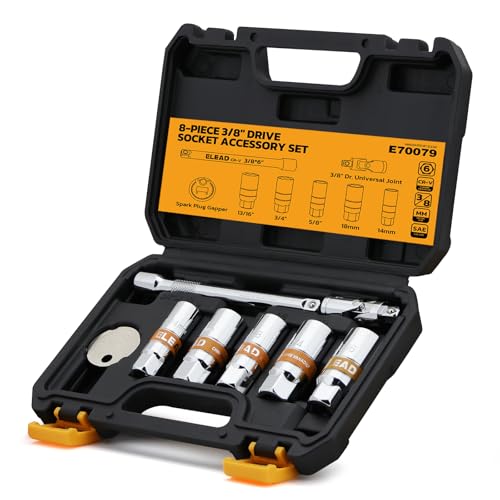 ELEAD 8-Piece 3/8" Drive Spark Plug Socket Set8-Piece Spark Plug Socket Set1.8 poundsCheck on Amazon
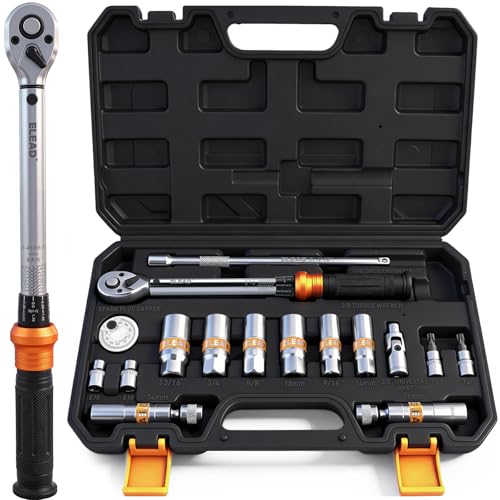

Best Spark Plug Socket Sets for Secure, Damage-Free Removal
The best spark plug socket set is a thin-wall, deep socket kit with the correct plug sizes, dependable retention, and a drive compatible with your ratchet and extension; for most modern cars, a 3/8-inch-drive set covering 14, 16, and 21 mm is the most useful starting point.
Spark plug sockets look simple, but ordinary deep sockets can make removal unnecessarily risky. A standard socket may not grip the plug’s ceramic insulator, may be too wide for a recessed plug tube, or may allow the plug to fall against the threads during installation. The right set matches the plug hex size, provides enough clearance around the insulator, and holds the plug without forcing it sideways.
As an Amazon Associate we earn from qualifying purchases at no extra cost to you.


Quick comparison: which type fits your job?
| Socket-set type | Common sizes | Typical drive | Retention method | Best use |
|---|---|---|---|---|
| Compact 1/4-inch-drive set | 14, 16, 18 mm; sometimes 5/8 inch | 1/4 inch | Rubber insert or magnet | Motorcycles, small engines, and cramped engine bays |
| General-purpose 3/8-inch-drive set | 14, 16, 18, 21 mm; 5/8 and 13/16 inch | 3/8 inch | Rubber insert or magnet | Most passenger cars and regular home servicing |
| Thin-wall professional set | 14, 16, 18, 21 mm, often with multiple lengths | 3/8 inch | Magnet, rubber, or locking insert | Deep plug wells and restricted clearance |
| Large-engine or older-vehicle set | 5/8, 13/16, 3/4 inch; selected metric sizes | 3/8 or 1/2 inch | Rubber insert or magnet | Older cars, trucks, marine engines, and equipment |
These are typical coverage ranges rather than a guarantee of vehicle fit. Check the vehicle manufacturer’s plug specification or remove the ignition coil and measure the plug hex before buying. Thread diameter does not tell you the socket size: two plugs with the same thread can have different hexes.
The key buying decisions
1. Choose the plug hex size before choosing the brand
The most common modern sizes are 14 mm, 16 mm, and 21 mm. In inch-based applications, 5/8 inch and 13/16 inch are especially common. A 5/8-inch socket is approximately 15.9 mm, but it is not a universal substitute for a 16 mm socket. The slight difference can matter when the plug hex is worn, contaminated, or made to a tight tolerance.
A set containing both 5/8 inch and 16 mm is useful when you work on different vehicles. A kit containing only 13/16 inch may be perfectly suitable for an older truck but unnecessarily large for many newer four-cylinder engines.
2. Thin-wall clearance matters more than a large size count
Many spark plugs sit at the bottom of narrow aluminum or plastic tubes. A socket can have the correct internal hex and still fail because its outside diameter contacts the tube before it reaches the plug. Thin-wall sockets reduce this problem, but they should not be confused with ultra-thin sockets intended for one highly specific application.
Compare the socket’s outside diameter and usable depth when the manufacturer publishes those measurements. Also check whether the socket has a raised collar, external knurling, or a bulky retention mechanism. Those features can be helpful in open access but troublesome inside a narrow plug well.
Do not use an impact-rated socket as a substitute for a purpose-made thin-wall spark plug socket unless its dimensions are confirmed. It may be strong, but its thicker walls can prevent access.
3. Rubber versus magnetic retention
A rubber insert grips the porcelain insulator and is usually inexpensive to replace. It gives positive friction, which is useful when lowering a plug into a deep hole. The drawback is that rubber can swell, harden, split, or remain stuck on the plug after repeated use.
A magnetic spark plug socket uses a magnet to hold the plug’s metal shell. It normally does not contact the ceramic, so it avoids some rubber-insert problems and often releases the plug cleanly. A strong magnet is particularly convenient when extracting a plug from a deep, vertical well. However, magnetic retention can be less effective with a heavily recessed plug, a loose socket fit, or a plug with a nonmagnetic or unusually shaped shell.
For frequent servicing, a magnetic socket set is often the cleaner long-term choice, while rubber-retained sockets offer excellent value for occasional maintenance. Some professional sets include both types, allowing you to choose based on access and plug design.
4. Match the drive to your extensions
A 3/8-inch drive is the best all-around choice because it accepts common ratchets, wobble extensions, universal joints, and torque wrenches. A 1/4-inch drive is slimmer and better in very tight spaces, but it offers less leverage. A 1/2-inch-drive spark plug socket is generally intended for larger engines or adapters and can be awkward in a passenger-car engine bay.
Look for a set that includes more than one length if plug depth varies. A six-inch extension may reach a deeply recessed plug, while a short extension gives better control in an exposed cylinder head. A universal joint can solve an angle problem, but excessive articulation makes it easier to load the plug sideways.
Best choice by situation
| Your situation | Recommended configuration | Why |
|---|---|---|
| One car, occasional plug changes | 3/8-inch drive, 14/16/21 mm or the vehicle-specific size, rubber insert | Low cost with enough capability for routine work |
| Several cars or unknown future vehicles | 3/8-inch drive, metric and inch sizes, magnetic retention | Broader coverage and less dependence on worn rubber inserts |
| Very narrow plug wells | Verified thin-wall sockets, preferably with two lengths | Outside diameter and reach are more important than total piece count |
| Motorcycle or small engine | 1/4-inch drive, compact 14 or 16 mm socket, short extension | Fits restricted spaces without excessive leverage |
| Professional or frequent use | Chrome-vanadium or chrome-molybdenum steel, laser-marked sizes, replacement inserts | Better identification, serviceability, and resistance to repeated use |
Sets worth considering
Brands such as TEKTON, GearWrench, Lisle, Sunex, and OEMTOOLS offer purpose-made spark plug sockets or related automotive socket sets in configurations covering common metric and inch sizes. The useful distinction is not the logo alone; compare the actual wall thickness, retention design, drive size, and included extensions.
A compact TEKTON- or OEMTOOLS-style set can suit a homeowner who needs one or two common sizes. A GearWrench-, Lisle-, or Sunex-style professional-oriented option may be preferable when the kit provides magnetic retention, multiple socket depths, stronger markings, or replacement inserts. Product ranges change, so verify the current contents rather than assuming every set from a brand has the same features.
How to remove and install a plug without damage
- Confirm the socket size. Push the socket fully onto the plug hex by hand. It should seat squarely without rocking.
- Clean around the plug. Blow away loose grit before removal. Debris that falls into the cylinder can damage the bore or valves.
- Break it loose gently. Use a ratchet, not an impact driver. If the plug resists, stop and investigate rather than applying uncontrolled force.
- Keep the tool aligned. Hold the extension in line with the plug. Side loading can chip the ceramic or damage the threads.
- Lift the old plug out. Check the retention insert or magnet if the plug stays in the well.
- Start the replacement by hand. A short piece of rubber hose over the insulator can act as a safe hand-starting tool when access is difficult.
- Torque to the vehicle specification. Spark-plug tightening requirements vary by plug type, thread material, and cylinder head. Do not use socket size as a guide to torque.
Never use a retention insert to force a plug onto an extension at an angle. Also avoid adding a cheater bar to a small ratchet: spark plug threads in an aluminum head are easy to over-tighten.
Durability and ownership costs
The first part likely to wear is usually the rubber insert, not the steel socket. Heat, oil, and repeated friction can make it lose grip. A replacement insert may cost only a few dollars, while replacing an entire specialized set is unnecessary. Magnets can also become weak or dislodged if the socket is dropped, although the steel body normally remains usable.
After use, wipe away oil and metal particles, then store the sockets dry. Do not pry with the socket or strike it with a hammer unless the manufacturer specifically permits that use. Keep the size markings visible; confusing 14 mm with 16 mm or 5/8 inch with 16 mm is a common cause of rounded plug hexes.
For most shoppers, the strongest value is a 3/8-inch-drive set with 14, 16, 18, and 21 mm coverage, at least one thin-wall socket, and magnetic or replaceable-rubber retention. If your vehicle uses an uncommon size, a precisely fitting single socket is better than a large assortment that does not clear the plug well.
Frequently asked questions
Can I use a regular deep socket?
Only if it fits the plug hex, clears the plug well, and provides a safe way to hold the plug. A regular deep socket may work for removal, but it can leave the plug loose during installation and may be too wide for recessed applications.
Is a magnetic spark plug socket better than a rubber one?
Not in every engine. Magnetic retention is cleaner and avoids rubber deterioration, while rubber can grip the ceramic securely and costs less to replace. Choose based on the plug’s shell, well depth, and the socket’s outside diameter.
Do spark plug sockets need to be impact-rated?
No. Normal spark plug work should be performed with a hand ratchet and a torque wrench. Impact use can damage the plug, ceramic insulator, or cylinder-head threads even when the socket itself survives.