What's inside
As an Amazon Associate I earn from qualifying purchases. This post may contain affiliate links at no extra cost to you.
Our Top Picks
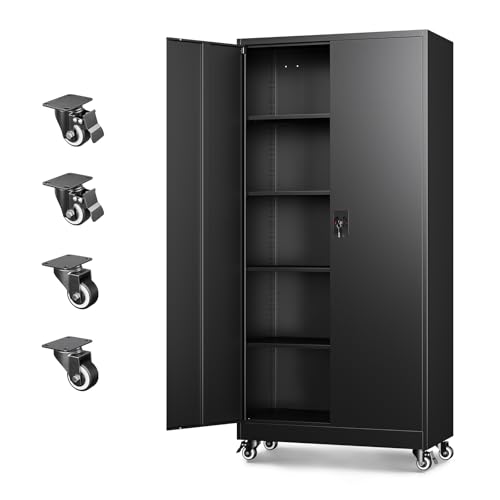 Letaya Metal Garage Storage Cabinets with Wheels16" D x 32" W x 74.41" H15.75 x 31.49 x 74.41 inches75 PoundsCheck on Amazon
 Maxority 7-Drawer Heavy-Duty Rolling Tool Chest Cabinet withLarge13 x 24 x 30 inches60 PoundsCheck on Amazon

Best Tool Cabinets on Wheels for Secure, Mobile Storage
For a secure mobile setup, choose a cabinet whose loaded weight stays within its caster capacity, whose drawers suit your tools, and whose locking system matches the workspace: a compact 26-inch chest for a home garage, a deeper 41-inch cabinet for frequent shop use, or a modular system when storage needs to grow. Before buying, verify the exact model’s dimensions, weight limits, steel gauge, slide rating, and lock details—these vary even within a product line.
Compare the main options by workspace
Dimensions and specifications below are representative of common product configurations, not guarantees for every version. Manufacturers may revise models; confirm the current spec sheet for the exact cabinet and accessory package.
As an Amazon Associate we earn from qualifying purchases at no extra cost to you.


| Cabinet type | Typical width and depth | Construction and drawers | Mobility and security | Best fit |
|---|---|---|---|---|
| Compact 26-inch rolling cabinet, such as a Husky or Craftsman configuration | About 26 in. wide; commonly 18–22 in. deep | Steel cabinet; often 5–6 drawers; slide and load ratings depend on model | Usually four casters, with two locking; key lock commonly secures drawers | Small garages, occasional use, and a limited tool collection |
| 41-inch rolling cabinet, such as a Milwaukee 46-inch-class or comparable shop cabinet | About 41–46 in. wide; commonly 18–22 in. deep | Steel construction; often 8–11 drawers; heavy-duty slides on higher-spec models | Typically four large casters; check individual caster ratings and lock coverage | Frequent shop work with a broad mix of hand tools and accessories |
| Modular rolling storage, such as a DEWALT ToughSystem 2.0 rolling setup | Footprint varies by stack; commonly around 20–25 in. wide | Impact-resistant polymer cases rather than a steel drawer cabinet | Large wheels and stack connections; some configurations accept a padlock | Moving tools between work areas or transporting them to jobsites |
These choices are not interchangeable. A modular stack can travel over rough ground and keep tools enclosed, but it does not provide the quick, shallow-drawer access of a shop cabinet. A wide steel cabinet offers more organized storage but needs a clear route through doors and around benches.
Choose by the way you work
- Limited floor space or occasional repairs: Start with a compact cabinet. Measure the opening where it will park, including the handle and caster footprint. A smaller cabinet that can move freely is more useful than a larger one wedged beside a bench.
- Daily woodworking or repair work: Favor deeper drawers, full-extension ball-bearing slides, and a broad top that can serve as a staging surface. Check whether the top is rated for a vise or heavy equipment before mounting anything.
- Tools shared in a garage or workshop: Look for a central lock that secures all drawers, and consider whether the cabinet can be anchored or parked out of public reach. A lock helps deter casual access; it is not a substitute for a secure room or a high-security safe.
- Frequent movement between rooms or jobsites: Compare wheel diameter, tread, and the manufacturer’s total-load rating. For rough paths, a transport-oriented modular system may be more practical than a drawer cabinet with small hard casters.
- Growing tool collection: A wider cabinet or a compatible upper chest may be better value than replacing a small unit later. Confirm that the base cabinet is rated for the added top-chest weight.
Check the numbers before you buy
Size the cabinet around the route, not just the parking spot
Measure the narrowest doorway, turn, and aisle the loaded cabinet must pass through. Allow extra room for handles and for steering: a cabinet that fits through a doorway straight on may not clear when it has to turn. Also note the drawer depth. A cabinet can look large from the front yet have shallow drawers that will not fit a long ruler, plane, or wrench set.
Calculate caster capacity with a safety margin
Use the cabinet’s empty weight plus the weight of the tools and accessories you expect to store. Divide that total by the number of casters only as a first estimate; uneven floors and thresholds can shift more load onto some wheels. Aim for a combined caster rating at least 1.5 times the expected loaded weight, and follow the manufacturer’s stated limit if it is lower.
Example: If a cabinet weighs 150 lb empty and its contents weigh 250 lb, the expected total is 400 lb. Four casters rated at 150 lb each provide 600 lb of combined nominal capacity. That is 1.5 times the expected load, but it does not make the cabinet safe to push over obstacles or load beyond its published limit. Check whether the stated rating applies per caster or to the complete cabinet.
Match the slides to the heaviest drawer
Ball-bearing slides generally extend more smoothly and fully than basic friction slides, which makes it easier to reach tools at the back. The useful number is the slide’s load rating for the drawer—not a vague claim that the cabinet is “heavy duty.” Store dense items such as sockets and clamps in lower drawers, and avoid loading one drawer beyond its rating. Full extension also means the drawer projects farther into the aisle, so leave room to open it.
Steel, locks, and the parts that wear
Steel thickness is often advertised in gauge, but the gauge system can be confusing and a smaller gauge number usually means thicker sheet. Compare the manufacturer’s stated material and construction details rather than judging strength by paint or appearance alone. Reinforced corners, a rigid frame, quality welds, and a stable drawer system matter as much as the outer panels. Thin sheet metal can dent, while a cabinet that flexes may eventually make drawers harder to align.
Check what “locking” means on the exact model. Some cabinets use a keyed central lock that blocks the drawer slides; others secure only certain compartments, or offer a hasp for a separate padlock. Ask whether keys are replaceable and whether the lid or upper chest locks independently. Keep the key separate from the cabinet, and do not treat a basic tool-cabinet lock as theft-proof.
In regular use, casters, drawer slides, and locks are likely to need attention before the steel body does. Sawdust can collect in slides and caster swivels, while grit and dried finish can make drawers drag. Vacuum debris rather than blowing it deeper into the mechanism; wipe slides clean and lubricate them only as the manufacturer recommends. Periodically check caster fasteners, drawer stops, and lock operation. Avoid forcing a jammed drawer or rolling a heavily loaded cabinet over cords and floor lips—both can damage the slides, caster mounts, or frame.
Shortlist by priority
| Your priority | What to favor | What to avoid |
|---|---|---|
| Lowest footprint | Compact width, useful drawer depth, locking casters | Choosing by width alone without checking the handle and turning clearance |
| Heavy tools and frequent access | Sturdy frame, rated full-extension slides, documented drawer capacity | Putting dense tools in top drawers or relying on an unspecified load rating |
| Secure shared storage | Central drawer lock, clear lock coverage, sturdy construction | Assuming every compartment locks or that a keyed cabinet resists forced entry |
| Movement over uneven floors | Large wheels, suitable tread, ample caster capacity | Small hard casters and repeated impacts over thresholds |
Bottom line
For a home garage with modest storage needs, a compact steel cabinet is usually the sensible starting point. For a busy woodworking shop, prioritize drawer-slide ratings, depth, and a stable frame over the highest drawer count. Choose a modular rolling system when transport matters more than steel drawers. In every case, verify the exact model’s dimensions, total and drawer capacities, caster ratings, and lock coverage—and leave a margin for the tools you plan to add.