
What's inside
As an Amazon Associate I earn from qualifying purchases. This post may contain affiliate links at no extra cost to you.
The best plier sets are compact combinations built around one high-use combination plier, one long-nose plier, and one diagonal cutter—not the largest box of mismatched sizes.
For most homeowners and general repair work, a three- or four-piece set from Knipex, Channellock, Klein Tools, Wiha, or a comparable professional brand offers better value than a 10-piece kit filled with duplicate cutters and rarely used specialty pliers. The right choice depends on how often you work, whether you need electrical insulation, and how much of each tool you would actually buy individually.
As an Amazon Associate we earn from qualifying purchases at no extra cost to you.
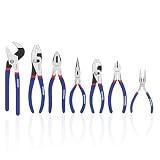
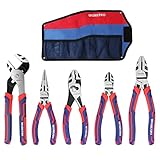

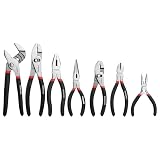
Our Top Picks
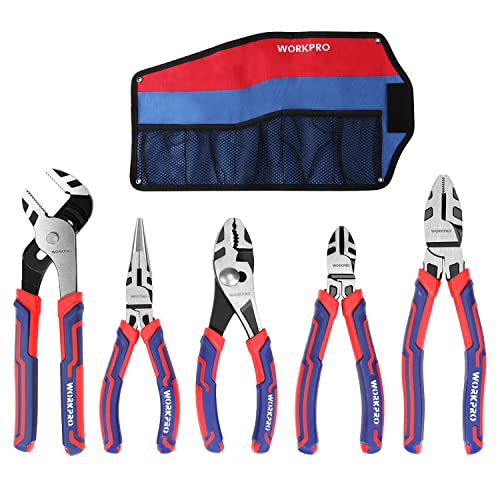

What a useful plier set should contain
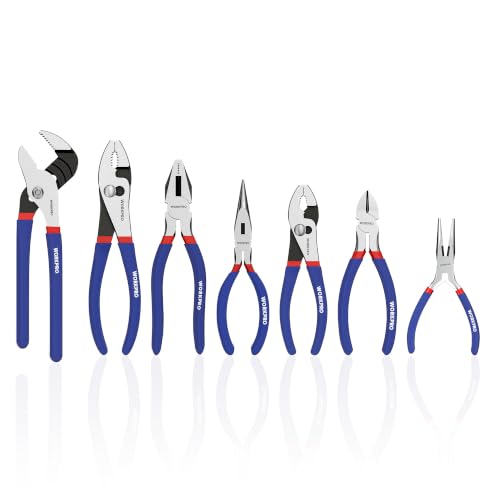
A practical pliers set covers different jobs rather than merely adding more sizes. The core combination is:
- Combination or lineman’s pliers: gripping, twisting, pulling staples and wire, and cutting moderate wire.
- Long-nose pliers: reaching into narrow spaces, bending small wire, and placing clips or pins.
- Diagonal-cutting pliers: cleanly cutting wire, cable ties, nails, or soft fasteners without abusing the combination pliers.
- Slip-joint or water-pump pliers: gripping larger nuts, pipe fittings, and irregular objects.
That four-tool arrangement usually delivers more useful coverage than a set containing several nearly identical long-nose pliers. A set of pliers is worth considering only when each included tool performs a distinct task that matches your work.
Best plier sets by situation
| Situation | Best configuration | Useful size range | Typical 2026 market range |
|---|---|---|---|
| Occasional household repairs | Combination pliers, long-nose pliers, diagonal cutters | 6–8 inches | $25–$60 |
| Frequent DIY and woodworking | Combination pliers, long-nose pliers, diagonal cutters, slip-joint pliers | 6–10 inches | $50–$120 |
| Electrical maintenance | Insulated combination or lineman’s pliers, insulated long-nose pliers, diagonal cutters | 6–9 inches | $80–$180 |
| Automotive and equipment repair | Combination pliers, long-nose pliers, diagonal cutters, water-pump pliers, locking pliers | 7–12 inches | $70–$180 |
| Fine work and electronics | Small long-nose pliers, flush cutters, flat-nose or bent-nose pliers | 4–6 inches | $35–$110 |
| Maximum capability in limited storage | Three core pliers plus one adjustable water-pump plier | 6–10 inches | $60–$140 |
Which combinations are actually worth the money?
Best general-purpose plier set: three-piece core combination
The strongest default choice is a set containing approximately 7-inch combination pliers, 8-inch long-nose pliers, and 7-inch diagonal cutters. This arrangement suits household repairs, workshop tasks, light automotive work, and woodworking cleanup such as removing staples and cutting tie wire.
Look for forged chrome-vanadium or similar alloy-steel construction, induction-hardened cutting edges, and a smooth but controlled joint. Knipex, Channellock, Klein Tools, and Wiha all offer tools in this general professional category, although the exact contents and handles vary by product line.
This is usually the best set of pliers for someone who wants dependable tools without paying for specialty pieces. It also leaves fewer unused tools in a drawer.
Best heavy-duty set: add a water-pump plier, not another cutter
For plumbing, machinery, garden equipment, or demanding shop work, add a 10-inch water-pump plier with a useful jaw capacity of roughly 1 3/4 to 2 1/2 inches. Its adjustable jaws can grip objects that a standard combination plier cannot reach.
A heavy-duty kit becomes less attractive when it includes two diagonal cutters with nearly identical capacities. A 7-inch cutter and a 9-inch cutter can make sense if you regularly cut thicker material, but otherwise the larger tool is often filler. A locking plier can be more valuable than a duplicate cutter because it holds a workpiece without continuous hand pressure.
Best electrical set: pay for insulation and geometry
Electrical work changes the buying criteria. Choose tools with clearly marked insulation appropriate to the work and with jaw and cutter geometry suited to wire sizes you handle. Insulated handles do not make energized work safe by themselves; circuits should be de-energized and verified, and regulated electrical work may require a qualified professional.
A useful electrical plier set normally includes a lineman’s or combination plier, long-nose plier, and diagonal cutter. A wire stripper or crimper may be useful, but it should not be counted as a substitute for a proper cutter. Sets that add several stripper functions while using low-grade pliers are often poor value.
Best compact set for woodworking and household use
Woodworkers commonly need to pull brads, staples, and small nails, cut wire, and reach into hardware assemblies. A compact combination of end-cutting nippers, long-nose pliers, and diagonal cutters can be more useful than a general mechanic’s set.
End-cutting nippers are especially helpful for lifting fasteners close to a surface, but they are not a replacement for side cutters. If a kit includes both, check that the end cutters solve a real task rather than duplicating the same cutting range.
Steel hardness, cutting edges, and joint quality
Manufacturers do not always publish complete hardness figures, so a high Rockwell number alone should not determine the purchase. Plier performance depends on the combination of forging quality, heat treatment, cutter geometry, alignment, and the hardness of the material being cut.
| Feature | What to look for | Warning sign |
|---|---|---|
| Body material | Forged alloy steel, commonly chrome-vanadium or comparable tool steel | Thin stamped jaws or vague “hardened steel” wording |
| Cutting edges | Clean, even meeting edges with a stated soft/medium/hard-wire capacity | Visible gap near the tip or rough grinding marks |
| Joint | Low side play with smooth opening throughout the range | Grinding, wobble, or stiffness at one point |
| Handle | Secure non-slip grips that do not rotate on the tang | Loose overmold or bulky grips that prevent access |
| Finish | Even chrome, nickel, black oxide, or corrosion-resistant treatment | Unprotected rough steel in a damp workshop |
For cutters, hardness is a trade-off. Very hard edges resist wear but can chip if used on hardened nails, piano wire, screws, or steel cable outside the stated capacity. A softer general-purpose cutter may tolerate abuse better but develop a notch sooner. Follow the manufacturer’s material limits rather than assuming a larger handle makes a cutter suitable for harder stock.
Cost per plier: when a set saves money
Compare the set with the individual tools you would actually purchase, not with the retail total of every possible piece. For example, suppose a three-piece set costs $72. Comparable individual tools cost $30 for combination pliers, $27 for long-nose pliers, and $25 for diagonal cutters. The individual total is $82, so the set saves $10, or about 12 percent.
The set’s simple cost per plier is $24, but that figure can mislead. If you would never use the diagonal cutter, the effective cost of the two useful tools is $36 each—more expensive than buying only the two tools individually. Conversely, if a four-piece $96 set contains three tools you need and a $30 water-pump plier you would soon buy anyway, its effective cost for the needed tools is $32 per tool, versus approximately $112 purchased separately.
Use this calculation:
Effective set cost per useful tool = set price ÷ number of tools you expect to use regularly.
Also check replacement cost. A bargain set loses its advantage if one damaged cutter requires replacing the entire assortment.
Filler sizes and duplicate tools to avoid
- Two long-nose pliers differing by only 1 inch, unless access restrictions make the difference important.
- Multiple diagonal cutters with nearly identical wire capacities.
- Small pliers with handles too weak for their advertised cutting function.
- Crimpers included mainly to raise the piece count when you already own a better wire tool.
- Very large groove-joint pliers in a household kit where a medium 8- or 10-inch model would cover the work.
- Cheap locking pliers with poor jaw alignment and weak clamping hardware.
More pieces can also mean more storage problems. A four-tool set that fits a drawer is often more useful than a 12-piece set that is difficult to organize and encourages the wrong tool for the job.
Ownership realities: what wears first
Cutting edges usually show wear before the gripping jaws. Nicks, a shiny flattened edge, or increased force required to cut the same wire are signs that a cutter is approaching replacement time. Do not sharpen ordinary diagonal cutters casually with a file; changing the edge angle can create gaps and reduce cutting performance.
Joints may become stiff from dust, resin, or corrosion. Wipe the tools after use, brush away debris, and apply a small amount of light machine oil to the pivot. Open and close the pliers several times, then wipe off excess oil so it does not attract sawdust. Keep cutters dry, and avoid storing them in a damp toolbox.
Never use pliers as a hammer, wrench, pry bar, or substitute for a bolt cutter. Do not cut live electrical conductors, hardened fasteners, or material beyond the rated capacity. Those mistakes damage the tool quickly and can cause a sudden edge failure.
Bottom line
For most buyers, the best plier sets tools are a three-piece professional-quality combination of 6- to 8-inch combination pliers, long-nose pliers, and diagonal cutters. Choose a four-piece set only when its slip-joint or water-pump plier fills a genuine gap. Check forged steel, cutter capacity, joint alignment, insulation requirements, and the effective cost per useful tool. A smaller set with distinct jobs will usually outlast and outperform a larger kit padded with duplicates.