What's inside
- Best Inch-Pound Torque Wrenches for Low-Torque Work
- What matters most when choosing one
- Comparison: which type fits which job?
- Choose by situation
- Range and resolution: a quick selection example
- Is an inch-pound wrench right for a 250 ft-lb job?
- Use and care: avoid the common causes of bad readings
- Related Guides
As an Amazon Associate I earn from qualifying purchases. This post may contain affiliate links at no extra cost to you.
Our Top Picks
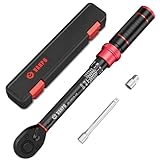
 PUIBERS 3/8" Drive Inch Pound Torque Wrench 20-2403/8" 20-240 in.lb - 4 Pcs1.6 poundsCheck on Amazon


Best Inch-Pound Torque Wrenches for Low-Torque Work
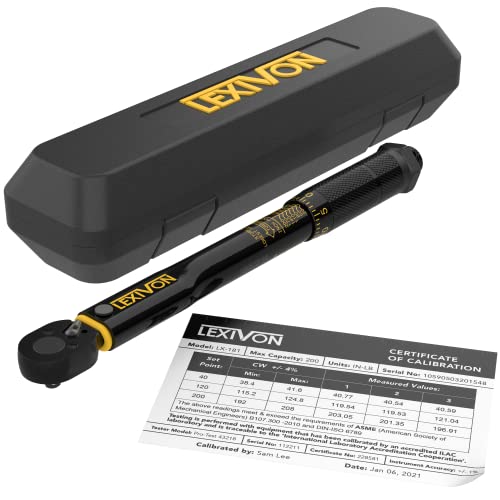
The best inch lb torque wrench for delicate fasteners is a calibrated 1/4-inch-drive model whose working range places your target torque away from either end of the scale; for bicycles and small engines, choose a range that covers the manufacturer’s specifications, while electronics may call for a low-range torque screwdriver instead.
Inch-pounds (in-lb) measure smaller torque values than foot-pounds: 12 in-lb equals 1 ft-lb. A wrench marked in in-lb is easier to read at low settings, but units alone do not guarantee precision. Check the range, smallest setting increment, stated accuracy, drive size, and whether the tool can release a fastener without being used as a breaker bar.
As an Amazon Associate we earn from qualifying purchases at no extra cost to you.

What matters most when choosing one
- Range: Match the wrench to the actual fastener specifications. A wrench should not be used below its stated minimum; a common selection rule is to keep routine targets within the middle portion of the range when possible.
- Resolution: This is the smallest displayed or selectable increment, not the same as accuracy. A 1-in-lb scale is easier to set finely than a 5-in-lb scale, but neither tells you how close the wrench is to the true value.
- Accuracy: Look for a manufacturer’s stated tolerance, often expressed as a percentage of reading or full scale. Those definitions are not interchangeable, especially at the low end.
- Drive size: A 1/4-inch square drive suits many small sockets and low-torque fasteners. A 3/8-inch drive is more useful when the range extends higher or the sockets are larger, but it may be awkward on tiny hardware.
- Tool type: A click wrench is compact and straightforward; a beam or dial wrench provides a visible reading while tightening; a digital wrench can improve readability but adds batteries and electronics.
Comparison: which type fits which job?
Specifications vary by model, so treat the figures below as common product-category ranges rather than guarantees for every wrench. Confirm the exact model’s manual before buying or applying torque.
| Tool type | Typical range | Typical resolution | Common drive | Best fit | Ownership trade-off |
|---|---|---|---|---|---|
| 1/4-inch click wrench | 20–200 in-lb | 1–5 in-lb | 1/4 in | Bicycle components, small engines, general light mechanical work | Simple to set, but the click can be subtle at low torque |
| 1/4-inch beam or dial wrench | 0–150 in-lb | Scale-dependent; often 1–5 in-lb markings | 1/4 in | Low-torque work where watching the reading is practical | Needs a clear view and steady hand; beam designs have few adjustment parts |
| Digital torque wrench | 10–200 in-lb | Often 0.1–1 in-lb display increments | Usually 1/4 or 3/8 in | Repeated settings, readable alerts, or jobs needing a displayed value | Costs more; batteries and electronic components need care |
| Torque screwdriver | About 1–80 in-lb, depending on model | Model-dependent; commonly fine adjustment at the low end | Hex bits, often 1/4 in | Electronics, instrument panels, small clamps, and tiny threaded hardware | Not a substitute for a socket wrench on larger fasteners |
Choose by situation
- Electronics and tiny fasteners: Start with the equipment maker’s torque specification. If it is below a socket wrench’s minimum, use an adjustable torque screwdriver with a compatible bit. A 1/4-inch ratchet can still be too large or powerful for small screws.
- Bicycle maintenance: A 1/4-inch click wrench around 20–200 in-lb is a useful general-purpose range for many small components, but it will not cover every bicycle fastener. Some parts require less torque, while pedals, axles, or other larger joints may call for a different tool and unit range. Follow the component maker’s value, not a generic bicycle chart.
- Small engines: Choose based on the engine service manual, not the label “small engine.” Covers, carburetor hardware, and other small fasteners may suit an in-lb wrench; larger fasteners can exceed its capacity. Avoid using an in-lb wrench close to its maximum if the specification is better covered by a larger tool.
- Occasional home use on a budget: A reputable mechanical click or beam wrench can be adequate if its range and accuracy statement suit the job. Spend extra on a better-matched range before paying for a digital display you do not need.
- Frequent work or several target values: A digital wrench can make values easier to set and read. Check its accuracy specification, calibration guidance, battery type, and whether it alerts by sound, vibration, or display.
Range and resolution: a quick selection example
Suppose a component calls for 48 in-lb. A wrench rated 20–200 in-lb can reach that setting, and a 1-in-lb increment lets you select it directly. A model with 5-in-lb increments cannot select 48 exactly; its nearest settings are 45 and 50 in-lb. That does not automatically make the finer wrench more accurate: a stated accuracy of ±4% of reading at 48 in-lb would mean a nominal error of about ±1.9 in-lb, while ±4% of a 200-in-lb full scale would mean ±8 in-lb. Read the manufacturer’s definition of accuracy before comparing specifications.
Also consider the socket and adapter. Extensions that keep the drive axis in line generally do not change the lever arm in the same way as a crowfoot adapter positioned at 90 degrees. A crowfoot placed in line with the wrench can alter the effective lever length; follow the tool maker’s correction method or reposition the crowfoot at 90 degrees when the setup permits.
Is an inch-pound wrench right for a 250 ft-lb job?
No. A 250 ft-lb target equals 3,000 in-lb, far beyond the capacity of typical 1/4-inch low-torque wrenches. The best 250 ft lb torque wrench is a separate high-capacity tool selected around the target value—often a suitable 1/2-inch or 3/4-inch-drive torque wrench, depending on the manufacturer’s range and the fastener. Do not convert units and assume a low-range wrench can safely handle the result; its mechanism and drive are not designed for that load.
Use and care: avoid the common causes of bad readings
- Check the fastener specification and unit. Confirm whether the value is in in-lb, ft-lb, or another unit. A 12-fold unit mix-up can damage threads or parts.
- Inspect the tool and socket. Keep the square drive, socket, and fastener clean and fully engaged. Worn or poorly fitting sockets can slip or round a small fastener.
- Set the wrench as directed. On an adjustable click wrench, lock the setting if the design provides a lock. Pull smoothly at the marked grip area, without jerking or adding a pipe for leverage.
- Stop at the signal. Stop applying force as soon as a click wrench releases or a digital tool signals the target. Repeatedly clicking it can continue tightening the fastener.
- Store it properly. Follow the manual’s storage instructions. Many adjustable click wrenches are returned to their lowest marked setting after use, but not below the scale or to zero unless the maker specifies that. Keep the tool clean and dry, and avoid dropping it.
- Calibrate when appropriate. Calibration intervals depend on use, handling, and manufacturer guidance. Frequent use, a drop, or suspected inaccuracy is reason to arrange a check; a torque wrench is a measuring tool, not a permanent guarantee of accuracy.
For most general low-torque mechanical work, a 1/4-inch click wrench with a suitable in-lb range and clearly stated accuracy is the practical starting point. Choose a torque screwdriver for smaller electronics fasteners, a beam or dial tool when you want to watch the reading, and a digital model when its display and alerts justify the added cost.