What's inside
As an Amazon Associate I earn from qualifying purchases. This post may contain affiliate links at no extra cost to you.
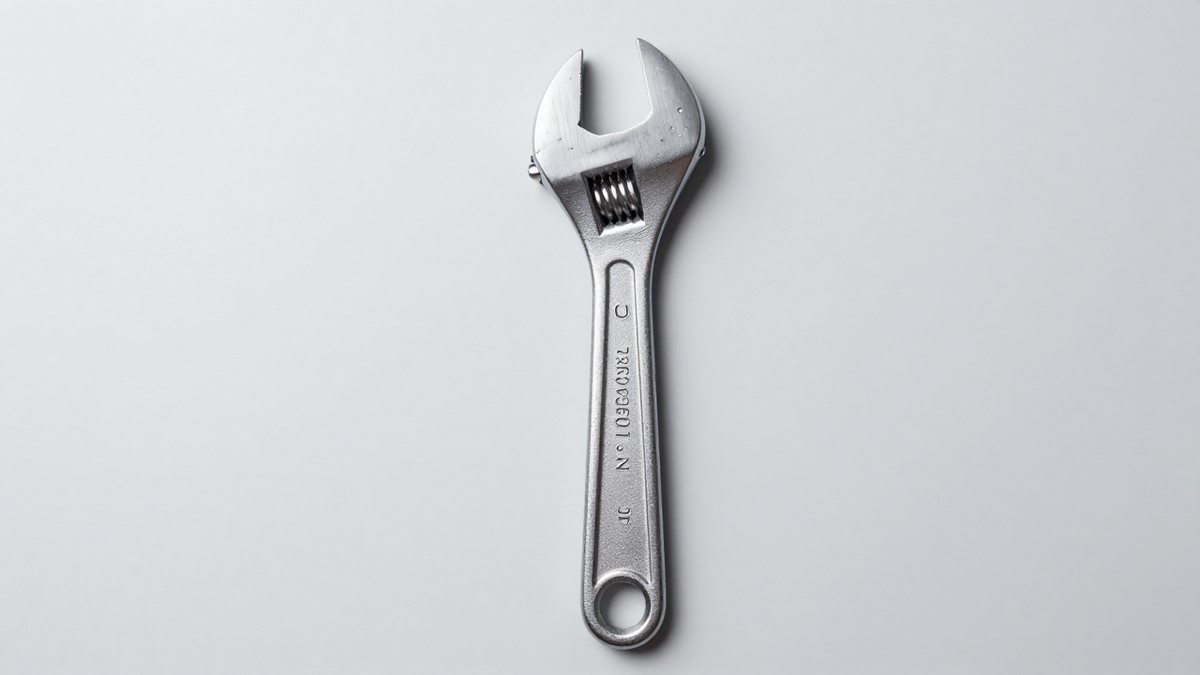
The best adjustable wrench set for most home and workshop users is a three-piece set covering approximately 6, 8, and 10 inches, because it provides useful jaw capacity without the weight, jaw play, and awkwardness of a large assortment.
A practical set should be judged by more than the number of tools in the box. Jaw capacity determines which fasteners you can actually grip, handle length affects leverage and access, jaw play controls whether the wrench slips, and steel construction influences both durability and comfort. The right combination depends on whether you are assembling furniture, maintaining bicycles, repairing plumbing, or working on machinery.
As an Amazon Associate we earn from qualifying purchases at no extra cost to you.


Our Top Picks


Quick comparison: useful adjustable wrench set sizes
| Wrench size | Typical jaw capacity | Approximate weight | Best use | Main limitation |
|---|---|---|---|---|
| 4–6 inches | 13–20 mm | 70–160 g | Small hardware, bicycles, electronics cabinets, tight spaces | Limited leverage and grip width |
| 6 inches | 20–24 mm | 130–220 g | General household repairs and light assembly | Too small for many plumbing fittings |
| 8 inches | 24–30 mm | 250–400 g | Most household, automotive, and workshop jobs | Less convenient in confined spaces |
| 10 inches | 28–35 mm | 450–700 g | Plumbing, outdoor equipment, larger bolts and nuts | Bulky for small fasteners |
| 12 inches | 35–40 mm | 700–1,000 g | Large fittings and high-leverage maintenance | Easy to over-torque and awkward to store |
These figures are typical ranges rather than a universal standard. A manufacturer’s jaw capacity can vary with the head design, jaw profile, and whether the measurement is taken at the widest opening. Check the individual specification before buying if a particular nut size matters.
Our practical picks by situation
Best all-around choice: a 6-, 8-, and 10-inch set
This three-piece format is the strongest default recommendation for a home workshop. The 6-inch wrench handles small fasteners and narrow access points, the 8-inch model covers the largest share of general repairs, and the 10-inch wrench adds enough capacity for many plumbing and outdoor-equipment jobs.
Look for forged alloy steel or chrome-vanadium steel, a clearly marked scale, a smooth adjustment worm, and slim, parallel jaws. Brands such as Crescent, Channellock, Bahco, Klein Tools, and TEKTON offer adjustable wrenches in this general category, although specifications differ between product lines. A set with a supplied pouch is preferable to loose tools because grit and moisture are less likely to damage the adjustment mechanism.
Best compact choice: a 4- or 6-inch pair
Choose a compact pair if you work on bicycles, camping equipment, furniture hardware, appliances, or small mechanical assemblies. Short handles fit where an 8-inch wrench cannot, and the lower weight is useful in a portable tool roll.
The trade-off is leverage. A 6-inch wrench may open to around 20–24 mm, but it cannot safely substitute for a 10- or 12-inch wrench when a large, stubborn fitting requires controlled force. Compact wrenches are also easier to misuse because users may be tempted to add a pipe for extra leverage. Do not do this: it can bend the tool or damage the fastener.
Best plumbing-oriented choice: an 8-, 10-, and 12-inch set
For household plumbing, outdoor taps, hose fittings, and larger threaded connections, an 8-, 10-, and 12-inch set offers more useful capacity than a small general-purpose kit. The 8-inch tool remains manageable under a sink, while the larger two provide clearance and leverage around bigger fittings.
Adjustable wrenches should not replace dedicated pipe wrenches where a rounded, painted, or heavily corroded pipe requires a deep biting grip. For plated nuts and finished fittings, use smooth-jaw adjustable wrenches and protect delicate surfaces with a thin cloth only when the jaws can still seat fully.
Best premium choice: a low-play, slim-jaw set
If you use adjustable wrenches weekly, prioritize jaw precision over the highest advertised capacity. A well-machined, low-play wrench is faster to position and less likely to round a nut. Bahco is particularly associated with adjustable wrench designs, while Crescent, Channellock, and Klein Tools also sell higher-grade options in professional-oriented ranges.
A premium set commonly costs more than a basic chrome-plated set, with broad market pricing of roughly $25–$50 for a basic three-piece set and $60–$150 or more for professional-grade tools, depending on finish, handle design, and included sizes. The price difference is easier to justify when the tools are used frequently or carried between job sites.
How to compare the features that matter
Jaw capacity
Capacity should be compared with the fasteners you actually encounter, not simply the length of the handle. Measure the widest nut or fitting you expect to service and choose a wrench whose maximum opening exceeds it by a small margin. A jaw opened almost completely often has less stable contact than one operating near the middle of its range.
For example, if your largest regular fitting is 27 mm, an 8-inch wrench rated to 30 mm is usually a better everyday choice than a 6-inch tool rated to 24 mm. The extra 3 mm gives room for positioning, while the shorter wrench would not fit at all.
Handle length and leverage
Longer handles produce more torque for the same hand force, but that is not always an advantage. Excessive leverage can stretch a bolt, crush soft brass, or damage threads. A 6-inch wrench is easier to control on small fasteners; an 8-inch wrench is a balanced general-purpose size; and a 10- or 12-inch wrench is best reserved for larger hardware that can tolerate the additional force.
Prefer a handle with rounded edges and enough surface area for a firm grip. Smooth, polished handles are easy to clean, while textured or dipped grips can be more comfortable in cold or oily conditions but may add bulk in a tool roll.
Jaw play
Some movement between the fixed jaw and sliding jaw is normal, but excessive side-to-side play makes accurate positioning difficult. It can cause the movable jaw to shift under load, concentrating force on a corner of the nut rather than across the flat.
When comparing tools in a shop, close the jaw until it lightly contacts a known straight edge. Hold the handle still and try to move the sliding jaw sideways. A small amount of movement is expected; noticeable rocking suggests poor machining, a loose adjustment screw, or wear. Online, look for close-up photographs showing the jaw fit and for manufacturer information describing precision machining or reduced play.
Steel and finish
Forged chrome-vanadium steel is a sensible target for a frequently used set. It combines strength and toughness with reasonable weight. Drop-forged carbon steel can also be durable, particularly in budget tools, but the heat treatment and jaw machining matter as much as the steel label.
Chrome plating helps resist corrosion and makes grease easier to remove. Black oxide or satin finishes can provide a good grip and reduce glare, but they need prompt drying after exposure to water. Avoid tools with visible casting seams, chipped plating around the jaws, uneven teeth on the adjustment mechanism, or a worm screw that binds before the jaws close.
Decision matrix: which set fits your work?
| Your situation | Recommended coverage | What to prioritize | What to skip |
|---|---|---|---|
| Occasional household repairs, limited budget | 6-, 8-, and 10-inch set | Forged steel, clear markings, included pouch | Five- or six-piece sets with duplicate mid-size tools |
| Small apartment or portable tool kit | 4- and 6-inch pair | Thin head, low weight, minimal jaw play | 12-inch tools that rarely fit available spaces |
| Frequent plumbing and outdoor maintenance | 8-, 10-, and 12-inch set | Large capacity, strong adjustment mechanism, corrosion resistance | Using an adjustable wrench on pipe surfaces that need teeth |
| Automotive or machine maintenance | 6-, 8-, and 10-inch professional set | Low jaw play, slim head, accurate scale | Relying on an adjustable wrench where a fixed six-point socket fits |
| Heavy daily use | 8-, 10-, and 12-inch premium set | Heat-treated forged steel, replaceable or robust worm mechanism | Very cheap tools with rough adjustment and thin jaws |
How to use and maintain an adjustable wrench
- Choose the smallest suitable wrench. Smaller tools offer better control and are less likely to contact nearby parts.
- Seat the fixed jaw first. Turn the adjustment screw until both jaws contact the flats evenly. Do not leave a visible gap.
- Keep the handle aligned. Pull toward the fixed jaw when possible. This reduces the tendency of the movable jaw to shift or spread.
- Use steady force. If the fastener will not move, apply penetrating fluid where appropriate or switch to a correctly sized six-point socket rather than striking the adjustable wrench.
- Clean and lubricate lightly. Wipe away grit and moisture, then apply a small drop of light machine oil to the worm screw. Open and close the jaws several times, and wipe off excess oil.
The worm screw and jaw edges usually show wear before the handle does. A wrench that develops pronounced jaw rock, slips despite correct positioning, or has rounded jaw corners should be retired from critical work. Store adjustable wrenches slightly open rather than clamped tightly shut, and keep them dry to slow corrosion.
Are larger multi-piece sets worth buying?
Usually, no. A five-piece assortment may include 4-, 6-, 8-, 10-, and 12-inch tools, but the smallest and largest sizes often see little use in an ordinary home. The additional bulk can cost more than a separate specialty tool you will actually need.
A three-piece set is the most efficient starting point. Add a 4-inch wrench for confined spaces or a 12-inch model for large fittings only after a real job demonstrates the need. For fasteners that are frequently serviced, fixed combination wrenches or sockets provide better fit and lower risk of rounding than any adjustable wrench.
Final recommendation
For most buyers, the best adjustable wrench set is a well-made 6-, 8-, and 10-inch trio with forged chrome-vanadium or comparable alloy-steel construction, smooth adjustment, minimal jaw play, and capacities around 20–24 mm, 24–30 mm, and 28–35 mm respectively. Choose a compact 4- and 6-inch pair when storage and access matter most, or move to an 8-, 10-, and 12-inch set when plumbing and large fittings dominate your work. The goal is practical coverage and accurate grip—not the largest collection of handles in the toolbox.