What's inside
As an Amazon Associate I earn from qualifying purchases. This post may contain affiliate links at no extra cost to you.
Our Top Picks
 EPAuto 1/2-inch Drive Click Torque Wrench1/2 Inch Drive (10-150 ft.-lb.)17.4 x 3.3 x 2.6 inches3.5 poundsCheck on Amazon
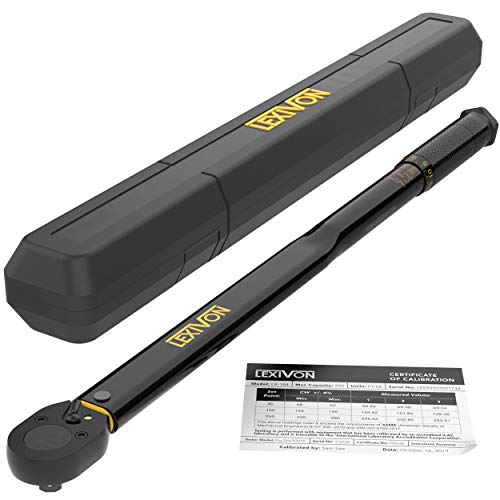 LEXIVON 1/2-Inch Drive Click Torque Wrench 25-250 Ft-Lb/33.9-338.91/2"DR. 25-250 FT-LB3 x 3 x 24 inches6.4 PoundsCheck on Amazon
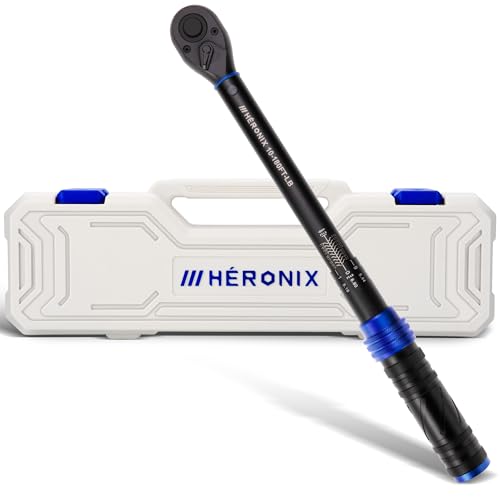

Best 1/2-Inch Drive Torque Wrenches for High-Torque Jobs
The best 1/2-inch drive torque wrench for most automotive and equipment work is a click-type model with a range that covers your actual fastener specifications, clear markings, and a positive locking collar. For frequent or critical work, choose a reputable model with published accuracy and a calibration service available; for occasional jobs, a well-made budget click wrench can be sufficient if you verify its condition and store it correctly.
A half-inch drive is a useful middle ground: it accommodates many automotive sockets and reaches higher torque values than typical 1/4- or 3/8-inch tools. It is not automatically the right choice for every fastener. Check the vehicle or equipment service manual first, especially for wheel hardware, suspension components, and fasteners with a torque-plus-angle procedure.
As an Amazon Associate we earn from qualifying purchases at no extra cost to you.

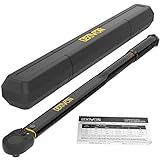

Compare the main 1/2-inch options
These established product families illustrate the trade-offs. Specifications can differ by model number, region, and revision, so confirm the exact range and accuracy on the manufacturer’s current listing before buying. Weights are approximate and may vary with handle length.
| Product or type | Drive and approximate range | Accuracy / indication | Best fit | Ownership consideration |
|---|---|---|---|---|
| TEKTON 1/2-inch click torque wrench, 24335 | 1/2 in; 10–150 ft-lb (13.6–203.4 Nm) | Click type; ±4% stated by manufacturer | General automotive work and home garages | Manual setting is simple; keep the scale clean and return it to the minimum setting after use. |
| Precision Instruments PREC3FR250F | 1/2 in; 40–250 ft-lb (54–339 Nm) | Split-beam click type; ±4% stated by manufacturer | Higher-torque jobs and users who prefer not to unwind a conventional spring after each job | Costs more than many basic click wrenches; check that the range does not leave your common lower-torque work uncovered. |
| CDI 2503MFRPH | 1/2 in; 30–250 ft-lb (40.7–339 Nm) | Click type; ±3% stated by manufacturer | Frequent shop use where a broader high-torque range and service support matter | Professional-grade pricing; confirm calibration and warranty arrangements for your location. |
| Electronic 1/2-inch torque wrench, such as a Snap-on TechAngle model | Varies by model; some versions cover roughly 12.5–250 ft-lb (17–339 Nm) | Digital display and audible/visual alerts; accuracy varies by model | Users who need a readable display, multiple units, or angle-related functions | Higher purchase cost; batteries and electronic components add maintenance needs. Check the exact model’s specifications. |
Published accuracy is typically specified under defined conditions, not a promise that every old or damaged wrench remains accurate indefinitely. If a fastener’s required torque sits near the very bottom or top of a wrench’s range, choose a tool whose range places that setting more comfortably inside its working span. For example, a 150 ft-lb maximum wrench is a poor choice for repeated settings close to 150 ft-lb.
Choose by job, not just maximum torque
- One general-purpose automotive wrench: Look for a 1/2-inch click wrench spanning roughly 20–150 ft-lb. This suits many wheel and chassis tasks, but check the manual because some specifications fall below or above that range.
- Heavy equipment or higher-torque fasteners: Consider a model reaching 250 ft-lb or more, provided its lower limit still covers the work you do. For very high values, a larger drive or a torque multiplier may be safer and more practical than an overextended half-inch wrench.
- Frequent professional use: Prioritize a clear calibration interval, repair or calibration availability, robust markings, and a handle and locking system that are easy to operate with gloves.
- Occasional home use on a budget: A reputable click wrench with a published accuracy specification can be a sensible buy. Avoid dropping it, using it as a breaker bar, or leaving it set at a high value between jobs.
- Tight access or small fasteners: A 1/2-inch head may be bulky, and its useful range may start too high. The best 3/8 drive torque wrench often makes more sense for moderate settings and smaller sockets; a 1/4-inch drive is better suited to low-torque work.
The related search for the best 1/4 drive torque wrench points to a different job: low-torque fasteners where a half-inch tool may not measure within its intended range. A 3/8-inch wrench fills the gap for many engine and interior tasks. Buying one oversized wrench to cover every setting can compromise access and leave some work outside its specified range.
Click, split-beam, or digital?
Click type: the practical default
A click wrench signals when the set torque is reached. It is broadly useful and usually offers a good balance of price, availability, and ease of use. The locking collar or knob matters: it should hold the selected value during handling but release without excessive force. Read the scale at eye level and lock the setting before applying load.
Split-beam: convenient for repeated work
Split-beam designs use a different spring arrangement from common micrometer-style click wrenches. Some do not require resetting to the minimum after use, which can simplify repeated jobs. Follow the specific manufacturer’s storage instructions rather than assuming all split-beam models should be left at any setting.
Digital: more feedback, more upkeep
Digital models can show torque numerically and alert the user as the target approaches. That feedback can help when a scale is hard to read or when switching units, but it does not remove the need for correct technique or calibration. Consider battery availability, display visibility, and whether the features justify the higher price.
Fit, leverage, and comfort
A longer handle increases leverage, which can help at high settings but also makes it easier to overshoot. Use a smooth, steady pull at the marked grip area, not a sudden jerk, and stop at the first clear click or target alert. Do not add a pipe to the handle. An extension between the wrench and socket generally does not change torque in the same way as lengthening the handle, but crowfoot adapters can alter effective leverage when positioned in line with the wrench. Follow the tool maker’s instructions or use an appropriate correction formula.
Before choosing a model, consider the work area. A long wrench can be awkward around a wheel well or machine enclosure; a shorter handle may fit but require more care to apply force smoothly. A comfortable grip should allow a controlled pull without forcing your hand against nearby parts. For wheel nuts, use a correctly sized socket and tighten in the manufacturer’s specified pattern before final torqueing.
Accuracy and care that affect service life
Torque wrenches can lose accuracy after impact, misuse, wear, or long service. Calibration intervals depend on the manufacturer, workload, and applicable shop requirements; professional users should follow their documented quality system, while occasional users should have a questionable or dropped tool checked before relying on it. A calibration certificate is useful only if it corresponds to the actual tool and remains within its stated interval.
- Use the wrench only to apply torque, not to loosen stubborn fasteners.
- Keep the square drive, ratchet head, and handle clean; wipe off oil and grit rather than immersing the tool in solvent.
- For conventional micrometer click models, return the setting to the manufacturer’s recommended storage position—often the lowest marked setting—without forcing it below the scale.
- Store it in its case, away from moisture and temperature extremes. Avoid dropping it or using it as a hammer.
- Do not assume a wrench click means the fastener is correct if threads are damaged, lubricated contrary to the specification, or assembled with the wrong hardware. Those conditions can change clamping force.
Bottom line
For a first half-inch wrench, choose a click model whose stated range covers your common jobs with room at both ends, and whose locking mechanism is easy to set and verify. TEKTON’s 10–150 ft-lb model is a straightforward general-purpose option; Precision Instruments’ split-beam design is worth considering for repeated work in its higher range; CDI and electronic models suit buyers who value broader high-torque coverage, additional feedback, or professional service support. The best torque wrench 1/2 drive is the one that fits the specified torque, access, and maintenance demands of the work—not simply the one with the largest number on its scale.