What's inside
- How Much Wall Coverage Do You Actually Need?
- Pegboard Wall Systems Compared: Materials, Sizes, and Capacity
- Panel Materials: Which Holds Up in a Garage?
- Installation Methods and What Your Wall Requires
- Accessory Compatibility: Will Your Hooks Stay Put?
- Decision Matrix: Pick by Your Situation
- Durability and Ownership: What Wears First
- Installation Tips for Maximum Capacity
- FAQ
As an Amazon Associate I earn from qualifying purchases. This post may contain affiliate links at no extra cost to you.
The best pegboard wall for most garages and workshops is a steel panel system like Wall Control for heavy tools and frequent reconfiguration, while traditional hardboard pegboard remains the cheapest way to cover large wall areas for light hand tools.
Choosing comes down to four factors: how much wall you need to cover, what the panels are made of, how you can mount them, and whether the hooks and accessories you want will actually stay put. Get those right and a pegboard wall saves floor space without turning into a wall of fallen tools.
As an Amazon Associate we earn from qualifying purchases at no extra cost to you.


Our Top Picks
 Wall Control 30-P-3232B Black Metal Pegboard Pack32" Tall x 16" Wide x 0.75" Deep32 x 16 x 0.75 Inches14 poundsCheck on Amazon


How Much Wall Coverage Do You Actually Need?
Don’t buy panels by count – buy by square footage. Measure usable wall space after subtracting windows, electrical panels, garage door tracks, and the 18 inches needed above a workbench for clearance.
Coverage Calculation: A Standard 2-Car Garage Wall
Example: One clear wall 20 feet wide x 4 feet high usable height (from 4 ft off floor to 8 ft ceiling) = 80 sq ft.
- Standard hardboard pegboard: 4 ft x 8 ft sheet = 32 sq ft. You need 2.5 sheets to cover it, with waste from cutting around obstacles. Cost is lowest per sq ft but you will need to frame and cut.
- Wall Control 32″ x 16″ steel panels (2.67 ft x 1.33 ft = 3.56 sq ft each): You need 23 panels for 80 sq ft. Sold in 3- and 6-packs, so plan for multiples and seams.
- Triton LocBoard 24″ x 18″ panels (2 ft x 1.5 ft = 3 sq ft each): You need 27 panels for 80 sq ft. Panels interlock to create a continuous run without extra brackets.
- Gladiator GearWall 48″ x 24″ panels (4 ft x 2 ft = 8 sq ft each): You need 10 panels for 80 sq ft. Geartrack behind allows slotted accessories to slide.
For partial coverage over a workbench, 16 to 32 sq ft is usually enough. A 4×8 sheet or 4-6 steel panels handles most drill, driver, plier, and sanding accessory storage. Covering a full 80 sq ft wall makes sense only if you are wall-mounting power tools, gardening tools, and bins.
Pegboard Wall Systems Compared: Materials, Sizes, and Capacity
Panel material determines weight capacity, moisture resistance, and which accessories lock in securely.
| System / Panel Type | Panel Material & Thickness | Common Panel Size | Weight per Panel | Capacity per Square Foot* | Hole / Slot Pattern |
|---|---|---|---|---|---|
| Traditional Hardboard Pegboard | Tempered hardboard, 1/4″ thick | 24″ x 48″ and 48″ x 96″ | 6 lbs (2×4) / 12 lbs (4×8) | 10-15 lbs when mounted to studs with furring strips | 1/4″ round holes, 1″ on center |
| Wall Control Steel Pegboard | 20-gauge steel | 32″ x 16″ | 6.5 lbs | 200 lbs per panel / ~56 lbs per sq ft (static, into studs) | Slotted grooves + 1/4″ round holes, hooks lock with bracket |
| Triton Products LocBoard | Polypropylene plastic, 0.18″ thick | 24″ x 18″ | 2.2 lbs | 50 lbs per panel / ~16 lbs per sq ft (into studs) | 1/4″ round holes with locking tabs, 1″ on center |
| Gladiator GearWall | PVC composite + steel-reinforced slot | 48″ x 24″ | 14 lbs | 50 lbs per linear foot of track / ~25 lbs per sq ft | Horizontal slot track, not standard peg holes |
| Metal Pegboard (Generic 16-gauge) | 16-gauge steel, powder coated | 24″ x 24″ or 24″ x 48″ | 8-11 lbs | 80-100 lbs per panel / ~20-25 lbs per sq ft | 1/4″ round holes + square slots for double-prong hooks |
*Capacity assumes mounting into wood studs or solid masonry. Drywall anchors alone reduce capacity by 60-80% and are not recommended for anything heavier than hand tools. Always use manufacturer-specified screws and hit at least one stud per panel.
Panel Materials: Which Holds Up in a Garage?
Tempered Hardboard
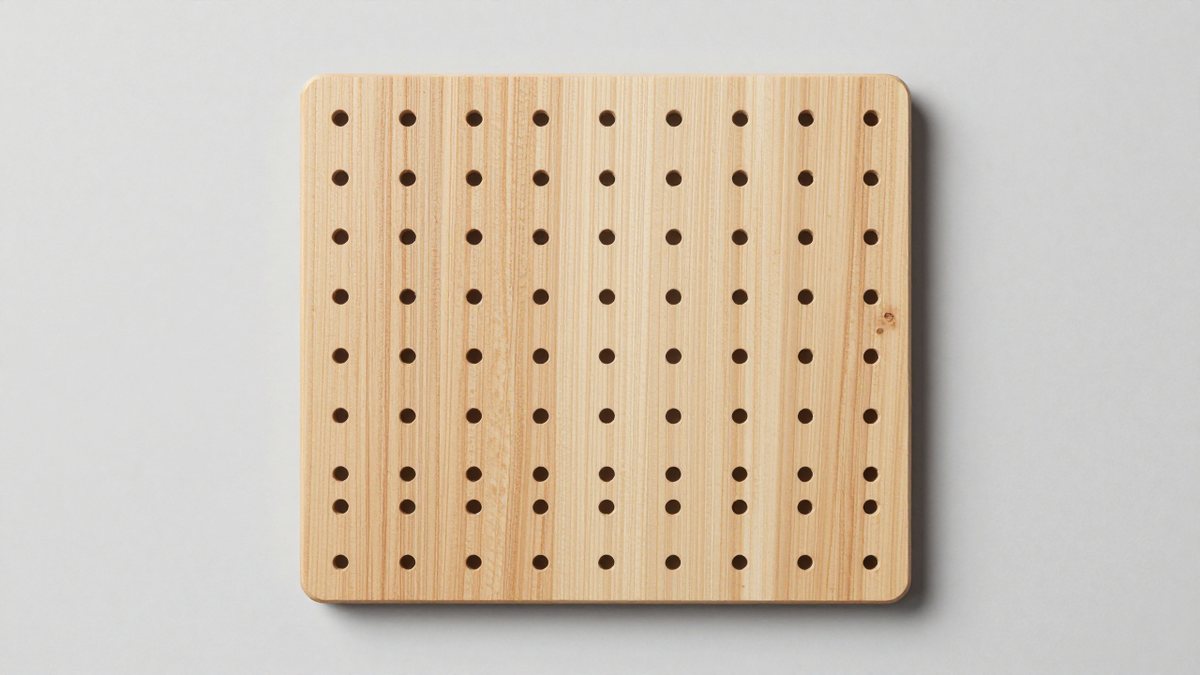
The classic brown pegboard is cheap, easy to cut with a jigsaw, and accepts any standard 1/4″ peg hook. It sags if it gets damp and crumbles around holes that are repeatedly stressed. In unconditioned garages, humidity causes swelling and warping unless you seal the back and edges with polyurethane or paint before installation. It is ideal for climate-controlled workshops, craft walls, and light-duty storage.
Steel
Steel panels do not sag, warp, or absorb oil. Powder coating resists chemical stains and wipes clean. The downside is weight and cost per square foot – 2 to 3 times more expensive than hardboard for the same coverage. Steel also conveys cold and can condense moisture in unheated garages, so leave a small air gap behind panels if your walls sweat in winter.
Plastic (Polypropylene)
Plastic systems like LocBoard are lightweight, impervious to moisture and chemicals, and will not rust. The locking hook design is the advantage – hooks snap and stay until lifted. They flex under very heavy loads, so they are not ideal for hanging circular saws or heavy planers without additional support. Best for humid garages, potting areas, and mobile work carts.
PVC-Slotted Panels (GearWall Type)
These are hybrid wall systems: the face looks like a peg wall but accessories slide in a horizontal track. They excel at holding bulky items with proprietary brackets – ladders, bins, and power tool holders. You trade universal 1/4″ peg compatibility for stronger slot-lock stability and higher shear strength for heavy bins.
Installation Methods and What Your Wall Requires
Your mounting method is more important than the panel brand for long-term stability.
- Direct to Studs (Preferred): Screw steel or hardboard panels directly through their mounting holes into studs at 16″ or 24″ on center. Use #8 or #10 pan-head screws, 1-1/4″ for steel into wood studs, 1″ for hardboard with washers. Every panel should catch at least two studs.
- Furring Strips + Hardboard: Traditional pegboard needs 3/4″ furring strips or a frame to create clearance for peg tails behind the board. Mount 1×2 strips horizontally at top, bottom, and middle, screwed to studs, then screw the board to the strips. Without this gap, hooks will not seat and will fall out.
- French Cleat or Rail System: Steel and GearWall-type panels often mount to a horizontal rail first, then panels hook on. This allows leveling the rail once and keeps panels aligned. Essential for concrete/block walls where you want fewer Tapcon or sleeve anchors.
- Masonry and Drywall Only: For concrete, use 3/16″ x 1-1/4″ Tapcons with a hammer drill. For drywall without stud, use heavy-duty toggle bolts rated for 50 lbs+ per point and keep loads under 10 lbs per sq ft, or install a plywood backer screwed to studs first and mount pegboard to the plywood.
Allow 1/8″ expansion gap between hardboard sheets and between plastic panels. Steel panels are designed to butt tightly with alignment tabs. Keep the bottom edge 4-6 inches above a workbench backsplash to prevent damage from standing water.
Accessory Compatibility: Will Your Hooks Stay Put?
Standard 1/4″ peg hooks fit any 1/4″ hardboard, plastic, and most steel pegboards, but they rely on friction and gravity. They fall off when you remove a tool unless you add retainer clips or use locking hooks.
- Universal 1/4″ Hooks with Retainers: Work everywhere but best on hardboard and generic metal board. Add small plastic peg locks on the back of each hook. General market range for a 50-piece hook assortment: $15-$30.
- Locking Tabs (Triton LocBoard): Hooks have plastic tabs that rotate to lock behind the board. They do not interchange well with standard peg accessories without an adapter.
- Slotted Steel Hooks (Wall Control): Hooks have a double-bend bracket that slots into the steel louvers and locks downward. They accept standard pegboard accessories in the round holes, but the slotted hooks themselves only fit that system. Much more stable for heavy drills and sanders.
- GearTrack / GearWall Brackets: Proprietary. You must use Gladiator or compatible slot accessories. Adapters exist to add a pegboard insert, but capacity drops.
If you already own a large collection of standard hooks and 3D-printed holders, stay with a system that uses 1/4″ holes on 1″ centers. If you want zero hook fallout and plan to buy into a full ecosystem of bins, shelves, and power tool holders, a locking steel or slotted system saves frustration.
Decision Matrix: Pick by Your Situation
| Your Situation | Best Fit | Why |
|---|---|---|
| Small wall (under 20 sq ft), renter, light hand tools | Plastic LocBoard or small steel panels with minimal anchors | Lightweight, removable with minimal wall damage, moisture proof |
| Large unheated garage, need full-wall coverage on a budget | Tempered hardboard on sealed furring strips + peg locks | Lowest cost per sq ft, covers 32 sq ft per sheet, easy to replace |
| Heavy power tools, need 40+ lbs per panel, daily use | Wall Control or 16-gauge metal pegboard into studs | Highest capacity per sq ft, hooks lock and don’t dislodge |
| Bulky items: ladders, bins, battery chargers, garden tools | Gladiator GearWall or similar slotted track system | Track holds shelf and bin brackets with higher shear load |
| Humid, chemical, or wash-down area | Plastic or powder-coated steel, not raw hardboard | Will not swell, rust, or degrade with moisture and oils |
| Already invested in 1/4″ peg accessories | Hardboard, LocBoard, or generic metal board (all 1/4″ holes) | Preserves existing hooks, avoids repurchasing proprietary brackets |
Durability and Ownership: What Wears First
A pegboard wall fails at the holes, not the board center. Hardboard enlarges around the holes from repeated hook insertion and weight, especially with 1/8″ holes forced to take 1/4″ hooks. Steel deforms if overloaded on a single hook – spread heavy tools across two hooks or a dedicated bracket rated for 10+ lbs.
Common mistakes to avoid: mounting hardboard flush to drywall without furring strips, using drywall screws that strip in the board, overloading the top row which levers the panel away from the wall, and mixing hole sizes. Clean steel and plastic panels with mild soap and water; avoid abrasive pads that strip powder coating. Replace any hook that wobbles – a loose hook enlarges the hole and will eventually drop the tool.
Consumables to plan for: peg locks or retainer clips, replacement hooks for your most-used tools, and single-bag sanding discs or drill bits stored in bins that add concentrated weight. Inspect mounting screws annually in garages with temperature swings – wood studs expand and contract, loosening screws over time.
Installation Tips for Maximum Capacity
- Locate studs with a stud finder and mark centers. Predrill hardboard to prevent cracking, especially near edges.
- Place heaviest items (routers, circular saws) lowest and centered over studs. Keep 1/3 of panel capacity as a safety margin.
- For hardboard, paint or seal all sides before mounting to limit moisture uptake. For steel on exterior walls, add foam strip spacers to prevent condensation.
- Label hook positions with a marker or tape so tools return to the same spot and holes are not widened by searching.
FAQ
Can I mount a pegboard wall over drywall without hitting studs?
You can for light loads under 5 lbs per hook using toggle bolts, but any power tool or cast-iron plane should be on a stud-anchored panel or a plywood backer that is itself screwed to studs. A full wall of drywall-only anchors will sag and pull out.
Are 1/4″ and 1/8″ pegboards interchangeable?
No. Most modern tools use 1/4″ hooks. A 1/8″ board will not accept them securely, and adapters wobble. If you are buying new, choose 1/4″ holes on 1″ centers to maximize accessory options.
How do I stop hooks from falling out when I grab a tool?
Use locking hooks designed for your panel system, add plastic peg lock retainers to standard hooks, or add a few wraps of rubber band behind the hook tail to increase friction. The most reliable fix is a panel with a mechanical lock like steel louvers or LocBoard tabs.