What's inside
- Best Air Hammers for Automotive and Workshop Jobs
- Air hammer comparison: match the tool to your compressor
- Choose by the job you actually do
- Check compressor compatibility before buying
- Chisels, fit, and control matter as much as power
- Ownership realities: lubrication, wear, and safe use
- Quick decision guide
As an Amazon Associate I earn from qualifying purchases. This post may contain affiliate links at no extra cost to you.
Our Top Picks
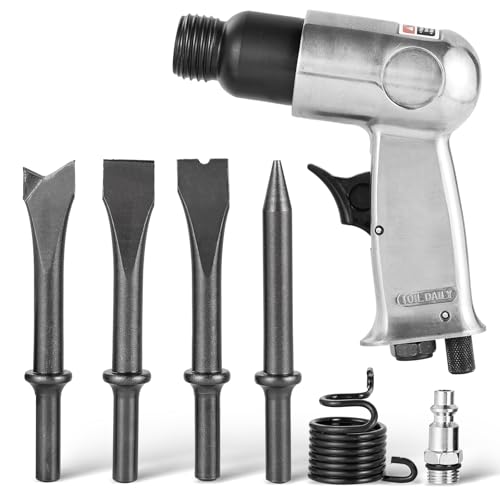
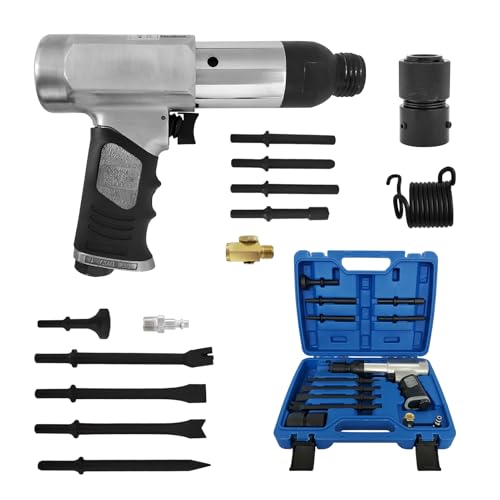
 Ingersoll Rand 119MAXK 3 1/2" Stroke Long-Barrel Air3-1/2" Stroke9.1 x 2 x 7.2 inches4.5 poundsCheck on Amazon

Best Air Hammers for Automotive and Workshop Jobs
The best air hammer is the one whose air demand your compressor can sustain: choose a compact, lower-consumption model for occasional exhaust and suspension work, or a higher-speed, longer-stroke model for frequent cutting, splitting, and heavy shop use. Compare blows per minute (BPM), stroke length, air consumption, and the chisel set—not just the tool’s maximum speed.
Air hammer comparison: match the tool to your compressor
The table compares useful specification targets rather than specific model claims. Manufacturers measure air consumption and publish it in different ways, so confirm the stated figure and required operating pressure for any particular tool before buying.
As an Amazon Associate we earn from qualifying purchases at no extra cost to you.



| Use case | Typical BPM | Typical stroke | Air demand* | Chisel set to look for |
|---|---|---|---|---|
| Occasional light repair | 2,000–3,000 | About 1⅝ in | 2–4 CFM | Flat, tapered punch, panel cutter |
| Automotive general-purpose work | 2,500–3,500 | About 2⅝ in | 4–6 CFM | Flat, tapered punch, spot-weld splitter, exhaust cutter |
| Frequent heavy shop work | 3,000–4,500 | About 3½ in | 6–10+ CFM | Heavy flat chisel, panel cutter, pickle fork or rivet punch as needed |
*Approximate working ranges, not standardized ratings. Actual demand varies by tool, pressure, trigger use, and manufacturer test method. Check CFM at the tool’s specified PSI, not just the compressor’s maximum pressure.
Choose by the job you actually do
For occasional automotive repairs: compact and manageable
If an air hammer comes out a few times a year to free a stuck joint, trim an exhaust section, or separate corroded parts, prioritize moderate air demand, a comfortable grip, and a useful basic chisel set. A shorter-stroke tool is easier to control in tight spaces. It may take longer on stubborn material, but it can be a better fit for a smaller compressor and reduces the temptation to overwork a part with excessive force.
For suspension, exhaust, and regular repair work: general-purpose power
A mid-range tool with a roughly 2⅝-inch stroke and an automotive-focused chisel assortment suits a wider range of tasks. The longer stroke can help when breaking corrosion or separating seams, while a spot-weld splitter or panel cutter saves time on bodywork compared with trying to force a general flat chisel into the job. Choose the accessory you will use, not the biggest kit: unused specialty chisels do not compensate for inadequate airflow.
For daily fabrication or heavy shop use: prioritize sustained output
For repeated cutting, rivet removal, or heavier material work, a longer stroke and higher BPM can improve productivity—but only if the compressor and air line keep up. A high-demand hammer connected to a small compressor may start forcefully, then slow as tank pressure falls. In that situation, a less aggressive tool that can run continuously may deliver better real-world progress.
Check compressor compatibility before buying
Air tools are commonly specified by pressure and air consumption. The compressor’s tank size tells you how much air it stores; its delivered CFM tells you how quickly it can replenish air during use. For sustained hammering, delivered CFM at the required pressure matters more than tank volume alone.
As a practical screening calculation, compare the tool’s stated average consumption with the compressor’s delivered CFM at the same PSI. If a hammer calls for 5 CFM and the compressor delivers 4 CFM at that pressure, the shortfall is 1 CFM. The tank can cover some bursts, but it cannot erase the gap during prolonged use. Expect pauses for recovery, reduced performance, or both. A compressor rated above the tool’s average demand gives more breathing room, especially if other air tools are running.
- Check the tool’s required pressure and consumption in the manufacturer’s specifications.
- Use the compressor’s delivered CFM at that pressure; do not compare against a rating stated at a different pressure.
- Use a suitable hose and fittings. A restrictive, undersized line can starve the tool even when the compressor is adequate.
- If the compressor cycles constantly, the tool slows noticeably, or pressure drops during work, pause and reassess the setup rather than compensating with longer trigger time.
Chisels, fit, and control matter as much as power
Air hammers commonly use spring-retained chisels, but retention and shank compatibility are not universal. Verify that replacement chisels match the tool’s specified shank and retainer. A kit with several shapes is useful only if the accessories are intended for the materials and tasks at hand.
- Flat chisel: general material removal and separating accessible seams.
- Tapered punch: concentrating force to drive pins or start separation; avoid using it where slipping could damage nearby components.
- Panel cutter or spot-weld splitter: bodywork and joining seams, when used with adequate access and care.
- Exhaust cutter: cutting pipe or opening a joint; confirm its size and shape suit the workpiece.
More BPM is not automatically better. High speed can make a tool feel lively, but impact energy, stroke, chisel geometry, and operator control all affect results. On thin sheet metal, nearby wiring, or delicate assemblies, start with a suitable accessory and controlled bursts. Keep the chisel aligned with the work; angling it can cause skidding, damaged edges, or a broken tip.
Ownership realities: lubrication, wear, and safe use
Impact chisels are consumables. Their cutting edges round over, tips deform, and retainers can wear; a dull or damaged chisel transfers force poorly and may slip. Inspect the chisel and retainer regularly, and replace parts that are cracked, badly mushroomed, loose, or no longer retained securely. Use only accessories specified for the tool.
Follow the manufacturer’s lubrication instructions. Many pneumatic hammers need a few drops of air-tool oil in the inlet before use, while some setups use an inline lubricator. Keep the air supply clean and dry: water and debris can accelerate internal wear. Disconnect the air hose before changing chisels, servicing the tool, or clearing a jam. Wear eye and hearing protection, secure the workpiece, and check what lies behind or beside the area being struck. Metal fragments and loosened parts can travel unexpectedly.
Quick decision guide
| Your situation | What to prioritize | Likely fit |
|---|---|---|
| Small compressor, occasional repairs | Lower air demand, shorter stroke, simple controls | Compact general-purpose hammer |
| Home mechanic, varied automotive jobs | Balanced BPM and stroke, useful automotive chisels | Mid-range hammer with a compatible accessory set |
| Daily shop use and sustained work | Longer stroke, durable retainer, compressor capacity above tool demand | Heavy-duty hammer and appropriately sized air system |
| Bodywork or seam separation | Correct panel or spot-weld accessory, precise control | Hammer compatible with purpose-made cutters |
Before choosing, decide which jobs recur, check the compressor’s delivered CFM at the tool’s operating pressure, and confirm chisel compatibility. For most buyers, that sequence is more useful than picking the air hammer with the highest advertised BPM.