
What's inside
- Steel vs. Aluminum Metal Pegboard: Head-to-Head Specs
- Panel Thickness and Rigidity
- Load Capacity: What You Can Actually Hang
- Corrosion Resistance for Garages and Workshops
- Mounting Needs: Weight, Studs, and Hardware
- Which Metal Pegboard Should You Buy? Decision Matrix
- Durability and Ownership Realities
- FAQ
As an Amazon Associate I earn from qualifying purchases. This post may contain affiliate links at no extra cost to you.
For most workshops, choose steel metal pegboard when you need maximum load capacity and rigidity for heavy hand tools and power tools, and choose aluminum when you need rust-proof performance, lighter weight, and easier handling in damp, unheated, or coastal garages.
As an Amazon Associate we earn from qualifying purchases at no extra cost to you.
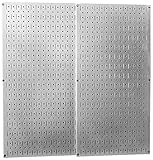


Our Top Picks
 Wall Control 30-P-3232GV Galvanized Steel Pegboard Pack0.63 x 32 x 32 Inches13.6 poundsCheck on Amazon
 Wall Control 30-P-3232B Black Metal Pegboard Pack32" Tall x 16" Wide x 0.75" Deep32 x 16 x 0.75 Inches14 poundsCheck on Amazon


Steel vs. Aluminum Metal Pegboard: Head-to-Head Specs
The core difference is not the look, but the material properties. Steel is stiffer and stronger per dollar, while aluminum is lighter and naturally corrosion-resistant. That affects everything from how thick the panel needs to be to how you mount it.
| Feature | Steel Metal Pegboard (20-Gauge) | Aluminum Metal Pegboard (0.064″ / 14-Gauge Equivalent) |
|---|---|---|
| Typical Panel Thickness | 0.036″ – 0.040″ (20-gauge steel) | 0.064″ – 0.080″ (thicker to compensate for lower stiffness) |
| Panel Weight | 2.2 – 2.8 lbs per sq. ft. | 1.3 – 1.6 lbs per sq. ft. |
| Weight Capacity (properly mounted to studs) | 80 – 120 lbs per sq. ft. / 200 – 300 lbs per 32″ x 16″ panel | 40 – 70 lbs per sq. ft. / 100 – 180 lbs per 32″ x 16″ panel |
| Hole Pattern | Standard 1″ on-center round or slotted holes, often with alternating slots for brackets | Standard 1″ on-center round holes, often tighter tolerances due to softer metal |
| Standard Panel Sizes | 16″ x 32″, 32″ x 16″, 32″ x 32″ | 16″ x 32″, 24″ x 32″, 32″ x 32″ |
| Finish | Powder-coated (epoxy/polyester), galvanized steel underneath on quality panels | Powder-coated or anodized; bare aluminum will not rust but will oxidize |
| Corrosion Resistance | High if coating intact; will rust at chips, scratches, and cut edges | Excellent; aluminum forms protective oxide layer, ideal for humidity and salt air |
| General Market Range (per panel, 2026) | $25 – $55 per 32″ x 16″ panel | $40 – $85 per 32″ x 16″ panel |
Bottom line: steel wins on strength-per-thickness and cost, aluminum wins on weight and corrosion. The numbers above assume panels from established metal pegboard makers like Wall Control and similar steel and aluminum system manufacturers. Cheaper unbranded panels often use thinner steel (22-gauge) or thinner aluminum (0.050″) and rate for significantly less weight.
Panel Thickness and Rigidity
Thickness alone does not tell you much, because steel is about three times stiffer than aluminum.
To achieve similar resistance to flex, an aluminum panel must be substantially thicker than a steel one. That is why you will see quality steel metal pegboard at 20-gauge (about 0.036 inch) while a comparable aluminum panel is 0.064 inch or thicker. A thin 22-gauge steel panel will flex under a heavy drill or circular saw, and a thin 0.050-inch aluminum panel will bow even sooner.
For practical use:
- Steel at 20-gauge: Feels solid with minimal deflection. Holds straight even when loaded unevenly, which keeps hooks from popping out.
- Aluminum at 0.064 inch+: Light but rigid enough for most hand tools. If you plan to hang bench vises, large tool chests, or multiple power tools on one panel, look for reinforced-return flanges or thicker 0.080-inch aluminum.
If a listing does not state gauge or thickness, assume it is on the thin end. For metal pegboard, the return flange depth and whether the panel is slotted-and-pegged matters as much as thickness for preventing warp.
Load Capacity: What You Can Actually Hang
Manufacturers rate metal pegboard systems by pounds per square foot when anchored to studs, not by what a single hook holds. A single peg hook may be rated for 15-25 lbs on steel and 10-15 lbs on aluminum, but total panel load is limited by panel flex and wall anchors.
A worked coverage example helps clarify:
A typical garage bay with 8 feet of wall width and 4 feet of vertical pegboard height equals 32 sq. ft. of coverage. That requires eight 32″ x 16″ panels (each 3.55 sq. ft).
- With steel panels at 100 lbs per sq. ft: 32 sq. ft. x 100 = 3,200 lbs theoretical wall capacity, but limited to stud locations and hook distribution. Realistically, you can distribute 400-600 lbs of tools across that wall without issue.
- With aluminum panels at 60 lbs per sq. ft: 32 sq. ft. x 60 = 1,920 lbs theoretical, realistically 250-400 lbs of well-distributed tools.
The difference matters if you hang heavy items: steel is the clear choice for bench grinders, corded circular saws, 1/2-inch drills, and full socket sets. Aluminum is fully capable for screwdrivers, pliers, cordless drivers, sanders, and levels, but heavy loads should be spread across multiple panels and placed near mounting points rather than centered on a span.
Corrosion Resistance for Garages and Workshops
This is where aluminum justifies its higher price.
Steel in humid or unconditioned spaces
Powder-coated steel resists rust well until the coating is compromised. In garages, scratches from hooks being repositioned, chips from dropped tools, and bare cut edges around holes are the first places to show surface rust. In humid, unheated garages or coastal areas, that can start within one season if not touched up. Quality panels use galvanized steel under the powder coat, which buys extra time, but maintenance is still required.
Aluminum in the same environment
Aluminum does not rust. It forms a dull aluminum oxide that protects the surface. Even with scratches and bare edges, it will not produce red rust or stain your wall. Anodized or powder-coated aluminum is even more resistant to salt air, condensation, and chemicals like fertilizer or de-icing salts tracked into a garage. If your shop sees seasonal condensation, has no HVAC, or sits within a few miles of the coast, aluminum will look better for longer with almost no maintenance.
Mounting Needs: Weight, Studs, and Hardware
Both types of metal pegboard must be mounted to structure, not just drywall. The installation effort differs due to weight and rigidity.
Steel mounting: Heavier panels require two-person handling for large 32″ x 32″ sizes. You need to hit studs or use a French cleat rail system. Expect 4-6 screws per 32″ x 16″ panel with #10 or #12 screws into wood studs, or concrete anchors for masonry. Steel holds its shape between studs (16″ or 24″ on-center) better, so you can often span one stud bay without a center support.
Aluminum mounting: About 40% lighter, so single-person install is easier, especially overhead or on a ceiling. Because aluminum flexes more easily, you should secure every 12-16 inches along the perimeter and add a center support on wide panels. Use washers or flanged screws to avoid dimpling the softer metal. On metal studs or drywall with toggle anchors, aluminum’s lower weight reduces pull-out risk.
For both materials, leave a 1/2-inch to 3/4-inch standoff from the wall if the panel design does not include integrated standoffs. This ensures hooks seat fully and allows airflow behind steel to reduce trapped moisture. If your system uses alternating slots and round holes, use the correct proprietary hooks; standard 1/4-inch peg hooks for fiberboard will not lock securely in metal pegboard.
Which Metal Pegboard Should You Buy? Decision Matrix
Use your situation, not just specs, to choose:
| Your Situation | Choose Steel If… | Choose Aluminum If… |
|---|---|---|
| Budget Priority | You want the lowest cost per pounds of capacity | You can pay 40-60% more upfront to avoid rust maintenance |
| Tool Load | You hang heavy power tools, vises, or bulk storage bins | You hang primarily hand tools and cordless tools under 10 lbs each |
| Garage Environment | Climate-controlled or dry detached garage | Unheated, humid, coastal, or open-air carport shop |
| Wall Type | Wood studs or masonry where weight is not an issue | Metal studs, drywall-heavy shop, or rental where you need lighter anchors |
| Installation Help | You have help lifting larger panels | You are installing alone or overhead |
| Long-Term Look | You don’t mind occasional touch-up paint on chips | You want color to stay uniform without rust stains |
For a dedicated woodworking shop with heavy routers, planes, and clamps, steel is the workhorse. For a general-purpose garage where the metal pegboard shares space with cars, bikes, and seasonal humidity, aluminum is the set-and-forget option.
Durability and Ownership Realities
What actually wears out on metal pegboard is not the panel itself but the interface points.
- Hook fit loosens: Aluminum holes can elongate if hooks are repeatedly yanked out at an angle, especially with heavy tools. Steel holes hold tolerance longer. Use locking hooks or screw-retained hooks for items you remove daily.
- Powder coat chips: Both materials chip at the hole edges from steel hooks. On steel, dab rust-inhibiting touch-up paint within weeks. On aluminum, chips are cosmetic but expose bare metal that will oxidize to a light gray.
- Cleaning: Dust and oily sawdust pack into holes. Vacuum with a brush attachment, then wipe with a damp cloth and mild detergent. Avoid pressure washers on steel, which force water behind the panel. Waxing the powder coat once a year makes hooks slide in and out more smoothly.
- Common mistakes: Overloading a single hook instead of spreading weight across two hooks, mounting only to drywall without hitting structure, mixing incompatible hook systems, and not leveling the bottom row, which transfers load unevenly and causes panels to gap.
- Consumables: Keep spare screws, hook locks, and shelf brackets from the same system. Metal pegboard accessories are not universally interchangeable between steel slot systems and round-hole systems.
Neither material will crack like plastic or sag like particleboard pegboard. With proper mounting and distributed loads, both will last 10+ years in a home shop. The decision comes down to whether you prefer to manage weight and strength or corrosion and weight.
FAQ
Can I mount metal pegboard directly to drywall without studs?
No. Use studs, masonry anchors, or a horizontal mounting rail secured to studs. Drywall alone will not hold the rated capacity for either steel or aluminum and will pull out under dynamic load when you remove tools.
Will magnets work on aluminum pegboard?
No. Aluminum is not magnetic. If magnetic accessory bars or magnetic tool holders are part of your plan, you need steel metal pegboard.
Do steel and aluminum hooks interchange?
Only if they share the same hole spacing and lock design. Many steel systems use slotted holes in addition to round holes to accept brackets. Check that the hook’s back tab matches your panel’s pattern before buying accessory packs.