What's inside
- The Best Pull Saw Depends on Your Cut, Not Just the Brand
- Key Specs That Determine Cut Quality
- Spec Comparison: Common Pull Saw Types in 2026
- Which Pull Saw to Choose: Decision Matrix by Situation
- Best Picks by Category for 2026
- Durability and Ownership: What Actually Wears Out
- Worked Calculation: Cost Per Use of Replaceable vs. Fixed Blade
- How to Set Up for a Clean Pull Cut
- FAQ
As an Amazon Associate I earn from qualifying purchases. This post may contain affiliate links at no extra cost to you.
Our Top Picks
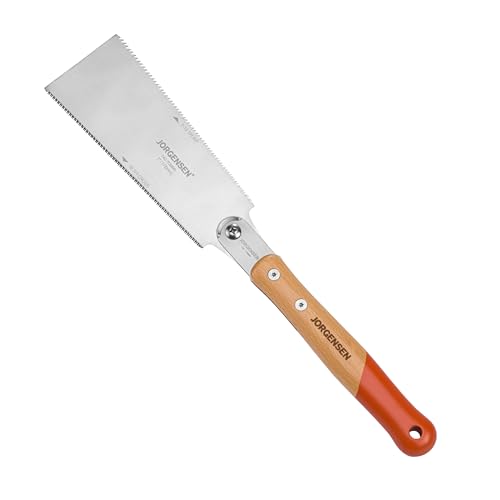
 SUIZAN Ryoba Double Edge Saw 9.5" Assembly ver9.5 Inch (240mm)23.2 x 0.79 x 3.15 inches0.44 poundsCheck on Amazon


The Best Pull Saw Depends on Your Cut, Not Just the Brand
The best pull saw for clean, controlled cuts is a 240mm to 270mm double-edged Ryoba for general workshop use, a 210mm Dozuki with a rigid spine for fine joinery, and a coarse-tooth Kataba or folding pruning saw for green wood and site work, because tooth pattern and kerf matter more than overall length.
Pull saws cut on the pull stroke, which keeps the blade in tension and allows for a much thinner plate than Western push saws. That thin plate is why you get a narrower kerf, less tear-out, and more control, but it also means blade choice determines the finish. For hardwaretoolshop.com readers in 2026, here is how to match blade length, tooth geometry, kerf, and replaceability to the work you actually do.
As an Amazon Associate we earn from qualifying purchases at no extra cost to you.


Key Specs That Determine Cut Quality
Before picking a model, understand the four specs that change how a pull saw behaves:
1. Blade Length
Longer is not automatically better. Effective stroke is about 70-75% of blade length. A 240mm blade gives you roughly 170mm of usable cutting stroke, which is ideal for boards up to 6-8 inches wide. Go shorter (180-210mm) for joinery where you need control, and longer (270-300mm) for breaking down panels or pruning where speed matters.
2. Tooth Pattern and TPI
- Crosscut teeth: Knife-like, filed at an angle to slice wood fibers. Usually 14-19 TPI. Leaves a clean edge across the grain.
- Rip teeth: Chisel-like, filed straight across to pare fibers along the grain. Usually 7-11 TPI. Faster along the grain, rougher across it.
- Ryoba (double-edged): One side rip, one side crosscut. The most versatile pattern for a single saw.
- Universal / Combination: Mixed filing that does both cuts adequately but neither perfectly. Good for general DIY.
3. Kerf and Plate Thickness
Kerf is the width of material removed. Japanese pull saws typically have a plate thickness of 0.3mm to 0.6mm and a kerf of 0.5mm to 0.9mm, compared to 1.1mm to 1.6mm for most Western backsaws. A thinner kerf means less waste, less effort, and less binding, but also a more fragile blade that will wander if you force it or twist on the push stroke.
4. Replaceability and Blade Mount
Most modern pull saws use a replaceable blade held with a friction screw or pin. This is critical for value. A high-quality impulse-hardened blade will stay sharp 2-3x longer but cannot be resharpened and must be replaced. Non-hardened blades can be sharpened with a feather file but dull faster in hardwoods.
Spec Comparison: Common Pull Saw Types in 2026
This table shows real-world ranges for the categories you will find from established makers like Gyokucho, Suizan, Z-Saw, Silky, and Shark Corp. Specific models vary slightly within these ranges.
| Type | Typical Blade Length | Plate Thickness | Kerf Width | Tooth Pitch (TPI) | Weight (with handle) | Blade Replaceable? |
|---|---|---|---|---|---|---|
| Dozuki (Backed Joinery Saw) | 180mm – 240mm | 0.30mm – 0.40mm | 0.50mm – 0.65mm | 18 – 26 (crosscut) | 110g – 190g | Yes |
| Ryoba (Double-Edged) | 210mm – 270mm | 0.40mm – 0.55mm | 0.55mm – 0.80mm | 9 – 11 rip / 15 – 18 crosscut | 150g – 250g | Yes |
| Kataba (Single-Edge, No Spine) | 240mm – 300mm | 0.45mm – 0.60mm | 0.65mm – 0.90mm | 12 – 15 universal or 10 rip | 140g – 230g | Yes |
| Azebiki / Flush-Cut | 180mm – 210mm | 0.30mm – 0.45mm | 0.45mm – 0.60mm | 18 – 22 crosscut | 90g – 150g | Often fixed |
| Folding Pruning Pull Saw (e.g., Silky Pocketboy style) | 120mm – 270mm | 0.80mm – 1.20mm | 1.10mm – 1.50mm | 6 – 8 coarse | 170g – 300g | Yes |
Takeaway: If your priority is the cleanest possible cut in hardwood joinery, a Dozuki wins on kerf and TPI. If you want one saw to rip, crosscut, and cut tenons, a 240mm or 270mm Ryoba covers more tasks with an acceptable finish.
Which Pull Saw to Choose: Decision Matrix by Situation
Match your primary work, experience, and workshop constraints to the right type:
| Your Situation | Best Match | Why It Fits |
|---|---|---|
| Fine joinery: dovetails, tenons, small boxes in hardwood | 210mm – 240mm Dozuki | Rigid spine prevents blade flex, ultra-fine crosscut teeth minimize tear-out and keep shoulders square |
| General workshop: furniture, shelving, mixed rip and crosscuts | 240mm Ryoba or 250mm Kataba Universal | Dual-purpose teeth or universal filing handles both grain directions without swapping saws |
| Beginner on a budget, limited space | 240mm Ryoba with replaceable blade | One tool does most jobs, teaches pull technique, low initial cost and cheap replacement blades |
| Trim and install work: flush-cutting dowels, plugs, shims | Flexible Flush-Cut / Kugihiki | No set on teeth, ultra-thin plate flexes flat against surface without scratching |
| Outdoor, green wood, or job-site pruning/lumber breakdown | 270mm Kataba or Folding Pruning Saw | Coarse, impulse-hardened teeth clear wet fibers fast; folding handle protects blade in a toolbox |
| Tight spaces, curves, or starting cuts in panel centers | 180mm Azebiki or Compact Kataba | Short, curved blade profile allows plunge cuts without drilling a starter hole |
Best Picks by Category for 2026
Best for Fine Joinery: Dozuki
A Dozuki from makers like Gyokucho or Z-Saw is the joinery standard. Look for a 210mm or 240mm blade with 19-22 TPI crosscut and a solid spine. The spine adds weight and stiffness so you can follow a marking line without drift, which is critical for dovetail baselines. Expect a kerf under 0.65mm. The trade-off is depth of cut is limited by the spine, usually to about 45-50mm, so it will not handle deep rips.
Best All-Rounder for the Workshop: Ryoba
The classic Ryoba from Suizan or Gyokucho remains the best value for most users. The Suizan 270mm Ryoba and Gyokucho 270mm Ryoba (Blue #372 or S- series) are widely available examples with impulse-hardened teeth. You get a 9-10 TPI rip side for tenon cheeks and a 15-17 TPI crosscut side for shoulders and board break-down. Replaceable blades typically cost in the general market range of $18 to $35, making ownership inexpensive long-term.
Best for General DIY and Site Cuts: Kataba
If you only want a single-edge saw that feels more like a Western handsaw, the Kataba is the choice. A 250mm to 270mm universal Kataba from Shark Corp or Tajima cuts faster than a Dozuki and is less technique-sensitive than a Ryoba. It will leave a slightly rougher crosscut than a Dozuki but is far more efficient for cutting 2x material, plywood, and softwoods.
Best for Pruning and Outdoor Use: Folding Pull Saw
For green wood, Silky saws (Pocketboy, Gomboy, or Bigboy series) are the benchmark. They use aggressive, non-hardened or impulse-hardened teeth with large gullets that clear chips instead of clogging. Do not use a fine joinery Dozuki for pruning; the hard, wet fibers will strip fine teeth and bend a thin plate. A folding saw also protects the edge when not in use, which is a major durability factor.
Best for Flush Trimming: Kugihiki
A dedicated flush-cut saw has no tooth set, so the teeth do not protrude beyond the plate. You can lay the blade flat on the work and cut dowels or plugs flush without marring the surface. These blades are thin and flexible by design and are not meant for deep or structural cuts.
Durability and Ownership: What Actually Wears Out
pull saw blades are consumables, not lifetime tools. Here is what to expect:
- What dulls first: The tips of impulse-hardened teeth. You will feel it as increased effort and more tearing rather than slicing, especially on crosscuts in maple, oak, or Baltic birch ply. In regular hobby use (a few hours per week), an impulse-hardened blade lasts 6-12 months; with heavy hardwood use, 3-6 months.
- What bends or kinks: The plate. The most common mistake is twisting the blade on the push stroke or using it to pry waste free. Always let the saw return freely on the push and only apply pressure on the pull. A kinked plate will never cut straight again and must be replaced.
- Consumables to budget: Replacement blades, not sharpening services. Most pull saws under $60 come with a replaceable blade system where the blade is 50-70% of the total tool cost. This is the correct economy: a $25 blade replacement is cheaper than a new saw.
- Cleaning: Resin and pitch from softwoods and green wood increase friction and cause drift. Wipe the plate with isopropyl alcohol or a mild resin remover after use, dry thoroughly, and apply a light coat of camellia oil or paste wax. Never leave a pull saw in a damp shop or outside sheath; thin plates rust quickly.
- Common mistakes that ruin cut quality: Starting too aggressively, forcing the cut, and using too much blade length for short joinery cuts. Start with 2-3 light draw strokes using the heel of the blade near the handle, then extend to full strokes once the kerf is established. Let the weight of the saw do the work.
Worked Calculation: Cost Per Use of Replaceable vs. Fixed Blade
To see why replaceability matters, consider a workshop cutting 4 hours per month, mostly in hardwood and plywood:
Option A: Fixed-handle Western saw with resharpenable plate, market range $70-$110. Requires professional sharpening every 12-18 months at $20-$35 plus shipping and downtime.
Option B: Pull saw with replaceable blade, market range $30-$50 for the handle + first blade, and $18-$30 per replacement blade.
Over 3 years (144 cutting hours), Option A costs about $110 + $60 sharpening = $170. Option B with two blade changes costs $45 + ($25 x 2) = $95, with no downtime and a fresh, factory-set tooth geometry each time. If you cut primarily softwoods or only occasionally, a single impulse-hardened blade can easily last the full 3 years, bringing the total below $50. For most non-professional shops, the replaceable pull saw has a significantly lower cost per hour of cutting.
How to Set Up for a Clean Pull Cut
You do not need a special bench, but setup affects results:
- Mark clearly and knife the line: A marking knife severs fibers and gives the fine teeth a track to follow, reducing tear-out on cross-grain cuts by a visible margin.
- Support the workpiece: Clamp so the cut line is close to the support with waste overhanging. Thin pull saw plates will vibrate if the workpiece chatters.
- Stance and grip: Hold the handle lightly with two to three fingers, elbow low, and pull straight back in line with your forearm. Do not grip like a push saw; a light grip prevents forcing the blade off line.
- Angle: For crosscuts, keep the blade at 15-25 degrees to the surface for a thin shaving action. For rips, raise the angle to 40-60 degrees so fewer teeth engage at once.
FAQ
Can I sharpen an impulse-hardened pull saw blade?
No. The hardening process makes the tooth tips glass-hard but brittle to filing. Attempting to file them will skip or break teeth. Replace the blade when it dulls, or buy a non-hardened version if you want to learn hand sharpening.
Why does my pull saw drift to one side?
Usually due to uneven pressure, a kinked plate, or starting the kerf without a guide. Check the blade for a bend by sighting down its length. If straight, reset technique: start with short, light strokes and keep your pull aligned with the cut, not angled across your body.
Are pull saws good for beginners?
Yes, especially a 240mm Ryoba. The pull action gives more control and requires less force than a Western push saw, so beginners tend to get straighter cuts sooner. The learning curve is mainly in not pushing or twisting the blade.