What's inside
- How Pickups, Scale Length, and Neck Profile Determine Your Sound and Feel
- Spec Comparison: 7 Proven Models Compared
- Best Electric Guitars by Situation: Decision Matrix
- Worked Example: Cost Per Use and String Tension Calculation
- Ownership Realities: What Wears First and How to Avoid Common Mistakes
- How to Choose in the Store or When Ordering Online
- Frequently Asked Questions
As an Amazon Associate I earn from qualifying purchases. This post may contain affiliate links at no extra cost to you.
The best electric guitars in 2026 balance pickup configuration, scale length, and neck profile to match your genre, hand size, and budget, with the Fender Player II Stratocaster (HSS/SSS), Yamaha Pacifica 112V, Epiphone Les Paul Standard, PRS SE Custom 24, and Ibanez RG550 covering most players from under $300 to around $1,500.
As an Amazon Associate we earn from qualifying purchases at no extra cost to you.


Our Top Picks
 Fender Squier Debut Stratocaster Beginner Electric Guitar KitFull Size43 x 22.32 x 7.75 inchesCheck on Amazon
 Fender Squier Debut Stratocaster Beginner Electric GuitarFull41.25 x 14.25 x 4.25 inches6.7 poundsCheck on Amazon

How Pickups, Scale Length, and Neck Profile Determine Your Sound and Feel
Before comparing models, understand the three specs that matter more than brand or finish. These determine whether a guitar will suit blues, metal, jazz, or country, and whether it will feel comfortable for your hands.
1. Pickup Configuration by Genre
Pickups are the primary voice of an electric guitar. Single-coils are bright, articulate, and low-output. Humbuckers are hotter, thicker, and hum-free. P-90s sit in between.
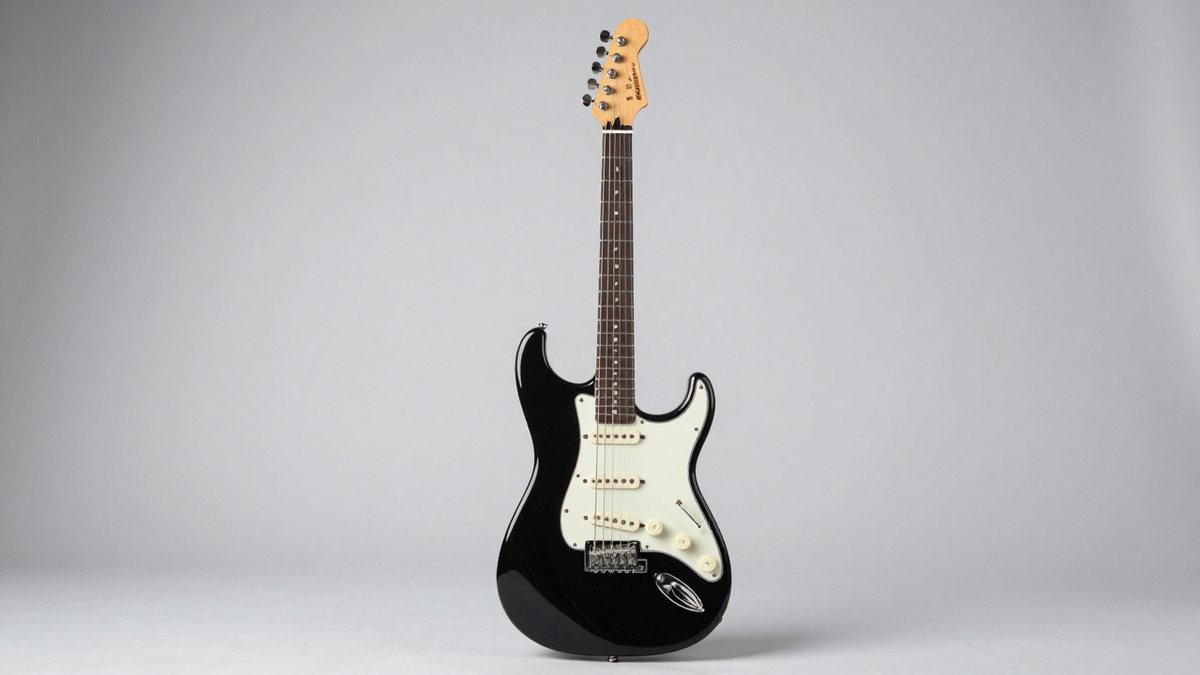
- SSS (three single-coils): Classic Stratocaster setup. Glassy cleans, quack in positions 2 and 4, bright attack. Ideal for funk, blues, surf, country, and classic rock. Weakness is 60-cycle hum and lower output for modern high-gain.
- HSS (humbucker + two single-coils): Most versatile. Bridge humbucker handles hard rock and lead distortion while neck/middle single-coils keep clean tones. Best one-guitar solution for beginners and cover-band players.
- HH (two humbuckers): Standard on Gibson Les Paul, SG, and PRS. Warm, compressed, high output with strong mids. Excels for jazz, hard rock, metal, and thick blues leads. Less sparkle for clean funk or country twang.
- HSH or HH with coil-split: Modern guitars like the PRS SE Custom 24 and Ibanez RG series use coil-splitting or 5-way switching to approximate single-coil tones from humbuckers. More wiring complexity, but maximum flexibility.
- P-90s (single-coil, large bobbin): Found on Gibson Les Paul Special, Epiphone Casino, and Reverend models. Raw midrange growl, more output than standard single-coils, cleans up well with volume knob. Great for indie, punk, and blues-rock.
2. Scale Length and String Tension
Scale length is the distance from nut to bridge. It changes tension, fret spacing, and tone even with the same tuning and string gauge.
- 25.5″ (Fender, Ibanez, Yamaha, Schecter): Tighter tension, brighter attack, tighter low end. Bends require slightly more force. Better for down-tuning, extended range, and articulate clean tones. Fret spacing is wider, which helps large hands but can stretch small hands on lower frets.
- 24.75″ (Gibson, Epiphone): Lower tension for same gauge, warmer tone, easier bending and vibrato. Frets are closer together, more comfortable for small to medium hands and for complex chords. Can feel loose when tuned to Drop C or lower without heavier strings.
- 25″ (PRS): Middle ground. PRS uses this to balance bending ease with tuning stability and clarity.
If you have small hands or short fingers, a 24.75″ scale with a 12″ fretboard radius will feel less strained in the first three frets. For large hands or players who value string separation for fingerpicking and low tunings, 25.5″ is often more comfortable.
3. Neck Profile and Fretboard Radius
Neck profile affects grip and fatigue more than any other shape spec.
- Modern C / Slim C (Fender Player II, Yamaha Pacifica): Oval, medium thickness. Works for most hand sizes, especially beginners. Depth around 0.82″ at 1st fret to 0.92″ at 12th fret.
- SlimTaper / 60s SlimTaper (Gibson, Epiphone): Thin, flat-backed. Fast for lead play, less hand fatigue for small hands, but less support for thumb-over chords.
- U / Chunky C (Fender Vintera, Gibson 50s profile): Thick with pronounced shoulders. Fills large palms, great for rhythm and vintage feel, can cramp small hands.
- Wizard / Super Wizard (Ibanez RG550, RG421): Very thin and flat, 17mm at 1st fret. Built for speed and shredding, not ideal if you anchor your thumb over the top.
- Fretboard Radius: 7.25″ to 9.5″ is curvier, easier to chord and barre. 12″ to 16″ is flatter, better for low action and wide bends without fretting out.
Spec Comparison: 7 Proven Models Compared
These models represent the core architectures used across every budget tier. Specifications reflect standard production versions available in 2026.
| Model | Scale Length | Pickups | Neck Profile / Radius | Weight (approx.) | Frets |
|---|---|---|---|---|---|
| Yamaha Pacifica 112V | 25.5″ | HSS (Alnico V) | C-shape / 13.75″ radius | 7.7 lbs / 3.5 kg | 22 |
| Squier Classic Vibe 50s Stratocaster | 25.5″ | SSS (Alnico) | C-shape / 9.5″ radius | 7.8 lbs / 3.54 kg | 21 |
| Fender Player II Stratocaster | 25.5″ | SSS or HSS | Modern C / 9.5″ radius | 8.0 lbs / 3.63 kg | 22 |
| Epiphone Les Paul Standard | 24.75″ | HH (ProBucker) | 60s SlimTaper / 12″ radius | 8.8 lbs / 4.0 kg | 22 |
| PRS SE Custom 24 | 25″ | HH (85/15 S) with coil-tap | Wide Thin / 10″ radius | 7.5 lbs / 3.4 kg | 24 |
| Ibanez RG550 Genesis | 25.5″ | HSH (V7/V8/S1) | Super Wizard / 17″ radius | 7.2 lbs / 3.27 kg | 24 |
| Gretsch G5420T Electromatic | 24.75″ | HH (Black Top Filter’Tron) | Standard U / 12″ radius | 8.2 lbs / 3.72 kg | 22 |
Best Electric Guitars by Situation: Decision Matrix
Use your budget, primary genre, and playing frequency to narrow to one architecture instead of comparing dozens of similar models.
| Your Situation | Best Match | Why It Fits |
|---|---|---|
| Budget under $400, first guitar, learning chords and songs across genres | Yamaha Pacifica 112V or Squier Classic Vibe Strat | HSS or SSS versatility, comfortable C neck, stable 25.5″ tuning, lighter weight for long practice |
| Budget $400-$800, play blues, funk, country, indie | Fender Player II Stratocaster or Squier Classic Vibe Telecaster | Single-coil articulation, 9.5″ radius for chording and bends, alder or pine body with bright snap |
| Budget $600-$900, play hard rock, punk, stoner rock on a short scale | Epiphone Les Paul Standard or Gibson SG Standard (when on sale) | HH warmth and sustain, 24.75″ easier bending, set neck with mahogany body for midrange thickness |
| Budget $800-$1,100, need one guitar for weddings, church, or covers | PRS SE Custom 24 or PRS SE CE 24 | HH with coil-tap covers humbucker rock and single-coil cleans, 25″ compromise scale, 24 frets |
| Play metal, prog, or down-tuned modern rock | Ibanez RG550, Schecter Omen Extreme, or Charvel DK24 HSH | High-output HSH, flat 14″-16″ radius, thin Wizard necks, Floyd Rose or fixed bridge options for stability |
| Jazz, rockabilly, or vintage hollow-body tone at home volumes | Gretsch G5420T or Epiphone ES-335 Inspired by Gibson | Filter’Tron or PAF-style HH, semi-hollow construction adds air and resonance, lower feedback than full hollow |
Worked Example: Cost Per Use and String Tension Calculation
Price alone is misleading. A $750 guitar played one hour daily for three years costs far less per session than a $300 guitar that stays in a closet. Likewise, string gauge must change with scale length to keep tension consistent.
Cost per use: Assume a PRS SE Custom 24 at a general market price in the $800-$900 range, played 5 days a week for 3 years (780 sessions). 850 / 780 = approx. $1.09 per session before strings and setup. An entry model at $300 played twice a month for one year (24 sessions) is $12.50 per session. Frequency of use should push you toward a comfortable neck and reliable hardware rather than the lowest price.
String tension example: A .010-.046 set on a 25.5″ guitar at standard tuning has about 16.2 lbs of tension on the high E. The same set on a 24.75″ guitar has about 15.2 lbs, roughly 6% less. If you switch from a 25.5″ Strat to a 24.75″ Les Paul and want the same bending resistance, move up one gauge on the shorter scale (e.g., .0105 or .011 set) or accept easier bends.
Ownership Realities: What Wears First and How to Avoid Common Mistakes
Electric guitars are durable, but a few parts create most repair bills and tuning issues. Knowing them prevents expensive setup problems.
- Frets and strings wear first. Nickel frets develop grooves under the plain strings after 1-3 years of heavy play. Stainless steel frets, now common on Ibanez, Charvel, and some PRS models, last 3 to 5 times longer but cost more to level. Strings lose brightness in 20-40 hours of play. Wipe strings after each session and change them every 1-3 months depending on sweat and playing time.
- Tuning instability is rarely the tuners. Most slipping comes from a poorly cut nut or old strings that have not been stretched. Use graphite or TUSQ nuts, stretch new strings by pulling gently at the 12th fret and retuning 3-4 times, and ensure string trees and bridge saddles are not binding.
- Neck relief changes with seasons. Wood moves with humidity. A neck that buzzes in winter or chokes on bends in summer usually needs a quarter-turn truss rod adjustment and a saddle height tweak. If you are not comfortable with a truss rod, a professional setup once or twice a year, typically in the $50-$90 range, is standard maintenance.
- Humidity and finish care: Keep solid-body electrics at 40-55% relative humidity. Avoid leaving guitars in cars, where heat can soften glue and warp necks. Clean with a dry microfiber cloth; use fretboard oil only on unfinished rosewood or ebony, never on maple with a sealed finish.
- Common buying mistakes: Choosing a Floyd Rose tremolo for a first guitar adds tuning complexity, buying ultra-heavy 9+ lb models without trying a strap for 30 minutes, and ignoring neck radius. A 7.25″ vintage radius feels very different from a 16″ modern radius when bending above the 12th fret.
How to Choose in the Store or When Ordering Online
Match these checks in order: 1) Sit and stand with a strap, check weight and neck balance. 2) Play open chords on frets 1-3, then barre at frets 5 and 7. If you feel stretching or cramping, try a shorter scale or thinner neck. 3) Test the pickups clean first. Roll volume to 7 and see if tone cleans up without getting muddy. 4) Bend the high E at the 15th fret a full step; listen for fretting out. 5) Check fret ends for sharpness and tuning stability after 2 minutes of tremolo use. If ordering online, verify return window and budget for a setup, as factory action varies.
Frequently Asked Questions
Are HSS Stratocasters better than HH Les Pauls for beginners?
For most beginners who are not sure of their genre, HSS is more forgiving. You get humbucker power on the bridge for rock distortion and single-coil clarity on the neck for cleans. HH is better if you know you want warm, thick drive as your primary voice and prefer the shorter 24.75″ scale.
What neck is best for small hands?
Look for 24.75″ scale, 60s SlimTaper, Modern C, or Wide Thin profiles with a 9.5″ to 12″ radius and a nut width around 1.685″. Thin Wizard-style necks also help, but a thick U or 50s rounded profile will fatigue small hands faster.
Do I need 22 or 24 frets?
22 frets is standard for blues, rock, country, and jazz. Choose 24 if you play lead above the 20th fret for metal or prog. Extra frets move the neck pickup slightly toward the bridge, which slightly brightens its tone.
Is a cheap electric guitar harder to stay in tune?
Not always. Tuning problems more often come from a sticky nut, unstable bridge, or improper string installation than from overall price. A properly cut nut and fresh, stretched strings make even entry instruments stable.