What's inside
As an Amazon Associate I earn from qualifying purchases. This post may contain affiliate links at no extra cost to you.
Our Top Picks
 T-Fal Ultimate Hard Anodized Nonstick Pots and Pans17-Piece21.84 x 13.8 x 15.4 inches23.81 PoundsCheck on Amazon
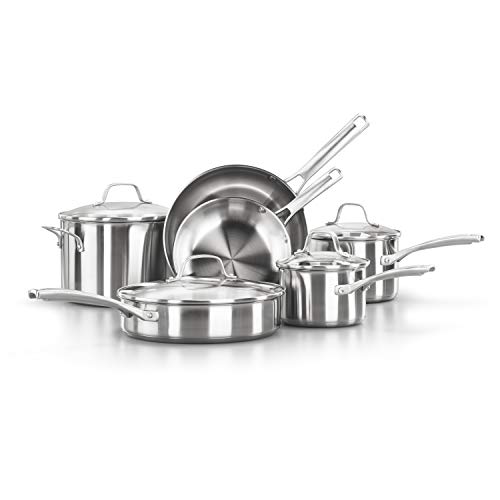 Calphalon Classic Stainless Steel Cookware Set10-Piece Set (Classic)24.96 x 14.57 x 10.75 inches22.7 PoundsCheck on Amazon


Best Cookware Sets for Every Stove and Budget
The best cookware sets depend on your stove and how you cook: choose tri-ply stainless steel for versatility and long service life, hard-anodized aluminum for easy handling and dependable nonstick performance, or ceramic nonstick for a coating-based option without traditional PTFE. Before buying, check induction compatibility and count the useful pots and pans—not the advertised pieces.
Quick picks by cooking situation
| Situation | Best fit | Typical useful core | Main trade-off |
|---|---|---|---|
| Induction stove; want cookware for years | Tri-ply stainless steel with a magnetic exterior | 10- or 12-inch skillet, 2- to 3-quart saucepan, 6- to 8-quart stockpot | More upkeep to prevent sticking; often heavier and pricier |
| Frequent eggs, pancakes, or delicate fish | Hard-anodized aluminum nonstick | 8- and 10-inch skillets, 2- to 3-quart saucepan, 5- to 6-quart pot | Many sets do not work on induction; coating eventually wears |
| Lightweight pans and easy cleanup are priorities | Ceramic-coated nonstick | 10-inch skillet, 2-quart saucepan, 5-quart covered pot | Coating life can be limited, especially with high heat or abrasive cleaning |
| Small kitchen or occasional cooking | A few open-stock pans rather than a large set | One skillet, one saucepan, one lidded pot | Less coordinated, but avoids paying for duplicate or rarely used pieces |
What the three main constructions actually mean
Tri-ply stainless steel: the all-purpose, long-term choice
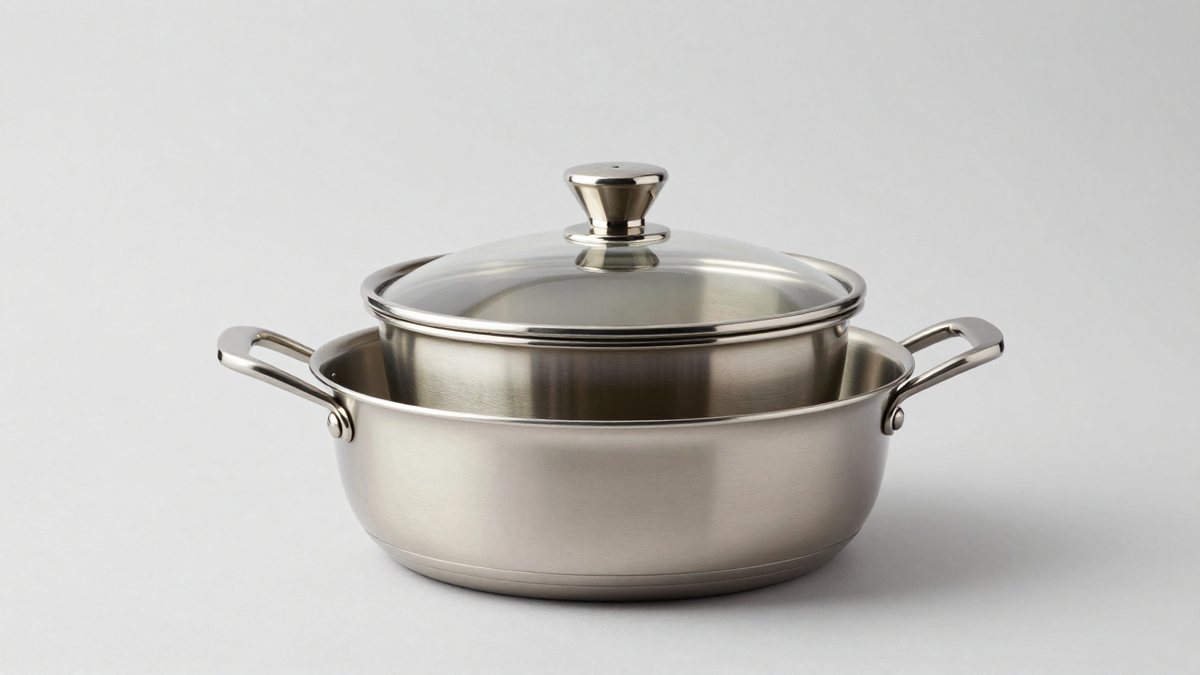
Tri-ply usually means a layer of aluminum is bonded between stainless-steel layers. The aluminum spreads heat; the stainless cooking surface is durable and does not rely on a nonstick coating. It is a strong choice for browning, pan sauces, boiling, and oven use, provided the handles and lids have suitable temperature ratings.
As an Amazon Associate we earn from qualifying purchases at no extra cost to you.


Stainless steel can stick when food goes into a cold pan or the pan is too cool. Preheat over moderate heat, add oil, and let protein release naturally after browning. Stainless can discolor or develop heat tint, but those cosmetic changes do not usually mean the pan has failed. Check the base for a magnetic layer if you cook on induction: “stainless steel” alone does not guarantee compatibility.
Hard-anodized nonstick: convenient, but check the stove and coating
Hard-anodized aluminum is treated to create a toughened surface, and many pans then receive a separate nonstick coating. The anodized body is not itself the nonstick layer. These pans are commonly lighter than tri-ply and suit low-to-medium-heat everyday cooking, especially foods that tend to cling.
Many hard-anodized sets have an aluminum base that will not work on induction. Some models add a magnetic steel plate, so verify the specific set’s compatibility rather than relying on the phrase “hard-anodized.” Avoid metal utensils, abrasive scouring, and prolonged high heat if you want to extend the coating’s useful life.
Ceramic nonstick: easy-release cooking with realistic expectations
Ceramic nonstick generally describes a sol-gel coating on a metal pan, not a solid ceramic pot. It can offer easy food release when new and is often marketed as made without PTFE. Ceramic-coated cookware is not automatically induction-ready; look for an explicitly magnetic base and the induction symbol or manufacturer’s compatibility statement.
Like other coated cookware, ceramic surfaces lose release performance with wear. High heat, cooking sprays that leave residue, stacking pans without protection, and rough cleaning can shorten their useful life. Use low or medium heat, a small amount of suitable fat when needed, and soft utensils. Choose stainless steel for tasks that routinely need intense searing.
How to count the usable pieces in a cookware set
A “piece” may mean a pan, a lid, or an insert. A set advertised as 12 pieces might contain six cookware pieces and six lids; it does not necessarily provide twelve pots and pans. Count the actual cooking vessels, then ask whether their sizes fit your meals and storage.
- Skillet: An 8-inch pan is useful for one or two eggs; a 10- or 12-inch skillet handles larger portions. Two nearly identical small skillets may be less useful than one larger one.
- Saucepan: A 2- to 3-quart pan covers oatmeal, sauces, and side dishes. A very small “butter warmer” may be an extra rather than a core pan.
- Covered pot: A 5- to 6-quart pot suits pasta, soup, or batch cooking. A stockpot is useful if you regularly cook larger quantities, but can take substantial cabinet space.
- Specialty pieces: Steamers, shallow pans, and utensils add value only if you will use them. Check whether a lid fits more than one vessel; shared lids can save space but may require swapping during cooking.
For many households, a genuinely useful starter set is three or four vessels: a 10- or 12-inch skillet, a 2- to 3-quart saucepan, and a 5- to 6-quart lidded pot, with an extra skillet or stockpot added only if cooking habits justify it.
Match the set to your budget, kitchen, and routine
| Your situation | Practical choice | What to prioritize |
|---|---|---|
| Tight budget; cooks a few times a week | Small nonstick set or a mix of open-stock pans | Useful sizes, sturdy handles, and replacement options over extra accessories |
| Induction user buying one coordinated set | Induction-ready tri-ply, or explicitly induction-compatible coated cookware | Magnetic base, flat contact surface, and clear oven-temperature limits |
| Experienced cook who sears and makes pan sauces | Tri-ply stainless steel | Even heat distribution, comfortable handles, and lids that fit the main pots |
| Beginner who values quick cleanup | Hard-anodized or ceramic-coated nonstick | Simple care instructions; use moderate heat and non-metal utensils |
| Limited cabinet space | Three-piece core or stackable cookware | Nested diameter, lid storage, and whether handles prevent stacking |
Price varies by brand, construction, and set size. As broad market ranges, basic coated sets often fall around $60–$180, midrange stainless or coated sets around $150–$400, and premium multi-ply sets can cost $400 or more. Compare what is included: a smaller set of well-sized pans can be better value than a discount bundle padded with lids or rarely used pieces.
Ownership costs and common mistakes
Nonstick coatings are consumable surfaces. Their release can decline before the pan body is unusable, so consider whether individual replacement pans are available rather than assuming the whole set will last indefinitely. Stainless steel avoids that coating replacement cycle, but can need more effort to clean stuck-on food. For any construction, avoid sudden temperature changes—such as rinsing a very hot pan in cold water—which can contribute to warping.
Before purchase, confirm that the largest pan fits your burner and that the handles fit your oven and storage space. On induction, a magnet that sticks firmly to the pan’s base is a useful preliminary check, but the maker’s compatibility guidance is more reliable. Also check care instructions: a “dishwasher safe” claim does not guarantee that repeated cycles are the best choice for preserving the finish.
Bottom line
For a single durable set across several cooking styles, start with induction-compatible tri-ply stainless steel. Choose hard-anodized nonstick if easy release matters most and your stove supports that model; choose ceramic-coated cookware if you prefer that coating type and are comfortable treating the pans as wear items. In every case, buy by the vessels you will use, not the biggest piece-count printed on the box.