What's inside
As an Amazon Associate I earn from qualifying purchases. This post may contain affiliate links at no extra cost to you.
The best lens for wildlife photography depends on whether you value reach, low-light aperture, portability, or the flexibility to reframe quickly: for most enthusiasts, a 100–500mm or 200–600mm zoom is the most practical starting point, while a 400mm or 600mm f/4 prime is the specialist choice for demanding low-light work.
As an Amazon Associate we earn from qualifying purchases at no extra cost to you.
Quick picks by shooting situation
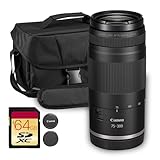
- Best all-round Canon option: Canon RF 100-500mm F4.5-7.1 L IS USM. It is relatively light, focuses quickly, and covers nearby animals as well as distant birds.
- Best all-round Sony option: Sony FE 200-600mm F5.6-6.3 G OSS. Its internal zooming, useful reach, and 2,115g weight make it a strong general-purpose choice.
- Best Nikon Z flexibility: NIKKOR Z 180-600mm f/5.6-6.3 VR. The broad range and internal zoom are valuable for animals that suddenly move closer.
- Best reach per dollar: Canon RF 200-800mm F6.3-9 IS USM, provided your camera body is compatible with Canon RF lenses and you usually photograph in reasonable light.
- Best low-light performance: A 400mm or 600mm f/4 prime, such as the Sony FE 600mm F4 GM OSS, Canon RF400mm F2.8 L IS USM, or NIKKOR Z 600mm f/4 TC VR S.
- Best compact Micro Four Thirds solution: OM SYSTEM M.Zuiko Digital ED 150-400mm F4.5 TC1.25x IS PRO, whose built-in teleconverter reaches an equivalent field of view of approximately 1,000mm at the long end.
Wildlife lens comparison
The figures below are manufacturer specifications or commonly published specifications. Mount availability matters: a lens cannot be adapted interchangeably between all camera systems, and autofocus performance may change with an adapter.
| Lens | Focal length and aperture | Stabilization | Minimum focus distance | Weight | Teleconverter compatibility |
|---|---|---|---|---|---|
| Canon RF 100-500mm F4.5-7.1 L IS USM | 100–500mm, f/4.5–7.1 | Up to 5 stops | 0.9m at 100mm; 1.2m at 500mm | 1,370g | RF 1.4x and 2x, but only from 300–500mm |
| Sony FE 200-600mm F5.6-6.3 G OSS | 200–600mm, f/5.6–6.3 | Optical SteadyShot | 2.4m | 2,115g | FE 1.4x and 2x teleconverters |
| NIKKOR Z 180-600mm f/5.6-6.3 VR | 180–600mm, f/5.6–6.3 | 5.5 stops | 1.3m at 180mm; 2.4m at 600mm | 1,955g | Nikon Z teleconverters |
| Canon RF 200-800mm F6.3-9 IS USM | 200–800mm, f/6.3–9 | Up to 5.5 stops | 0.8m at 200mm; 3.3m at 800mm | 2,050g | Not compatible with RF extenders |
| Sony FE 600mm F4 GM OSS | 600mm, f/4 | Optical SteadyShot | 4.5m | 3,040g | FE 1.4x and 2x teleconverters |
| OM SYSTEM M.Zuiko 150-400mm F4.5 TC1.25x IS PRO | 150–400mm f/4.5; built-in 1.25x TC | Optical and in-body stabilization | 1.3m | 1,875g including tripod collar | Built-in TC; compatible with selected external converters |
How the important specifications affect real wildlife shooting
Focal length and framing
A 100–500mm zoom is easier to use when an animal may approach quickly. At 100mm, you can locate the subject and include environmental context; at 500mm, you can fill the frame with a distant mammal or large bird. A 200–600mm or 200–800mm lens gives more reach, but the narrower starting angle makes moving subjects harder to find.
On an APS-C camera, a 600mm lens provides a narrower field of view than it does on full frame, which can be helpful for distant birds but less convenient for nearby wildlife. Micro Four Thirds cameras provide even more apparent reach, but the smaller sensor does not eliminate the need for shutter speed and adequate light.
Aperture and shutter speed
A wide aperture such as f/2.8 or f/4 gathers more light, produces a brighter viewfinder image, and allows faster shutter speeds at dawn, dusk, or under forest cover. This is why professional 400mm and 600mm primes remain expensive and heavy. Their cost is not simply about magnification.
Budget zooms commonly reach f/6.3 or f/9 at the long end. In bright daylight, that may be perfectly workable. In dim conditions, raising ISO becomes necessary. For birds in flight, begin around 1/1600 second; for a still mammal, 1/500 second may suffice, but subject movement matters more than stabilization.
Autofocus speed
Modern internal-focusing lenses with linear, Nano USM, or stepping motors generally focus faster and more quietly than older screw-drive designs. Focus speed also depends on the camera body, subject contrast, tracking algorithm, and the distance the lens must travel.
A lens with a focus limiter is particularly useful. Restricting autofocus to a distant range prevents the lens from repeatedly searching through its entire focus range after a branch or blade of grass interrupts the subject. Prime lenses and premium zooms often provide more effective limiter controls, custom buttons, or selectable stabilization modes.
Image stabilization
Optical stabilization helps counter your hand movement, not an animal running or a bird flapping. If a deer is motionless, stabilization may let you use a slower shutter speed. If the deer turns its head, shutter speed still has to be fast enough to freeze that movement.
Use the lens’s panning or active mode when available for tracking lateral movement. On a tripod or gimbal, follow the manufacturer’s guidance: some lenses work best with stabilization left on, while others benefit from switching it off when completely locked down.
Teleconverter compatibility
A 1.4x teleconverter turns 600mm into 840mm, but it loses one stop of light. A 2x converter turns it into 1,200mm and loses two stops. That affects autofocus, shutter speed, and image quality. A fast f/4 prime generally tolerates a 1.4x converter better than a slow f/6.3 zoom.
Compatibility is not universal. The Canon RF 100-500mm accepts extenders only when zoomed to 300–500mm, while the RF 200-800mm does not accept Canon RF extenders. Check the exact lens and camera combination before buying a converter.
Minimum focus distance
Close-focusing ability is easy to overlook. A lens with a short minimum focus distance can photograph a nearby reptile, butterfly, or small animal without changing lenses. The Nikon Z 180-600mm focuses as close as 1.3m at its wide end, whereas the Sony 200-600mm requires 2.4m. At maximum focal length, both require considerably more distance.
Decision matrix: choose by budget and working style
| Your situation | Best lens type | Why | Main compromise |
|---|---|---|---|
| First wildlife lens, occasional trips | 100–500mm or 150–600mm zoom | Flexible framing and moderate carrying cost | Usually f/6.3 or slower at maximum reach |
| Frequent bird photography in daylight | 200–600mm or 200–800mm zoom | More reach without prime-lens prices | Heavy and less useful in low light |
| Forest, dawn, or dusk shooting | 400mm or 600mm f/4 prime | Fast aperture and strong autofocus performance | High cost, bulk, and tripod-support needs |
| Long hikes and travel | 100–400mm or compact 100–500mm | Lower weight and easier subject acquisition | Less reach for very distant birds |
| Maximum reach in a small system | Micro Four Thirds 100–400mm or 150–400mm | Compact kit with a narrow angle of view | Less light-gathering ability than a full-frame f/4 prime |
Weight, support, and ownership costs
Carrying weight changes how often a lens gets used. A 1,370g zoom can usually be carried on a shoulder strap for hours; a 3,040g 600mm f/4 is more comfortable on a monopod, gimbal, or sturdy tripod. Add the camera body, battery, support, and rain protection before deciding that a lens is “portable.”
For a simple cost-per-use comparison, a $2,000 lens used 100 times costs $20 per outing before resale value, while a $6,000 lens used 20 times costs $300 per outing. The cheaper lens is not automatically better; the calculation shows why fit with your normal locations matters more than maximum specifications.
The parts most likely to show wear are zoom and focus rings, tripod-collar fasteners, lens-mount contacts, and the external barrel seals. Keep the front and rear caps on when the lens is stored, use a padded bag, and avoid repeatedly wiping dust across the front element. Blow loose grit away first, then use a clean lens cloth sparingly. A clear protective filter can simplify cleaning, but it may add flare and should not be treated as impact-proof protection.
Common buying mistakes
- Choosing 800mm reach when you normally photograph animals at close range, then struggling to locate them in the narrow view.
- Assuming image stabilization freezes a moving bird.
- Ignoring the lens’s maximum aperture at the focal length you actually use.
- Buying a teleconverter without checking mount, autofocus, and aperture compatibility.
- Underestimating the size of the tripod collar and hood in a travel bag.
- Failing to check whether the lens is weather-resistant enough for your intended conditions; weather sealing is not waterproofing.
Final recommendation
For the broadest range of wildlife situations, choose a stabilized 100–500mm lens if portability and nearby subjects matter, or a 180–600mm/200–800mm lens if distant birds are your priority. Choose a 400mm or 600mm f/4 prime only when you regularly work in low light, need the fastest autofocus and shutter speeds, and are prepared to carry support equipment. The best lens is the one whose reach, aperture, and weight match the places you will actually visit.