What's inside
As an Amazon Associate I earn from qualifying purchases. This post may contain affiliate links at no extra cost to you.
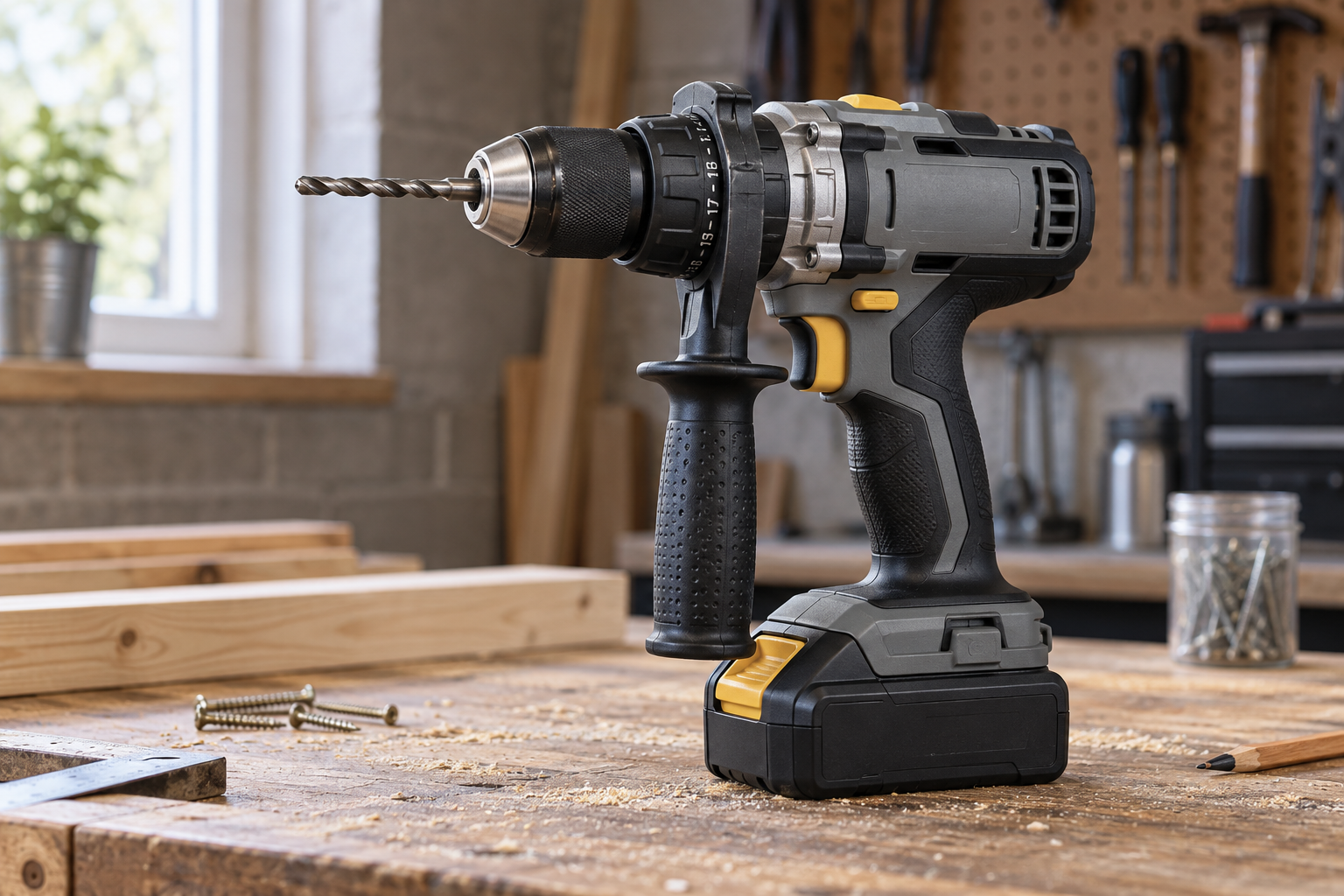
For a long masonry job, the drill’s name on the housing matters less than the hole size, the bit, the battery, and whether the work calls for a rotary hammer instead. Milwaukee’s M18 FUEL and DeWalt’s 20V XR hammer drills can handle occasional holes in brick and block, but neither is the right tool for drilling dozens of large holes into hard concrete. For that kind of work, a rotary hammer is faster and less tiring.
As an Amazon Associate we earn from qualifying purchases at no extra cost to you.


Our Top Picks
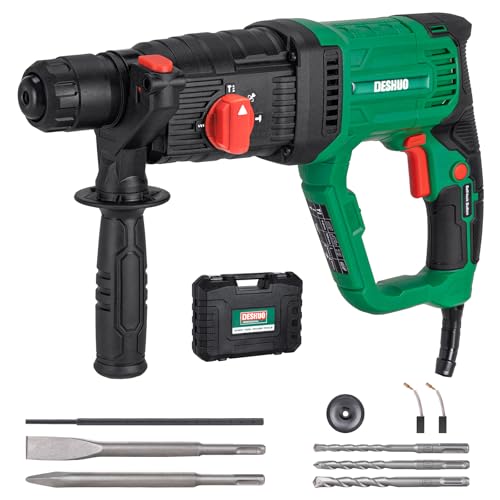 Deshuo 1" SDS-Plus Lightweight Rotary Hammer Drill forSmall15.15 x 8.85 x 3.93 inches7.19 PoundsCheck on Amazon



The short answer
For comparable brushless hammer drills with healthy, high-capacity batteries, Milwaukee M18 FUEL and DeWalt 20V XR are close enough that I would choose based on the battery platform you already own, the kit price, and how the drills feel in hand. Neither brand has a dependable advantage that makes it the automatic pick for a full day of masonry.
If your job is a few small anchor holes, either can be suitable with a sharp masonry bit and sensible pacing. If it involves many holes, large diameters, or reinforced concrete, buy or rent an SDS-plus rotary hammer. Hammer drills rely on rapid mechanical vibration and require the user to push; rotary hammers use a more forceful impact mechanism and generally make masonry drilling far more efficient.
What the comparison actually covers
“M18 FUEL” and “20V XR” are broad platform labels, not single drill models. Product generations, chuck designs, speed settings, and included batteries vary. A compact drill kit with a small battery is not a fair stand-in for a full-size hammer drill with a large pack. Check the exact tool specifications and kit contents rather than treating the platform name as a performance rating.
Both lines include brushless hammer drills intended for demanding general drilling and fastening. In masonry, though, the practical ceiling is often the same: ordinary hammer drills are best reserved for relatively small holes in brick, block, and softer masonry. Hard concrete, frequent holes, and bigger bits call for an SDS-plus tool.
Side-by-side for long masonry work
| Factor | Milwaukee M18 FUEL | DeWalt 20V XR |
|---|---|---|
| Platform | M18 batteries; attractive if you already own Milwaukee tools | 20V MAX batteries; attractive if you already own DeWalt tools |
| Small masonry holes | Suitable for occasional work with an appropriate masonry bit | Suitable for occasional work with an appropriate masonry bit |
| Long drilling sessions | Results depend heavily on model, battery capacity, bit condition, and pace | Results depend heavily on model, battery capacity, bit condition, and pace |
| Large or repeated concrete holes | Use an SDS-plus rotary hammer instead | Use an SDS-plus rotary hammer instead |
| Best buying reason | Existing M18 batteries or a better-priced kit | Existing 20V MAX batteries or a better-priced kit |
Do not compare bare-tool prices with full kits without counting the battery and charger. For a long job, a larger-capacity pack can reduce interruptions, but it adds weight and does not turn a hammer drill into a rotary hammer. If you need to drill continuously, plan battery swaps and charging time, or use a corded or SDS-plus tool suited to the workload.
Where both drills struggle
In dense concrete, a hammer drill can slow sharply, overheat, and leave the operator leaning hard into the handle. That pressure is not a substitute for the right impact mechanism. A dull or overheated bit makes the problem worse: drilling takes longer, the hole can wander, and the drill spends more time under load. Stop if progress stalls, let the bit cool, clear dust from the hole, and check the bit before continuing.
Hole diameter and depth matter. A few holes for small masonry anchors are a different job from repeated holes for large fasteners or deep penetrations. Follow the drill and bit manufacturers’ limits; don’t assume a model’s maximum wood or metal drilling capacity applies to concrete. For regular concrete work, compare SDS-plus rotary hammers instead of buying the strongest hammer drill you can find.
How to make a long job go better
Use a sharp carbide-tipped masonry bit in the right diameter, and make sure hammer mode is engaged. Start square to the surface at a controlled speed rather than forcing the bit to skate across the face. Keep the bit straight, withdraw it periodically to clear dust, and stop before the tool or bit becomes excessively hot. Dust slows cutting and can pack tightly in a deep hole.
Mark the required depth and avoid drilling deeper than necessary. If a hole must be repeated accurately, use a depth stop or a simple tape mark. Wear eye protection and suitable respiratory protection, and check for wiring, plumbing, and other services before drilling. Masonry dust is hazardous; use dust collection where practical rather than relying on a quick blow through the hole.
For a string of concrete holes, an SDS-plus masonry bit set is useful only if you also have an SDS-plus drill. SDS shanks do not fit an ordinary three-jaw chuck. For a standard hammer drill, choose bits with a compatible round or hex shank and the correct diameter.
Which one should you buy?
Choose Milwaukee if your M18 batteries already power the rest of your tools and the drill kit you want is competitively priced. Choose DeWalt for the same reasons on the 20V MAX platform. If you own neither system, compare the exact hammer-drill kits, battery capacity, warranty, weight, and price; there is no sound basis for choosing one platform solely on the assumption that it will finish a long concrete job dramatically faster.
If masonry is occasional and limited to small holes in brick or block, the cheaper suitable kit is fine. If masonry is a recurring part of your work, put the money toward a rotary hammer and keep the cordless hammer drill for wood, metal, fastening, and light masonry. That split is usually the more useful purchase than paying extra for a top-tier drill that still has to fight the wrong kind of concrete job.