What's inside
As an Amazon Associate I earn from qualifying purchases. This post may contain affiliate links at no extra cost to you.
Our Top Picks


Quick answer: fence accuracy depends on setup
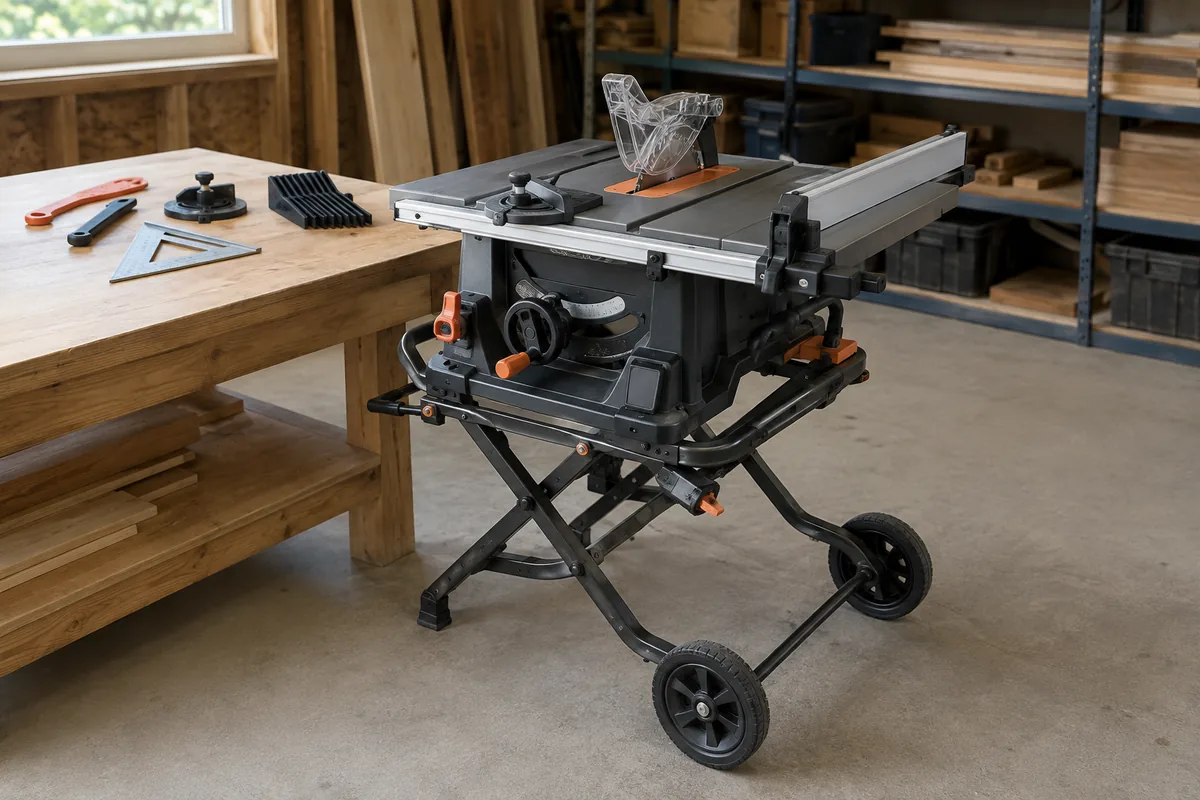
The RIDGID R4514 and SKIL TS6307-00 are both portable jobsite saws with rack-and-pinion fence systems. That design makes it easier to keep the fence parallel to the blade than on many budget saws with a simple clamp at each end. Neither saw guarantees perfect cuts straight out of the box, though: check the fence against the blade, set the pointer to zero, and recheck after transport.
For a buyer focused on repeatable fence positioning, the SKIL is a strong value and is commonly listed with a 25.5-inch rip capacity to the right of the blade. The RIDGID offers a slightly wider listed right-side capacity of 30 inches, which matters when ripping larger sheet goods. The better choice depends less on a small difference in fence mechanism than on whether its alignment holds in your work routine.
As an Amazon Associate we earn from qualifying purchases at no extra cost to you.

At a glance
| Feature | RIDGID R4514 | SKIL TS6307-00 |
|---|---|---|
| Fence type | Rack-and-pinion | Rack-and-pinion |
| Right-side rip capacity | About 30 inches | About 25.5 inches |
| Blade | 10-inch | 10-inch |
| Bevel range | 0–45 degrees | 0–45 degrees |
| Best fit | Wider panels and users who value added rip capacity | Everyday site cuts and buyers prioritizing value |
Check the current product listing before buying; specifications and included accessories can vary by package or retailer. Rip capacity is a maximum workpiece width, not a promise that a full sheet will be easy or safe to handle alone.
What fence accuracy means in practice
A fence can lock securely and still be out of parallel with the blade. If its rear end angles toward the blade, a board can bind as it passes the teeth. That creates rough edges and increases kickback risk. If the fence angles away, the cut may be safer but wider than the setting suggests, especially on a long rip.
Both saws’ rack-and-pinion systems move the front and rear of the fence together when you turn the adjustment mechanism. That is a practical advantage over fences that must be nudged into place at both ends. Still, the mechanism cannot compensate for a fence that has been knocked out of alignment, a loose component, or a blade that is not parallel to the miter slot.
Before relying on either saw for cabinet parts or repeated narrow strips, unplug it and check alignment with a reliable straightedge or dial indicator. Measure the distance from a miter slot to the blade teeth at the front and rear, with the blade raised. Then check the fence against the same reference. Set the fence pointer so it reads zero when the fence is aligned with the blade, and confirm the actual cut on scrap. A pointer can be off even when the fence itself is straight.
Where the RIDGID R4514 makes sense
The RIDGID’s roughly 30-inch right-side rip capacity gives it an edge when the work includes wider plywood or panels that need a cut beyond the SKIL’s listed capacity. More room also leaves additional margin when a cut needs to be made with the fence on the right side of the blade. That does not remove the need for a helper or outfeed support when handling large sheets.
Its fence layout is intended to make adjustment quick, but users should still verify that the fence locks without shifting. A useful test is to set a narrow rip, lock the fence, and measure at both ends; repeat after moving the fence across its range. If the reading changes, inspect the rails and locking action rather than trusting the scale. The main trade-off is that extra capacity is of little value if most of your stock is framing lumber or narrow trim.
Where the SKIL TS6307-00 makes sense
The SKIL’s approximately 25.5-inch right-side rip capacity covers many common shop and jobsite tasks: ripping boards, breaking down narrower panels, and cutting sheet goods with proper support. Its rack-and-pinion fence provides the same basic convenience—move the control, then lock the fence—without requiring separate front and rear adjustments.
For a homeowner or remodeler who rarely cuts panels wider than that capacity, the SKIL is often the sensible buy if it is priced lower. The limitation shows up when a panel must be ripped wider than the fence can reach, or when a cut plan depends on keeping a broad offcut supported. Reconsider the work sequence, use a track saw for sheet breakdown, or choose a saw with more capacity rather than improvising an unsafe fence extension.
Which one should you buy?
Choose the RIDGID if you regularly need its extra right-side capacity, or if you have already confirmed that its fence and rails suit the way you transport and set up the saw. Choose the SKIL if its capacity covers your material and it costs less. For typical framing, shelving, and trim work, the cheaper saw is fine when its fence is properly aligned and the cut is supported.
Neither should be judged by the printed fence scale alone. A difference of 1/16 inch can spoil a fitted part, and a fence that shifts under pressure can turn a clean setup into a bind. After moving either saw, check that the fence locks squarely, and make a test cut before batch work. If accurate repeat cuts are the priority, budget for a good combination square or a dial indicator for table-saw alignment rather than assuming a higher rip capacity means a more accurate fence.
For full sheets, include handling in the decision. A portable saw’s capacity does not make a heavy panel easy to control. Use an outfeed table or rollers, keep the offcut from pinching the blade, and get help with large panels. If sheet goods are frequent work, a track saw and guide rail can make initial breakdown safer and more manageable before final sizing on either table saw.