
What's inside
As an Amazon Associate I earn from qualifying purchases. This post may contain affiliate links at no extra cost to you.
Our Top Picks
 SKIL 5” Random Orbital Sander with Cyclonic Dust5 inches7.87 x 4.8 x 5.51 inches3.44 PoundsCheck on Amazon


Quick verdict
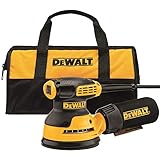
The DeWalt DWE6423 and Bosch ROS20VSC are both 5-inch, variable-speed random-orbit sanders built for furniture, trim, and general workshop finishing. Neither is a heavy stock-removal tool, and either can leave swirl marks if you press too hard or use a worn disc. The practical difference is in control and dust handling: DeWalt offers a higher top speed and a low-profile grip, while Bosch includes a removable microfilter dust canister and a soft backing-pad interface intended to reduce visible swirl marks.
For sanding indoors or working on visible surfaces, the Bosch is an appealing package, especially if you value its dust canister and included accessories. For a lower-profile grip and a faster top setting, consider the DeWalt. If you sand occasionally and already have a suitable dust extractor, choose based on price, grip comfort, and service support rather than expecting a dramatic difference in finish quality.
As an Amazon Associate we earn from qualifying purchases at no extra cost to you.



At a glance
| Feature | DeWalt DWE6423 | Bosch ROS20VSC |
|---|---|---|
| Disc size | 5 inches | 5 inches |
| Motor speed | 3.0 amps | 2.5 amps |
| Variable speed | 8,000–12,000 orbits per minute | 7,500–12,000 orbits per minute |
| Orbit diameter | 3/32 inch | 3/32 inch |
| Dust collection | Dust bag; vacuum-port connection | Microfilter dust canister; vacuum-port connection |
| Pad type | Hook-and-loop | Hook-and-loop |
Check the exact package before buying: included bags, canisters, adapters, and carry cases can vary by retailer or kit. Both models use standard 5-inch hook-and-loop discs, so consumables are easy to find.
Finish quality and control
Both sanders use a 3/32-inch orbit, a small orbit suited to finish sanding rather than aggressive material removal. With fresh discs and sensible grit progression, either can prepare a tabletop or cabinet door for finish. Start around 80 or 100 grit only when the surface needs meaningful leveling; move through 120 and 150, then use 180 or 220 when appropriate for the coating. Skipping grits leaves scratches that may show after staining.
The ROS20VSC’s soft backing-pad interface is designed to reduce swirl marks. That can help, but it does not make swirl marks impossible. A clogged disc, dust trapped beneath the pad, or leaning on the tool can still cut circular scratches into a workpiece. Keep the pad flat, move slowly, and let the sander’s weight do the work. On delicate veneer, use a light touch and test your grit sequence on scrap.
The DWE6423’s speed dial covers 8,000 to 12,000 OPM; the Bosch starts lower, at 7,500 OPM. That lower minimum can be useful on heat-sensitive finishes or when easing into a task, though neither machine is a dedicated low-speed polisher. DeWalt’s higher motor rating is not a promise of faster sanding in every situation. Disc condition, abrasive choice, and dust extraction often matter more than the amp figure.
Dust collection and comfort
Bosch’s microfilter canister is convenient for small jobs and is designed to capture fine dust, but it fills quickly during prolonged sanding and still needs regular emptying. DeWalt’s dust bag is simple to keep attached, while either tool can be connected to a vacuum with the right hose or adapter. For sanding indoors, a vacuum connection is generally more useful than relying on a small onboard collector. Fine wood dust is a health hazard; wear a suitable respirator and use effective extraction even when a sander has a dust bag.
Grip is personal, so handle both if you can. The DeWalt’s low-profile body puts your hand close to the work, which can feel stable on broad panels. The Bosch has a palm-grip shape and a top-mounted speed control; some users find it comfortable, while others prefer a slimmer body. Both are corded tools, so the cord can tug or catch on a bench edge. Keep it clear of the pad and workpiece.
Which one should you buy?
Choose the Bosch ROS20VSC if the package is competitively priced and you want a microfilter canister, a soft interface intended to limit swirl, and a lower starting speed. It is a sensible choice for furniture and cabinet work, especially when you value its supplied dust-collection setup. The canister is not a substitute for a shop vacuum on long jobs.
Choose the DeWalt DWE6423 if its low-profile grip suits you, you want the 8,000–12,000 OPM range, or it is the better deal locally. For routine sanding on doors, tabletops, and trim, the cheaper one is fine when it has a sound pad, good dust extraction, and fresh abrasives. Spend the savings on a useful range of discs rather than paying extra for a small difference in advertised motor power. Compare 5-inch random-orbit sanders if you are also considering other options.
Setup and common problems
Both sanders take 5-inch hook-and-loop discs, but check the hole pattern against the pad if you rely on vacuum extraction. A disc with mismatched holes may still attach, yet collect dust poorly. Replace discs when they clog, tear, or stop cutting; pressing harder to compensate can overheat the surface, wear the pad, and create deeper scratches. If a disc slips or sheds its hook-and-loop backing, inspect the pad for worn hooks and replace it if needed.
Before sanding, clean the surface and the pad so grit cannot get trapped underneath. Keep the tool running as you lower it onto the work and lift it before switching off; stopping the spinning pad on the surface can leave a mark. Sand edges carefully, since a round pad can tip over a corner and soften it unintentionally. If the finish looks cloudy or scratched after sanding, check for a dirty disc, excess pressure, or a skipped grit before blaming the machine.
For the discs themselves, buying 5-inch hook-and-loop discs in several grits makes it easier to progress without stretching a worn abrasive too far. For indoor work, a compatible shop-vac hose or sander adapter can be a more useful upgrade than a second dust bag.