What's inside
As an Amazon Associate I earn from qualifying purchases. This post may contain affiliate links at no extra cost to you.
Our Top Picks
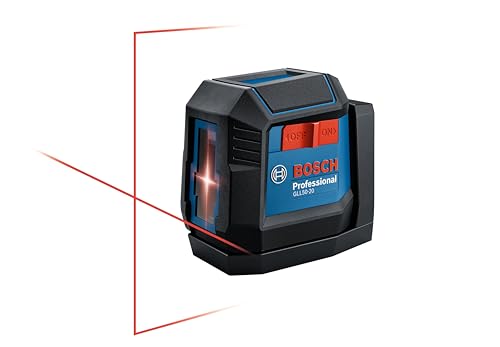 BOSCH PRO GLL50-20 Self-Leveling Cross-Line Laser41 in4.1 x 2.5 x 3.9 inches1.07 poundsCheck on Amazon


What the job demands
Upper cabinets need a level reference across their full run, even when the wall behind them bows, dips, or changes plane. A laser level helps you transfer one elevation across the wall; it does not make the wall flat or tell you where every cabinet’s back edge will sit. You still need to find the wall’s high spots, locate studs, and shim cabinets as needed.
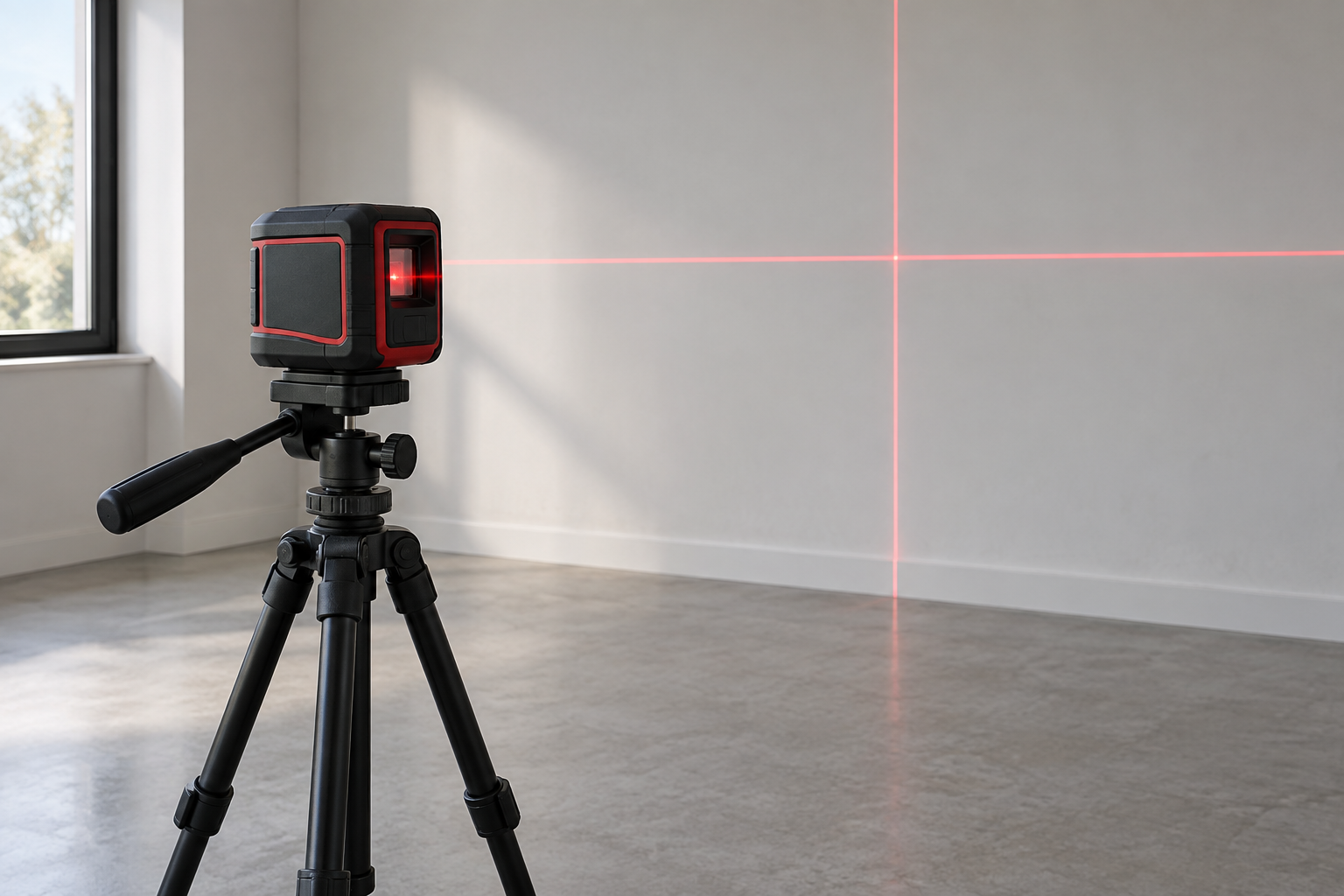
For most kitchens, a self-leveling cross-line laser is the practical choice. Its horizontal line gives you a continuous reference for cabinet tops or bottoms, while the vertical line can help with plumb checks and aligning cabinet edges. Choose a model that projects a visible horizontal line over the length of your cabinet run, has a locking mode for angled layout work, and can mount at a useful height. Green beams are easier to see in bright rooms, but cost more and still may need a detector in strong daylight.
As an Amazon Associate we earn from qualifying purchases at no extra cost to you.


Best type for cabinet installation
A self-leveling cross-line laser is more useful here than a basic point laser: you can read the reference anywhere along the run without moving the tool. A three-plane or 360-degree model can project a level line around the room, which is convenient for long runs or a kitchen with cabinets on multiple walls, but it is not necessary for one short run.
Compare self-leveling cross-line laser levels by working range, stated accuracy, mounting options, and whether a detector is available. For a cabinet run around 8 to 12 feet long, a basic cross-line unit is often enough indoors. If the wall is bright or the run is long, a brighter green-beam model or a detector-compatible laser is a safer buy than relying on a faint line at the far end.
Which laser setup makes sense?
| Option | Best for | Trade-off | Typical use |
|---|---|---|---|
| Red cross-line laser | Small, dim rooms and occasional installs | Harder to see in bright light; usually the least expensive | One cabinet run, with the room shaded |
| Green cross-line laser | Brighter interiors and longer runs | Higher price and often shorter battery life | Work where the line must remain visible across the room |
| 360-degree horizontal laser | Multiple walls or repeated layout work | Costs more than a simple cross-line model | Setting the same elevation around a kitchen |
| Laser with receiver | Very bright conditions or longer distances | Receiver adds cost and is usually unnecessary indoors | When the beam cannot be seen reliably |
Do not choose by color alone. A green line can look brighter to the eye, but beam visibility also depends on room lighting, distance, line width, and the surface. A receiver only helps if the laser supports one. Check the product specifications rather than assuming every laser can accept a detector.
How to handle the uneven wall
First, establish cabinet height from the finished floor and the appliance or countertop plan—not from the wall. Set the laser on a stable tripod or bracket, let it self-level, and mark the intended cabinet reference at both ends of the run. Check the line against a tape measure or a known level reference before using it to set the cabinets. A self-leveling laser can still be inaccurate if it has been dropped, is outside its leveling range, or is sitting on a surface that moves.
Next, find the wall’s high spots. Hold a long straightedge or level horizontally against the wall at cabinet height and check for gaps and rocking. A bowed wall may have a high point in the middle; a dip may leave a gap behind a cabinet. Measure the difference between the high and low areas. If the variation is 1/4 inch, for example, expect to shim the cabinet or build out the low area by roughly that amount. Do not pull a cabinet tight to a bowed wall with screws: that can twist the cabinet box, misalign doors, or split the back.
Mark studs separately with a stud finder and confirm their positions before lifting cabinets. The laser shows elevation, not safe fastening points. Use the cabinet manufacturer’s specified fasteners and secure each cabinet into studs or an approved blocking system. For a long run, install and level the first cabinet, then clamp adjacent boxes together and align their faces and tops before fastening each one. The laser is a reference; the cabinet faces and adjoining doors still need to be checked directly.
Mounting and accuracy matter
A laser mounted too low may put the line behind cabinet boxes; mounted too high, it may be awkward to read while lifting. A tripod with a fine-height adjustment is handy, but a wall bracket or a secure shelf can work if it holds the tool steady. Avoid setting the laser on a cabinet or ladder that will be bumped during installation. If several people are working, tape the tripod feet or place it outside the traffic path.
Look for stated accuracy around 1/8 inch at 30 feet or better for typical cabinet layout, then verify the unit. A simple check is to project a line on a wall, mark a point, rotate the laser 180 degrees without changing its height, and compare the line at that point. Follow the maker’s test procedure for the specific tool. If the lines disagree noticeably, do not compensate by guessing; use another verified reference or have the laser calibrated.
When to spend more—and when not to
For a single indoor kitchen with modest lighting, a reasonably accurate red cross-line laser is usually adequate. Spend extra on green output, 360-degree coverage, or a detector only when the work conditions justify it. A detector is more valuable outdoors or in bright spaces than in a shaded kitchen. A dependable mount may improve the job more than extra laser planes.
For a longer run or repeat installations, consider a green 360-degree laser level if you will use its full-room line regularly. If this is a one-time project, a red cross-line laser with a stable tripod is a sensible lower-cost setup. Either way, verify the line, map the wall, and shim the cabinets rather than expecting the laser to correct a crooked surface.