What's inside
As an Amazon Associate I earn from qualifying purchases. This post may contain affiliate links at no extra cost to you.
Long rip cuts expose the differences between cordless circular saws quickly. A short crosscut may feel similar with either tool, but ripping plywood, roof sheathing, or dimensional lumber for several feet puts more demand on the motor, battery, blade, and the operator’s ability to hold a straight line.
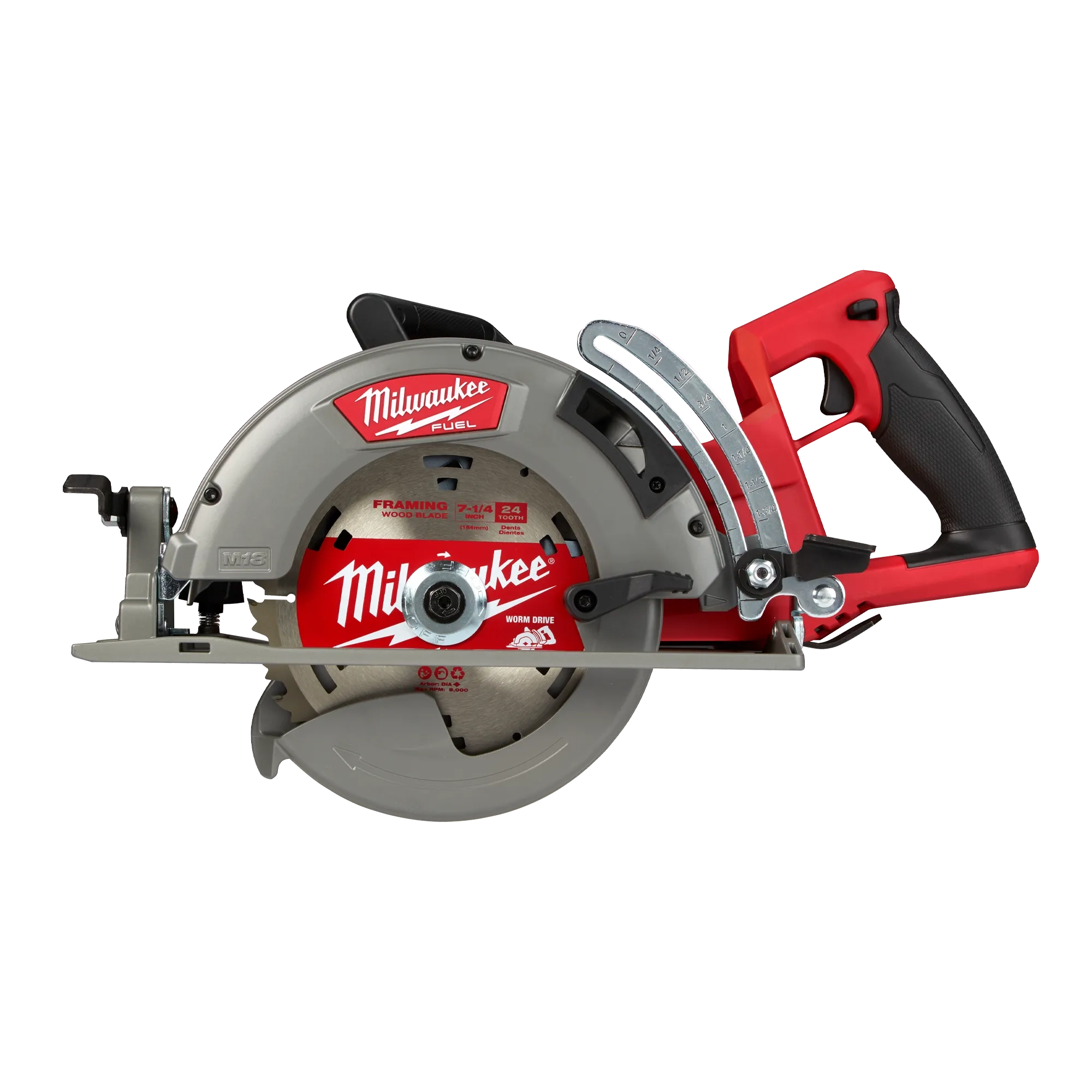
This comparison pits the Milwaukee M18 Fuel rear-handle saw against the DeWalt FlexVolt worm-drive-style saw. The short version is that both can make clean long cuts, but the DeWalt has more battery and cutting reserve under sustained load. The Milwaukee is lighter, easier to handle, and a better buy if you already use M18 batteries or do not regularly make long, heavy rips.
As an Amazon Associate we earn from qualifying purchases at no extra cost to you.

Our Top Picks


Specifications and design
| Feature | Milwaukee M18 Fuel rear-handle | DeWalt FlexVolt worm-drive-style |
|---|---|---|
| Platform | 18V M18 | 60V FlexVolt |
| Blade size | 7-1/4 inches | 7-1/4 inches |
| Maximum depth at 90 degrees | About 2-1/2 inches | About 2-9/16 inches |
| No-load speed | About 5,800 rpm | About 5,800 rpm |
| Drive layout | Direct-drive rear-handle design | Worm-drive-style rear-handle design |
| Best advantage | Lower weight and M18 compatibility | Higher sustained power and larger FlexVolt battery |
The Milwaukee 2830-series rear-handle saw uses a direct-drive layout. It is relatively compact and balances well for a battery saw. The DeWalt DCS577 uses a worm-drive-style arrangement, though it is not the same mechanical design as a traditional corded worm-drive saw. Its blade-left layout gives a clear view of the cut for many right-handed users, and its heavier construction helps it stay planted when the blade starts working hard.
Neither saw is a specialist for cutting unusually thick stock. With a 7-1/4-inch blade, both are intended for normal framing and sheet-good work. The small difference in stated depth capacity is not important for long ripping; motor reserve, battery temperature, and blade choice matter more.
How they handle long rip cuts
On plywood and OSB, both saws start quickly and maintain a useful cutting speed with a sharp combination blade. The Milwaukee feels faster to steer because it weighs less. That matters when cutting a full 8-foot sheet on sawhorses, particularly if you are supporting the saw with one hand while keeping the offcut from pinching.
The DeWalt’s advantage appears when the material is thick, damp, warped, or poorly supported. Its 60V battery supplies more electrical reserve, and the saw is less likely to bog when the kerf closes around the blade. It is not immune to overload: forcing the saw, using a dull blade, or letting the offcut sag can still trigger a slowdown or shutdown. However, it generally recovers more convincingly in sustained cuts.
For a single 8-foot rip in 3/4-inch plywood, the difference may be modest. For repeated rips in 2-by stock, pressure-treated lumber, laminated panels, or several sheets in succession, the DeWalt’s extra capacity is easier to notice. The Milwaukee can do the work, but it is more sensitive to the battery’s charge level and temperature.
Battery selection changes the result. A compact M18 pack keeps the Milwaukee pleasant to use but gives up runtime and peak output. A high-output M18 battery is the sensible choice for ripping. The DeWalt needs a FlexVolt pack, and the larger batteries add noticeable weight. That extra mass helps stability but becomes tiring during overhead work or when making many cuts from awkward positions.
Straightness and control
Neither saw will automatically make a perfectly straight 8-foot cut. The operator still needs a marked line, a guide, or a track-compatible setup. The rear-handle format gives both saws a natural push-forward grip, but the Milwaukee’s lower weight makes it easier to correct the line without twisting the base plate.
The DeWalt feels more substantial against the workpiece. That is useful when the saw is cutting near full capacity, but it can also make small corrections slower. If the base plate catches on a high spot in OSB or a warped board, do not muscle through it. Back out with the blade stopped, correct the support, and restart. Pushing harder can bend the blade, widen the kerf, or overheat the motor.
For the cleanest long cut, support the sheet on sacrificial foam or closely spaced supports, keep the offcut from falling, and use a sharp blade with the appropriate tooth count. A 24-tooth framing blade cuts quickly through construction lumber. A 40-tooth combination blade leaves a better edge in plywood but increases resistance and can reduce runtime.
Failure modes to watch for
The most common long-cut failure is not lack of power; it is pinching. If the waste side drops and closes the kerf, either saw can stop abruptly. This can damage the workpiece and create a kickback hazard. Place supports so both sides remain stable, and never allow the cut section to bear upward against the blade.
Heat is the second issue. Long rips in dense lumber or multiple sheets can warm the battery and force its protection system to reduce output. If performance falls sharply, let the pack and saw cool instead of immediately installing another hot battery. Keep the blade guard clean and confirm that it retracts freely. Sawdust buildup around the lower guard or depth mechanism can interfere with safe operation.
Which saw should you buy?
Choose the DeWalt if long, demanding rips are a regular part of your work: framing crews, remodelers, deck builders, and anyone cutting thick or resistant material repeatedly. Its power reserve and stable feel justify the extra battery cost when downtime or stalled cuts are expensive. The trade-off is weight. A large FlexVolt battery can make the tool tiring during all-day use.
Choose the Milwaukee if you already own M18 high-output batteries, value lower weight, or mostly cut plywood, OSB, and ordinary framing lumber. For occasional long rips, it is not a meaningful compromise. The cheaper option is entirely adequate when the material is properly supported and the blade is sharp. Buying into the DeWalt system solely for a few yearly sheet-good cuts is hard to justify.
If you are starting from zero, compare the complete system rather than bare-tool prices. Include two usable batteries, a charger, a quality blade, and a guide rail or straightedge. For regular heavy ripping, a sharp 7-1/4-inch framing blade and solid support setup will improve results more than a small difference in advertised cutting depth.
For most homeowners and light remodelers, the Milwaukee is the easier saw to live with. For repeated, uninterrupted long cuts where bogging and battery heat are the main concerns, the DeWalt FlexVolt is the stronger tool. The right choice depends less on the label on the motor than on how often you will make the saw work at full load.