What's inside
As an Amazon Associate I earn from qualifying purchases. This post may contain affiliate links at no extra cost to you.
Our Top Picks


Quick verdict
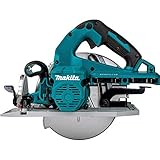
The Milwaukee 2732-20 and Makita XSH06Z are 7-1/4-inch cordless circular saws aimed at serious cutting, including framing. Both use a 15-amp-class brushless setup and can handle common framing lumber with the right battery and blade. The practical choice often comes down to which battery platform you already own, plus whether you value the saw’s handling and sightline more than a small difference in advertised speed.
These are bare-tool model numbers, so budget for a compatible battery and charger if you are not already on either system. Compare kit prices as well as tool-only prices: a saw that looks cheaper can cost more once you add a high-output battery.
As an Amazon Associate we earn from qualifying purchases at no extra cost to you.


What the specs tell you
| Feature | Milwaukee 2732-20 | Makita XSH06Z |
|---|---|---|
| Blade diameter | 7-1/4 in. | 7-1/4 in. |
| Maximum bevel | Up to 50° | Up to 56° |
| Maximum depth at 90° | About 2-1/2 in. | About 2-1/2 in. |
| Maximum depth at 45° | About 1-7/8 in. | About 1-7/8 in. |
| Power system | M18 battery platform | 18V X2 LXT: two 18V batteries |
| Blade speed | 5,800 rpm | 6,000 rpm |
Published capacity and speed figures are useful, but they do not predict every cut. Battery condition, blade sharpness, wood density, and feed rate all matter. Check the current manual for exact limits and setup before cutting; specifications can vary by market or revision.
How they perform on framing cuts
Both saws have enough capacity for a single pass through a standard 2-by-4, which is 1-1/2 inches thick, and can cross-cut a nominal 2-by-6, which is 1-1/2 by 5-1/2 inches, in one pass at 90 degrees. That does not mean every cut will be effortless. A dull or coarse, damaged blade, pinched kerf, or fast push through wet lumber can bog a saw down, leave a rough edge, or trip its protection.
For repeated cuts in framing stock, fit a sharp 24-tooth framing blade and use a battery intended for high current output. Keep the shoe flat, let the blade reach speed before entering the work, and do not force it through a bind. A compact 2-by-4 cutoff may be easy; repeated bevel cuts in wet 2-by-10s are a tougher test. Neither saw turns poor technique into a clean cut.
The Makita’s higher no-load rpm does not automatically make it the faster framing saw. Under load, blade condition and the operator’s feed rate have more effect than a 200-rpm difference. Milwaukee’s 50-degree bevel limit is enough for common 45-degree framing cuts; Makita offers extra range to 56 degrees when the job calls for a steeper bevel.
Handling, setup, and battery trade-offs
The Milwaukee is the straightforward fit for someone already invested in M18 tools. One battery platform can simplify a crew’s chargers and spares, and avoiding a second platform can be worth more than a small difference in saw price. Its maximum bevel range covers normal framing work, though it provides less adjustment beyond 45 degrees than the Makita.
The XSH06Z uses two 18V LXT batteries at once. That gives the saw a higher-voltage power system, but it also means you need two compatible batteries available, and heavy cutting drains a matched pair. If you own only one LXT battery, factor in the cost of a second one. The two-battery arrangement is less convenient than a single-pack saw when you are rotating a small battery inventory on a roof or scaffold.
Neither tool should be judged only by its bare-tool weight. Add the battery, then hold the saw at the height and angle you will use. A heavier setup can tire your arm during overhead work and make it harder to keep the shoe flat at the end of a long cut. Check the shoe adjustment and blade visibility with your usual gloves on; a clear line of sight is more useful than a minor speed advantage.
Which one should you buy?
Choose the Milwaukee if you already own M18 batteries and want a full-size framing saw without adding another battery system. It is also the sensible pick when 45-degree bevels are your steepest regular cuts. Before buying, compare the cost of the bare tool with an M18 high-output battery and charger if needed.
Choose the Makita if you already own two suitable LXT batteries, want the extra bevel capacity, or prefer Makita’s handling after trying both. Do not buy it on the assumption that its higher rpm guarantees faster work. The two-battery requirement is a real cost and logistics trade-off, especially for an occasional DIY user.
For light repairs and a few cuts a month, either saw may be more tool than necessary. A less expensive cordless saw is adequate for occasional cuts in 2-by lumber if you use a sharp blade and do not expect sustained production. Compare cordless circular saw bare tools if the premium full-size models do not fit your workload. If you are buying into a system, compare M18 high-output batteries or Makita 18V LXT batteries alongside the saw price.
A few details that prevent bad cuts
Set blade depth so the teeth extend just below the workpiece, typically about 1/4 inch beyond the material. Support the offcut so it cannot sag and pinch the blade; pinching can stop the saw abruptly and cause kickback. Keep hands out of the cut line, secure short stock instead of holding it by hand, and wait for the blade to stop before setting the saw down. For a straight production cut, a compatible guide or clamped straightedge is often a better upgrade than chasing a small difference between these two saws.