What's inside
As an Amazon Associate I earn from qualifying purchases. This post may contain affiliate links at no extra cost to you.
Our Top Picks
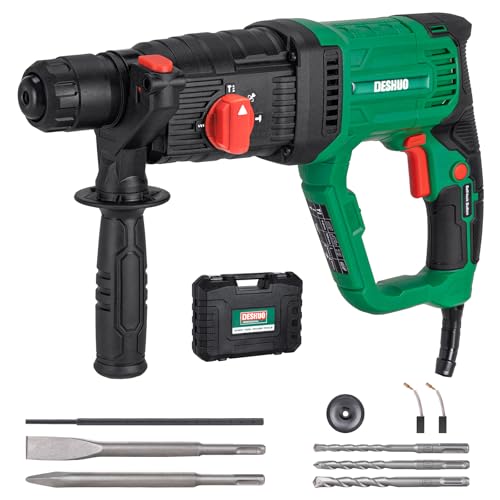 Deshuo 1" SDS-Plus Lightweight Rotary Hammer Drill forSmall15.15 x 8.85 x 3.93 inches7.19 PoundsCheck on Amazon


Short answer
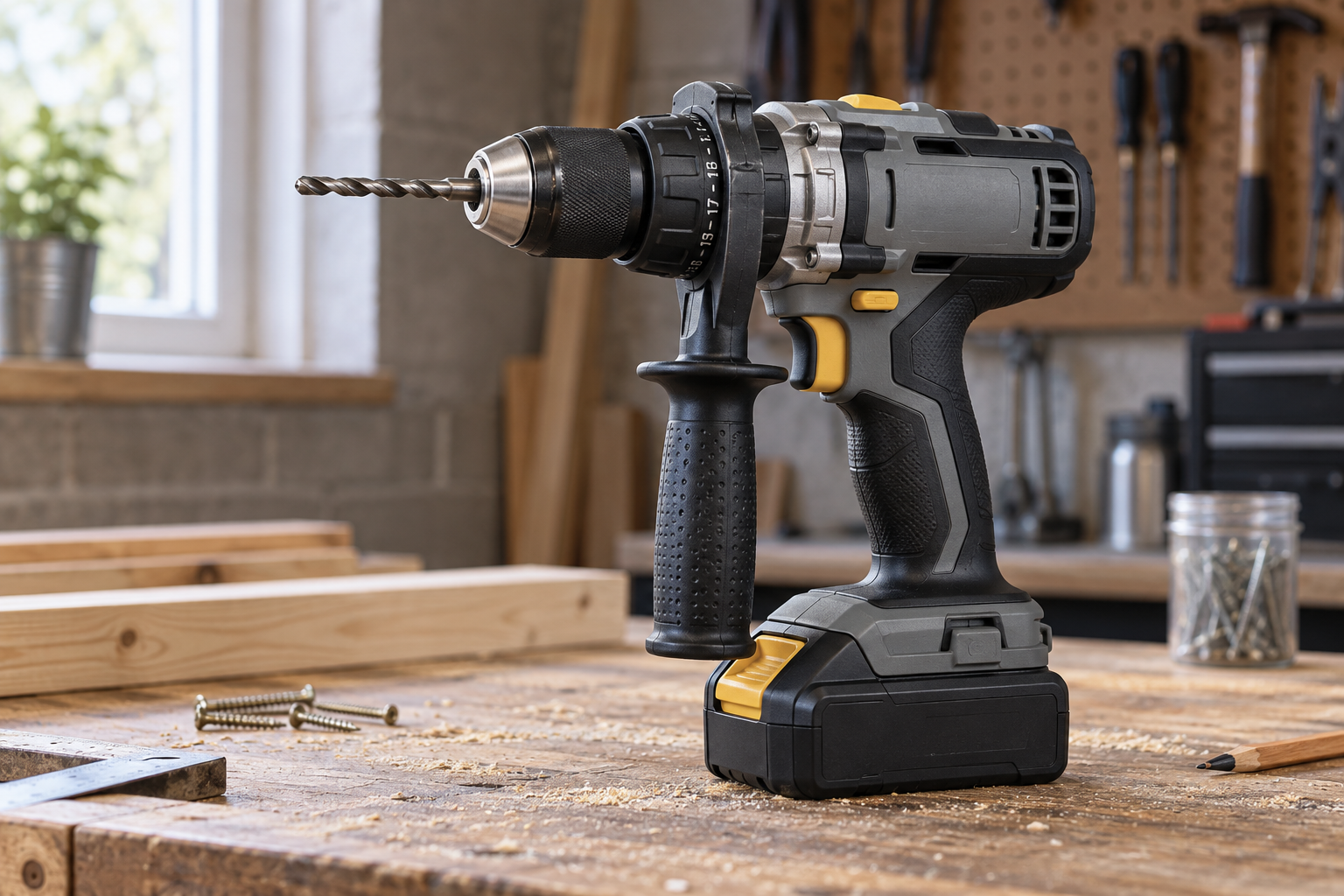
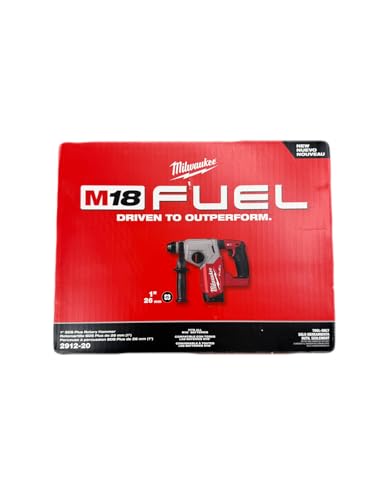
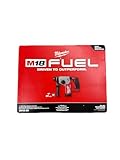
For drilling large holes in masonry with a hammer drill, the Milwaukee M18 Fuel 2904-20 and DeWalt DCD999 are both capable cordless drills, but neither is a substitute for a rotary hammer when the job involves repeated large holes in concrete. The Milwaukee is the more compact choice and is easier to control in tight spaces. The DeWalt offers a higher-speed setting intended for demanding applications, but that does not automatically make it the better tool for oversized masonry bits.
For occasional holes around 1/4 to 1/2 inch in brick or block, either drill can be a reasonable purchase. For frequent holes larger than that, especially in poured concrete, buy or rent a rotary hammer with the right bit and use a hammer drill only for lighter work.
As an Amazon Associate we earn from qualifying purchases at no extra cost to you.


What the specs tell you—and what they don’t
Both tools are 18-volt-class, brushless hammer drills with a two-speed gearbox and a three-jaw chuck. The 2904-20 is Milwaukee’s tool-only M18 Fuel hammer drill; the DCD999 is DeWalt’s 20V MAX XR hammer drill. Neither name means the drill delivers 18 or 20 volts continuously—that is the battery platform’s nominal class.
DeWalt lists up to 2,250 rpm for the DCD999, while Milwaukee lists up to 2,100 rpm for the 2904-20. Those figures describe the high gear, not hammer-drilling performance. For masonry, use low gear for control and torque, and let the bit’s hammering action do the work. Hammer drills drive the bit forward with a relatively fast, short impact; they are not designed to deliver the stronger blows of an SDS rotary hammer.
Both manufacturers quote maximum torque figures, but those numbers come from controlled tests and are not a direct measure of how quickly either drill will bore a large hole in concrete. Bit type, battery condition, material, and operator pressure all matter. In a large hole, heat and binding are practical limits long before a headline torque number settles the comparison.
Side-by-side comparison
| Feature | Milwaukee M18 Fuel 2904-20 | DeWalt DCD999 |
|---|---|---|
| Platform | M18, 18-volt class | 20V MAX, 18-volt nominal class |
| Chuck | 1/2-inch keyless | 1/2-inch keyless |
| Maximum listed speed | Up to 2,100 rpm | Up to 2,250 rpm |
| Hammer-drill use | Brick, block, and limited masonry drilling | Brick, block, and limited masonry drilling |
| Practical advantage | Compact body for its power class | Compatible with the optional FlexVolt battery system |
| Best fit | M18 users who value a shorter, more maneuverable drill | DeWalt users who want one drill for varied demanding work |
How they handle large masonry bits
A “large bit” can mean very different things. A 3/8-inch masonry bit in a concrete block is a manageable task for either drill. A 1/2-inch bit in hard, cured concrete is slower and more likely to make a hammer drill struggle. Larger holes, deep holes, or a run of many holes call for an SDS-plus rotary hammer, not a contest between these two drills.
As hole diameter increases, the bit removes more material and needs more force to turn. A standard round-shank masonry bit also relies on the chuck gripping it securely; sustained hammering can loosen a poorly tightened bit. If the bit stalls, binds, or makes the drill twist sharply, release the trigger. Do not keep forcing it: that can overheat the tool, damage the bit, or injure your wrist. Use the side handle, keep a firm two-handed grip, and clear dust from the hole periodically.
In a direct comparison, Milwaukee’s more compact form is helpful when working overhead or near a wall, where a long drill can be awkward. DeWalt’s slightly higher published top speed is of little consequence for large masonry holes, which should be drilled in low gear. Battery capacity and tool temperature can matter more: a small battery may sag under heavy load, while a larger pack adds weight but can sustain longer work.
Which one should you buy?
Choose the 2904-20 if you already own M18 batteries and want a powerful general-purpose drill that is relatively easy to maneuver. Choose the DCD999 if you are invested in DeWalt’s 20V MAX system or value its battery compatibility. If you have neither platform, compare the price of the tool with a battery and charger included; tool-only prices can make a platform look cheaper than it is.
For a handful of holes in brick or block, the less expensive drill-and-battery package may be entirely adequate. Check the material first: a drill that works comfortably in softer block may crawl in dense concrete. Use a sharp carbide-tipped masonry bit, mark the hole, start slowly to keep it centered, and stop if progress falls off or the bit gets hot. Don’t use hammer mode on tile, fragile brick, or other material that can crack; start without hammer action, or use a suitable alternative method.
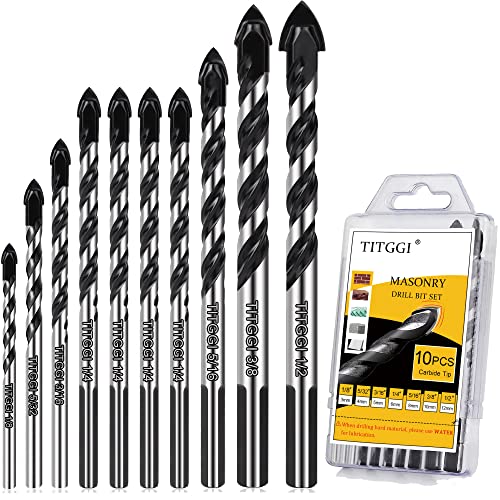
If your job calls for several holes larger than 1/2 inch, deep anchors, or routine drilling into concrete, put the money toward a corded or cordless SDS-plus rotary hammer. Its dedicated bit shank and stronger impact mechanism are better suited to the work. For occasional smaller holes, a quality carbide-tipped masonry bit set is a more useful upgrade than choosing between the two drills based on a small difference in top speed.
The decision that matters
Neither the Milwaukee 2904-20 nor the DeWalt DCD999 has a decisive advantage for large masonry bits: both are strong hammer drills, and both meet the same limitation when the holes get big or the concrete gets hard. Pick based on battery platform, handling, and package price. If large-hole masonry work is the main reason you are shopping, skip both as the primary tool and get a rotary hammer; if masonry is occasional and modest in size, either drill is a sensible choice.