What's inside
As an Amazon Associate I earn from qualifying purchases. This post may contain affiliate links at no extra cost to you.
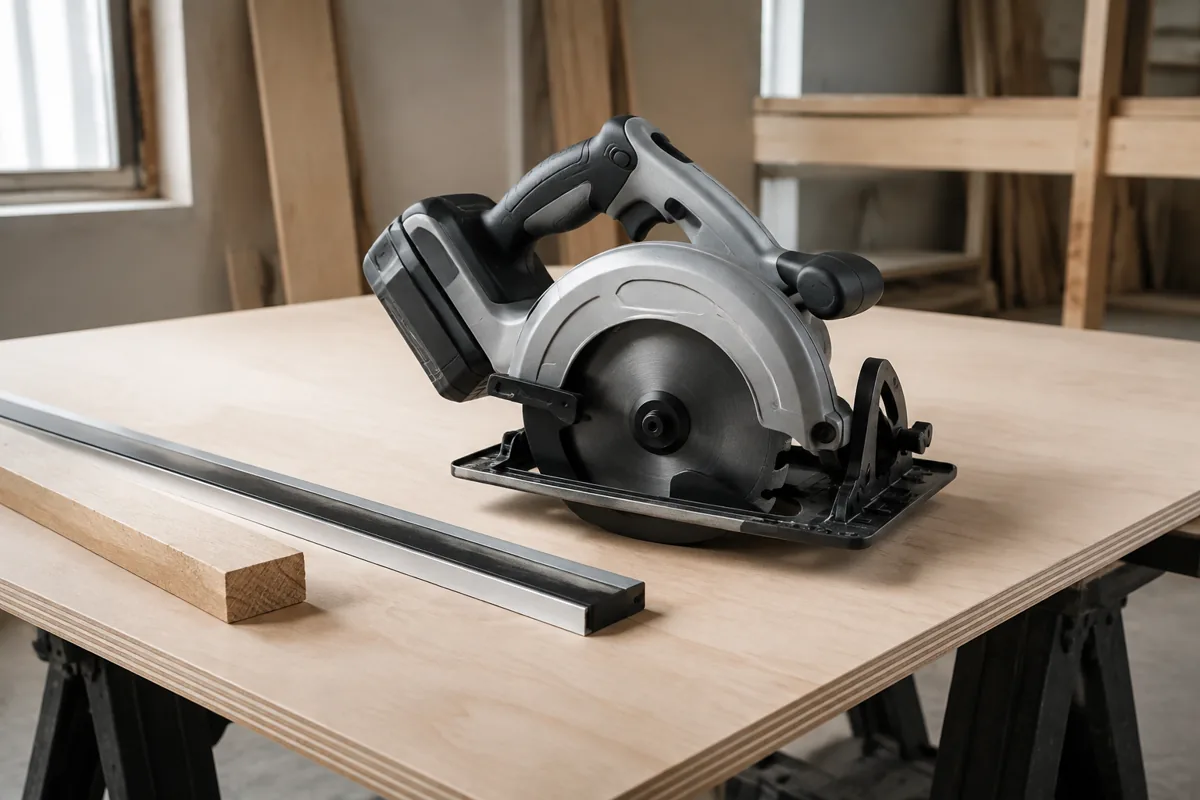
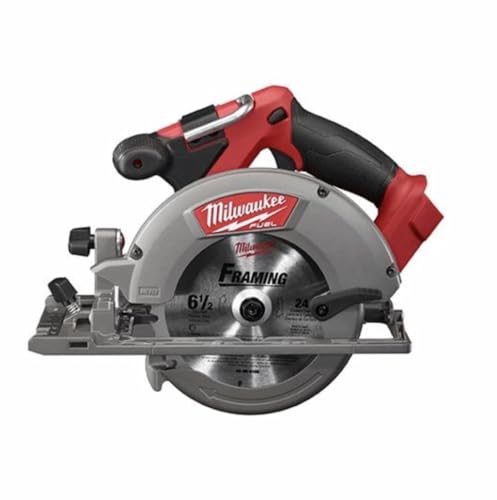
For repeated ripping—long, straight cuts through plywood, framing lumber, or stacks of sheet goods—the Milwaukee M18 Fuel circular saw and DeWalt DCS573 are both capable cordless replacements for a corded 7-1/4-inch saw. The more important question is not whether either one can make a cut. It is which saw maintains speed, handles heat and dust, and remains manageable after dozens of cuts.
The short answer: choose the Milwaukee if you already use M18 batteries and prefer a blade-left saw with strong cut visibility. Choose the DeWalt if you are in the 20V Max system, value a lighter-feeling saw, or want a little more bevel range. For production ripping, the battery and blade choice matter nearly as much as the saw body.
As an Amazon Associate we earn from qualifying purchases at no extra cost to you.

Our Top Picks


Key specifications that affect ripping
| Feature | Milwaukee M18 Fuel | DeWalt DCS573 |
|---|---|---|
| Blade size | 7-1/4 inches | 7-1/4 inches |
| Maximum bevel | 50 degrees | 57 degrees |
| Maximum cut at 90 degrees | About 2-1/2 inches | About 2-9/16 inches |
| Maximum no-load speed | About 5,800 rpm | About 5,500 rpm |
| Blade position | Left side | Right side |
| Primary battery platform | Milwaukee M18 | DeWalt 20V Max |
Both saws have enough capacity for standard 2x material and most sheet goods. Neither is a substitute for a worm-drive saw when you routinely cut thick timbers or expect maximum torque at low speed. For ordinary ripping, however, their brushless motors and electronic controls provide plenty of performance.
Performance during repeated ripping
Repeated ripping exposes weaknesses that a single crosscut will not. A saw can feel powerful for one cut and still bog down, heat up, or drain batteries quickly when it spends several minutes cutting continuously.
The Milwaukee M18 Fuel has a notably aggressive feel when paired with a high-output M18 pack. Its higher listed no-load speed helps it clear material quickly, and the motor maintains speed well in construction lumber and plywood. That does not mean it cannot stall. Pinching the blade in a bowed board, forcing a dull blade, or cutting wet lumber can still trigger the electronic protection system. When that happens, release the trigger and allow the blade to stop before restarting; repeatedly forcing a stalled saw wastes battery and heats the motor.
The DCS573 is also strong in long cuts, particularly with a large DeWalt battery rather than a compact pack. Its Power Detect electronics are designed to use higher-output batteries effectively. In practical use, the difference between the two saws is smaller than the difference between a fresh 5.0Ah or larger pack and a tired compact battery. If you are ripping a full sheet into multiple strips, carry a second charged battery instead of expecting one small pack to finish the job.
For either tool, a sharp 24-tooth or ಸಾಮ 24-tooth framing blade is suitable for fast dimensional-lumber ripping. Use a 40-tooth or 60-tooth finish blade for cleaner plywood edges, but expect slower cutting and faster loading in resinous lumber. A blade with burned teeth, missing carbide, or visible pitch buildup is a common cause of “weak” saw performance. Replacing it is cheaper than diagnosing a healthy motor as defective.
Handling, visibility, and cut control
The Milwaukee’s blade-left layout is useful for many right-handed users because the cut line is visible on the left side of the saw while the motor sits farther from the workpiece edge. The DeWalt’s blade-right layout is familiar to users of many traditional circular saws and can feel natural if you guide the saw with your right hand and watch the right edge of the shoe.
Neither layout is universally better. The deciding factor is how you sight the line and where you place your body. Keep both hands on the saw when practical, stand to the side of the blade rather than directly behind it, and support the sheet so the waste side cannot fall and pinch the kerf. A pinched blade is one of the most common causes of kickback during ripping.
The DeWalt offers more bevel adjustment, which matters for repeated angled cuts. For ordinary 90-degree ripping, that advantage is irrelevant. The Milwaukee’s slightly faster blade speed can make it feel quicker in softwood, while the DeWalt’s balance may appeal to users who make many overhead or shoulder-height cuts. Actual bare-tool weights vary by configuration, and the battery can add roughly 1.5 to more than 2 pounds, so compare complete saw-and-battery setups rather than catalog numbers alone.
Battery choice and heat management
For a day of ripping, buy or use the largest high-output battery your platform offers that does not make the saw unwieldy. Compact packs are fine for a few cuts, trim work, and occasional repairs. They are a poor choice for repeated full-depth rips because voltage sag and heat arrive sooner.
Keep a second pack charging, and swap batteries before the saw reaches thermal shutdown. If a pack or tool is hot after heavy cutting, let it cool in the shade with airflow. Do not put a hot battery directly on a charger or leave it in a hot vehicle. Users who regularly process sheet goods should consider a high-output M18 battery or high-capacity DeWalt 20V Max battery, depending on the platform they already own.
Which saw is the better buy?
Buy the Milwaukee M18 Fuel for repeated ripping if you already own M18 batteries, prefer blade-left visibility, or want a particularly lively cut through framing lumber. It is a good fit for remodelers and contractors who make many freehand cuts but still need enough capacity for sheet goods.
Buy the DeWalt DCS573 if your existing tools use DeWalt 20V Max batteries, you prefer its handling, or you make frequent bevel cuts. The additional bevel range is a legitimate advantage, although it should not justify switching platforms by itself.
The cheaper option is fine when the work is occasional: a few 2×4 cuts, small plywood projects, or short rips where you already have the matching batteries. Spend the difference on a quality 7-1/4-inch circular-saw blade and a straightedge guide. For repeated production ripping, choose the platform with the better battery supply and service support in your shop. That decision will affect productivity more than the modest performance gap between these two saws.